

Small Island Coastal State
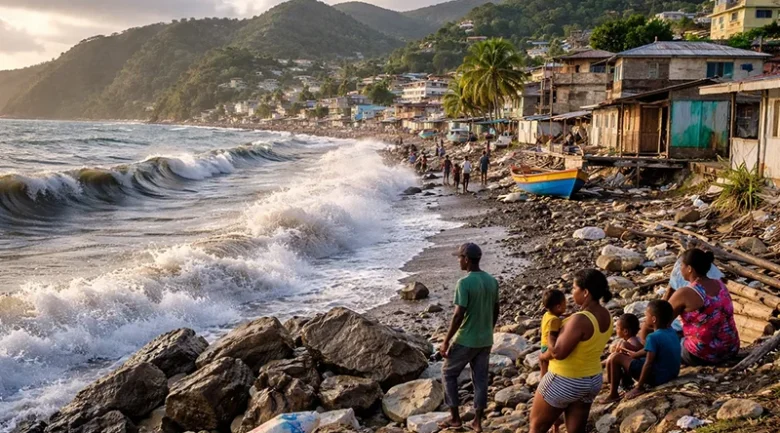
The term Small Island Coastal State (often used interchangeably with SIDS, Small Island Developing States) perfectly describes Dominica’s unique vulnerability and leadership in the era ahead. As a nation defined by its vertical volcanic interior and its fragile, low-lying coastal perimeter, Dominica faces the frontline of climate change every day.
The Coastal Paradox
In Dominica, the coast is both the economic engine and the greatest point of risk. Nearly 90% of the population and almost all critical infrastructure (hospitals, airports, and the capital, Roseau) are located within 500 meters of the high-water mark.
- The Squeeze: Because the interior is so mountainous, there is very little room for retreat. When sea levels rise or storm surges strike, the population is squeezed between the rising Caribbean Sea and the steep, landslide-prone volcanic cliffs.
- Economic Hubs: The St. Paul’s Fisherfolk Co-operative and the Portsmouth Maritime Hub (home to the Green Eco-Industrial Park) represent the vital Blue Economy sectors that drive national GDP but are most exposed to marine hazards.
Challenges: Rising Tides and Warming Seas
Dominica is managing three primary coastal threats:
| Threat | Impact on Dominica | Mitigation Strategy |
| Sea Level Rise | Salination of coastal aquifers and flooding in Roseau and Portsmouth. | Construction of massive sea-defense walls using Stonefield Quarry boulders. |
| Sargassum Influx | Invasive seaweed clogging boat engines and harming tourism. | Harvesting sargassum for use as organic fertiliser in the Layou valley. |
| Ocean Acidification | Degradation of coral reefs, which act as natural breakwaters. | Establishment of the Sperm Whale Reserve to protect the entire marine ecosystem. |
The Ridge-to-Reef Management Model
Dominica has pioneered a Ridge-to-Reef approach to coastal management. They recognise that what happens at the top of a volcanic peak directly affects the coastal state.
- Erosion Control: By using Vetiver grass to stop soil erosion in the mountains, the government prevents silt from flowing down its 365 rivers and smothering the coastal coral reefs.
- Mangrove Restoration: In areas like Northeast Dominica, active mangrove replanting provides a soft defence against storm surges, absorbing wave energy before it reaches the roads.
Leading the SIDS Agenda
Dominica has used its status as a small island coastal state to become a global advocate for Climate Justice.
- Geothermal Sovereignty: By tapping into volcanic heat, Dominica is moving away from imported fossil fuels, showing other coastal states how to achieve energy independence.
- Debt-for-Nature Swaps: The island is a leader in negotiating financial deals where international debt is forgiven in exchange for verifiable coastal and marine protection.
The 2030 Vision: Dominica’s goal is to be the world’s first Climate Resilient Nation. For a small island coastal state, this means building a country where a Category 5 hurricane no longer results in a total economic collapse.


References
-
1.
Dominica National Ocean Policy (NOP) https://oecs.int/en/our-work/knowledge/library/ocean-governance/dominica-national-ocean-policy
-
2.
Blue Economy Scoping Study for Dominica (UNDP) https://www.undp.org/latin-america/publications/blue-economy-scoping-study-dominica
-
3.
UNCTAD - Small Island Developing States (SIDS) Profile https://unctad.org/topic/small-island-developing-states
-
4.
Dominica Climate Resilience and Recovery Plan (CRRP) 2020-2030 https://odm.gov.dm/wp-content/uploads/2022/02/CRRP-Final-042020.pdf