

Stonefield Quarry and Crushing Plant
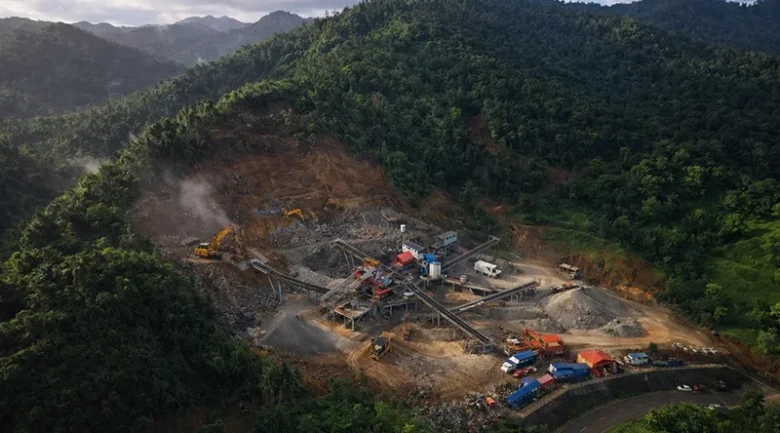
The Stonefield Quarry and Crushing Plant (frequently identified by its location at Deux Branche or as the Concord Crushing Plant) is a vital industrial artery in the eastern-central corridor of Dominica. Located near the intersection of the primary trans-island road and the Pagua River system, this facility is the engine room for the massive infrastructure projects currently transforming the windward side of the island in 2026.
While the Stonefield Quarry in the west (Antrim) serves the leeward coast, the Deux Branche/Concord site is strategically positioned to minimise haulage costs for the International Airport Project at Wesley and the East Coast Road rehabilitation.
Strategic Location: The Deux Branche Advantage
The plant sits at a geographical nexus. Deux Branche (Two Branches) refers to the confluence of river systems in the area, a location that historically provided easy access to deep volcanic deposits.
- Proximity to the Airport: Transporting heavy aggregate is one of the highest costs in civil engineering. Being located relatively close to the Wesley/Marigot area, the Concord plant reduces the carbon miles and wear-and-tear on the national road network.
- Geological Quality: The rock extracted at Deux Branche is primarily high-density Andesite. This stone is chemically stable and physically tough, making it the preferred material for high-stress applications like airport runways and sea-defence armour.
Industrial Infrastructure and Capacity
Recently, the plant has undergone significant technological upgrades to meet the Resilient Dominica standards.
- Primary and Secondary Crushers: The site utilises a multi-stage crushing circuit. Large boulders are reduced in the primary jaw crusher, then refined in cone crushers to produce specific fractions (sizes) ranging from 2-inch crusher run to 3/8-inch pea gravel.
- Washing and Screening: Because the plant is near the river valley, it employs a closed-loop water filtration system. This washes the stone to remove fines (dust and clay), ensuring the aggregate binds perfectly with bitumen for asphalt or cement for high-strength concrete.
- Stockpiling for the Airport: In 2026, the facility maintains massive buffer stockpiles. This ensures that, even during periods of heavy rain when active quarrying might slow, the paving crews at the International Airport have a continuous supply of material.
Key Outputs and Applications
The Concord/Deux Branche facility produces several specialized products essential for Dominica’s development:
| Product Grade | Primary Use in 2026 |
| Armour Stone | Massive 2–5 ton boulders used for river training and sea-walls in Marigot and Castle Bruce. |
| Sub-Base (Crusher Run) | The foundational layer for the new high-speed sections of the East Coast Road. |
| Bituminous Aggregate | Clean, angular stones used in the Hot Mix asphalt plants for the Airport runway. |
| Sand/Quarry Dust | Clean, angular stones are used in the Hot Mix asphalt plants for the Airport runway. |
Environmental Stewardship at Deux Branche
Operating a crushing plant at the Deux Branche site requires extreme sensitivity to the water table and the surrounding forest.
- Siltation Ponds: To protect the Pagua River, the plant uses a series of tiered settlement ponds. Any water used in the crushing process is filtered through these ponds to prevent sediment or stone flour from reaching the river, protecting the freshwater ecosystems downstream.
- Dust Suppression: In 2026, the plant utilises automated misting cannons. These create a water curtain over the crushers and conveyors, preventing silica dust from migrating into the surrounding rainforest or nearby settlements in Concord.
- Noise Management: Blasting at the quarry face is strictly regulated and timed to minimise the impact on local wildlife and the Kalinago Territory residents nearby.
Socio-Economic Impact
The plant is a major source of Blue-Collar wealth for the eastern districts. It provides high-skill employment for:
- Blasting Engineers: Managing the controlled explosives needed to shear the volcanic rock faces.
- Heavy Equipment Mechanics: Maintaining the fleet of excavators and crushers in a high-intensity environment.
- The Trucking Sector: Dozens of independent truckers from Concord, Marigot, and Atkinson rely on the daily ticket system at the plant for their livelihoods.
Industrial Insight: The Stonefield/Concord plant at Deux Branche is the silent partner in Dominica’s “Resilience” era. While the airport towers and new bridges get the headlines, they are all physically built from the volcanic heart of the island, processed at this site.
Stakeholder Analysis: Navigating the Controversy
The Stonefield Quarry and Crushing Plant at Deux Branche has become the centre of one of the most intense environmental and social debates in Dominica. While the site is a critical industrial pillar, its proximity to the Pagua River and the Kalinago Territory has sparked a complex conflict involving indigenous rights, environmental preservation, and national development.
To provide a fair assessment, it is necessary to examine the situation through the three primary lenses currently shaping the discourse.
The Kalinago Territory Perspective: Sovereignty and Consultation
For the Kalinago people, the controversy is not merely about a quarry; it is about Indigenous Rights and the principle of Free, Prior, and Informed Consent (FPIC).
- Exclusion from Dialogue: Kalinago Chief Anette Sanford has publicly disputed the government’s claim that the Kalinago Council was meaningfully consulted during the Environmental and Social Impact Assessment (ESIA) process. Although the Council was listed as a stakeholder, the Chief confirmed in March 2026 that no substantive discussions had taken place with her office or the previous council.
- Lack of Information Access: The community group “Save Deux Branches” has criticised the lack of transparency, noting that despite the quarry’s immediate proximity to their land, no physical copies of the ESIA were initially placed within the Territory for public review.
- Cultural and Physical Threats: The Kalinago rely on the Pagua River for livelihoods and heritage. Concerns remain that sediment runoff and heavy mining could permanently degrade the river and infringe upon the Northern Forest Reserve, which borders their ancestral lands.
The Public and Environmentalist Perspective: “Nature Island” at Risk
Environmental advocates and concerned citizens, organised under petitions and advocacy groups, frame the issue as a choice between short-term infrastructure and long-term ecological survival.
- The “Escazú” Violations: Critics argue that the project violates the Escazú Agreement, a regional treaty that protects environmental defenders and ensures public access to information. They argue that limited access to geological and hydrological reports constitutes a breach of international obligations.
- Visible Environmental Damage: Protesters have documented heavy sedimentation in the Pagua River, which they describe as environmental genocide. They fear that the loss of mature forest biodiversity and the destabilisation of the watershed will undermine Dominica’s global brand as a nature sanctuary.
- The “Mining” Controversy: A significant point of public contention is the fear that the site is being used for mineral mining (such as copper) rather than just aggregate quarrying. This suspicion has fueled larger protests, even as official sources deny such intentions.
The Government Perspective: National Interest and Strategic Necessity
The Government of Dominica, led by Prime Minister Roosevelt Skerrit and the Ministry of Environment, maintains that the quarry is an absolute necessity for the island’s future.
- The Airport Mandate: The government asserts that the Deux Branche site provides the highest quality volcanic aggregate required for the International Airport. They argue that importing millions of tons of stone would be cost-prohibitive, increase the project’s carbon footprint via shipping, and delay the airport’s completion.
- Legal Compliance and Mitigation: Officials state that the quarry is operating within the law and under strict oversight from the Physical Planning and Development Authority. To address outcries, a temporary halt was ordered in late 2025 to review mitigation measures, which now include:
- 50-meter Buffer Zones: A mandatory distance between the quarry and the Northern Forest Reserve.
- Terracing and Sediment Ponds: Engineering requirements to ensure water flows away from the cliff face and into filtration systems before reaching the river.
- Economic Sovereignty: The Prime Minister has emphasised that the airport is a strategic investment for long-term resilience. From the government’s view, the project creates jobs and ensures that the wealth generated from the island’s grey gold stays within the national economy.
Comparison of Key Stakeholder Points
| Stakeholder | Primary Concern | Stance on the Quarry |
| Kalinago Council | Lack of meaningful consultation and indigenous rights. | Opposed until genuine dialogue occurs. |
| Environmental Groups | River pollution and loss of Nature Island status. | Call for immediate halt and independent audit. |
| Dominica Government | Sourcing material for the International Airport. | Essential for national development; strictly regulated. |
| Local Truckers | Livelihoods and employment opportunities. | Supportive of continued operations. |
Summary: A Test of Balance
The Stonefield Quarry controversy serves as a test case for Dominica’s 2030 Resilience Vision. The outcome will likely define how the nation balances its ambitious infrastructure goals with its commitment to protecting its most vulnerable ecosystems and its First Peoples. As of the March 30, 2026 deadline for public feedback on the ESIA, the nation remains deeply divided on whether the Concord Crushing Plant represents a foundation for progress or a fracture in the island’s ecological heart.


References
-
1.
Frequently Asked Questions Faq Stonefield Quarry and Crushing Plant Development Application https://pressroomopm.gov.dm/frequently-asked-questions-faq-stonefield-quarry-and-crushing-plant-development-application/
- 2.
-
3.
Mines and Minerals Act 1996 https://www.dominica.gov.dm/laws/1996/act5-1996.pdf
-
4.
Local activist group cites study countering DA gov’t claims about Deux Branches quarry (with full report) https://dominicanewsonline.com/news/homepage/homepage-carousel/save-deux-branches-campaign-cites-study-countering-govt-claims-about-activities-in-deux-branches-with-full-report/
-
5.
Kalinago Community Demands Environmental Studies and Approvals for Deux Branches Quarry https://kairifmlive.com/kalinago-community-demands-environmental-studies-and-approvals-for-deux-branches-quarry/
-
6.
Former Chief Physical Planner calls for halt to quarry operations at Deux Branches as PM Skerrit meets stakeholders https://dominicanewsonline.com/news/homepage/news/former-chief-physical-planner-calls-for-halt-to-quarry-operations-at-deux-branches-as-pm-skerrit-meets-stakeholders/
-
7.
UWP Calls for Complete Halt to Illegal Quarry Activity in Deux Branche Dominica https://emonewsdm.com/uwp-calls-for-complete-halt-to-illegal-quarry-activity-in-deux-branche-dominica/