


Maroon Chief Apollo
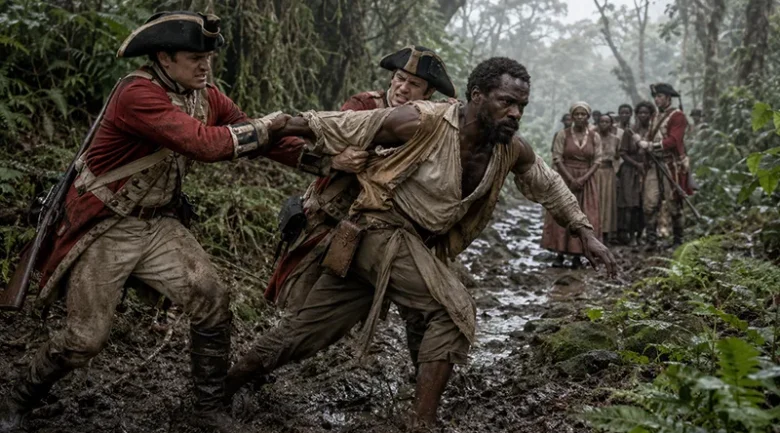
Maroon Chief Apollo stands out as one of the most resilientand strategically crucial military commanders among the Maroons of Dominica. Operating during the late 18th century and continuing his defensive resistance into the opening decades of the 19th century, Apollo managed a major defensive sector in the center of the island near Belles.
While elder statesmen like Chief Jacko maintained the primary high-altitude agricultural base at Jacko Flats, Apollo functioned as a frontline district commander. His multi-decade campaign of guerrilla warfare directly threatened the expansion of the British plantation economy, making him a primary target of the colonial administration during both the First and Second Maroon Wars.
Ethno-Cultural Background and the Belles Command
Colonial military entries and court archives record Chief Apollo as being born in Guinea, confirming his status as a first-generation West African who survived the Middle Passage. This background provided him with direct knowledge of decentralised warfare, survival mechanics, and tracking, which he applied to the island’s vertical interior.
By the late 1780s, Apollo had established a heavily fortified camp (maniel) within the deep river valleys and dense rainforests surrounding Belles. This territory was geographically critical to the Maroon federation:
- The Transit Corridor: His central positioning allowed him to control the vital interior paths connecting the windward and leeward coasts, effectively monitoring British troop movements across the island.
- The Agricultural Buffer: Apollo’s camp featured extensive hidden provision grounds of yams, dasheen, and cassava. These fields served as a crucial supply buffer, feeding newly escaped runaways and supporting mobile combat units operating far from the central strongholds.
Military Operations and Tactician of the Maroon Wars
Apollo’s military leadership spanned both major phases of organized anti-colonial insurgency. He first achieved prominence during the First Maroon War (1785–1786), leading a highly coordinated, large-scale assault on the Rosalie Bay Estate in December 1785. This raid successfully disrupted sugar production along the windward coast and freed numerous enslaved labourers.
Apollo avoided direct, open-field battles with British regulars, relying instead on asymmetric tactics tailored to Dominica’s rugged terrain:
- Acoustic Sentry Networks: His warriors deployed the kon lambi (conch shell) to relay warning codes across mountain ridges, eliminating the element of surprise for advancing colonial militias.
- Defensive Chokepoints: Apollo engineered his mountain defenses near deep ravines, forcing British forces into narrow, rain-slicked clay paths where their conventional military formations were ineffective.
The Counter-Insurgency and Betrayal of 1786
The success of Apollo’s raids forced the British colonial government to alter its counter-insurgency strategy. Recognizing that European soldiers were poorly adapted to the humidity and steep terrain of the interior, Governor John Orde authorised the deployment of the Black Rangers, paramilitary units of armed enslaved trackers.
In 1786, unable to breach Apollo’s fortifications through conventional force, the British military turned to internal sabotage. Apollo was ultimately betrayed by an informant from the Belfast Estate. A specialized squad of Black Rangers used this intelligence to bypass his outer sentries, ambushing the commander and shooting him within his central district sector.
Legal Execution and Psychological Warfare
Following his capture, Apollo was marched in chains to the colonial capital of Roseau. The white plantocracy, determined to project absolute psychological dominance over the island’s labor force, bypassed standard civil proceedings and subjected him to a public execution.
Apollo was exposed on a public gibbet at the Old Market Square. Colonial records note that he survived for a full week on the gallows, maintaining a defiant demeanour until his death. His execution was meant to terrorise the remaining resistance, but it had the opposite effect, cementing his status as a martyr and a symbol of sovereign Black authority.
Historical Legacy and Regional Summary
Chief Apollo’s decades of resistance helped shape the Dominica economy. By making the interior forests dangerous and expensive for the British plantocracy to cultivate, leaders like Apollo prevented corporate sugar estates from expanding across the island.
| Operational Dimension | Strategy Under Chief Apollo | Long-Term Historical Impact |
| Geographic Focus | District Command of the central forests near Belles. | Secured a strategic corridor linking the windward and leeward resistance. |
| Tactical Execution | Night raids on coastal estates and asymmetric mountain ambushes. | Constrained the expansion of the plantation complex into the interior. |
| Colonial Reaction | Deployment of the Black Rangers and public execution on a gibbet. | Inspired future resistance, leading into the Second Maroon War. |
Today, Chief Apollo is honoured as an essential architect of Dominican freedom. His role in the destruction of the plantation model is commemorated during national Emancipation Day events, and his tactical achievements are recorded within the Dominica Museum archives to preserve the history of the Neg Mawon.


