

Reverend Atherton Didier
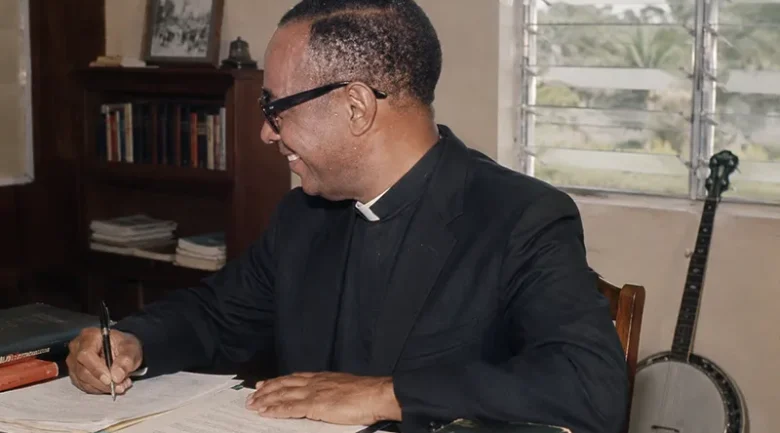
Atherton Didier was a prominent Dominican religious leader, civic reformer, and cultural figure who played a pivotal role in the island’s ecclesiastical and socio-political history during the mid-to-late 20th century. A reverend within the Methodist Church in the Caribbean and the Americas (MCCA), he served as a senior minister and Superintendent of the Dominica Circuit, eventually rising to become the Chairman of the Jamaica and the Leeward Islands Districts. Beyond his ecclesiastical leadership, Didier was a celebrated cultural traditionalist and acoustic musician, widely known for his proficiency on the banjo. He is most historically notable for serving as the Chairman of the independent eight-person task force, popularly known as the Didier Committee, which investigated state security and human rights during the political turbulence of the mid-1970s.
Ecclesiastical and Cultural Career
Didier dedicated his primary professional life to ministry within the Methodist Church, advancing through theological ranks to become one of the most influential Caribbean clergymen of his generation. Throughout his service in the Dominica Circuit, his leadership spanned several major national parishes, including the historic Bethesda Congregation. His administrative capabilities led to his elevation within regional church governance, culminating in his appointment as Chairman of the Jamaica and Leeward Islands Districts, where he managed regional church infrastructure, overseas missions, and theological education.
Parallel to his clerical assignments, Didier was an active preserver of traditional folk music in Dominica. He was a highly regarded string instrumentalist who specialised in the four-string and five-string banjo, using his musical platform to sustain the traditional séwénal (serenading) styles and local folk arrangements. Within the community, he championed the intersection of spiritual discipline and cultural heritage, making him a distinct, unifying civic figure across religious and secular divides in Roseau and rural communities.
The Didier Committee and Legislative Advocacy
In 1974, the political landscape of Dominica shifted drastically following the passage of the Prohibited and Unlawful Societies and Associations Act, universally known as the Dread Act, under the administration of Premier Patrick John. The emergency legislation outlawed the emerging Rastafari movement, granting security forces and civilian homeowners total legal immunity for arresting, detaining, or shooting suspected Dreads on sight without a warrant. As state violence escalated and numerous citizens fled into the island’s mountainous rainforests, international human rights concerns and domestic social fractures intensified.
Recognising the unsustainable nature of the state’s military enforcement, the government of Dominica established an independent, eight-person task force in 1975 to investigate the crisis and propose a legislative path forward. Reverend Didier was selected to serve as the independent Chairman of this committee.
Under his direction, the task force conducted comprehensive field research, interviewing rural villages, security personnel, and peaceful Rastafari adherents who were hiding in the interior. The final report issued by the Didier Committee concluded that the vast majority of the Dread population consisted of peaceful, law-abiding cultural activists rather than violent insurgents. The committee formally recommended that the Patrick John administration immediately annul the oppressive Dread Act and replace it with narrow, constitutionally sound anti-terrorism frameworks that preserved basic human rights.
Although the ruling Dominica Labour Party initially rejected the committee’s findings and maintained the law, the report became a foundational text for civil liberties advocates. The judicial and policy findings of the Didier Committee were officially vindicated on February 16, 1981, when the newly elected administration of Prime Minister Dame Mary Eugenia Charles passed the Prevention of Terrorism Temporary Provisions Act, explicitly executing Section 18 to repeal the Dread Act based on the structural tenets originally outlined by Didier’s task force.


References
-
1.
Bethesda Congregation http://dominicamethodist.org/index.php/congregation/bethesda-congregation
-
2.
Chapter 1 Browns Town and Edmondson Circuit https://www.mymethodisthistory.org.uk/people-2/missionaries-and-mission-partners/called-to-serve-jamaica-1966-1970/chapter-1-browns-town-and-edmondson-circuit
-
3.
The War on Dreads in Dominica: From Democracy to Papadocracy 1 https://www.academia.edu/44917135/THE_WAR_ON_DREADS_IN_DOMINICA_FROM_DEMOCRACY_TO_PAPADOCRACY_1