
Patrick Roland John
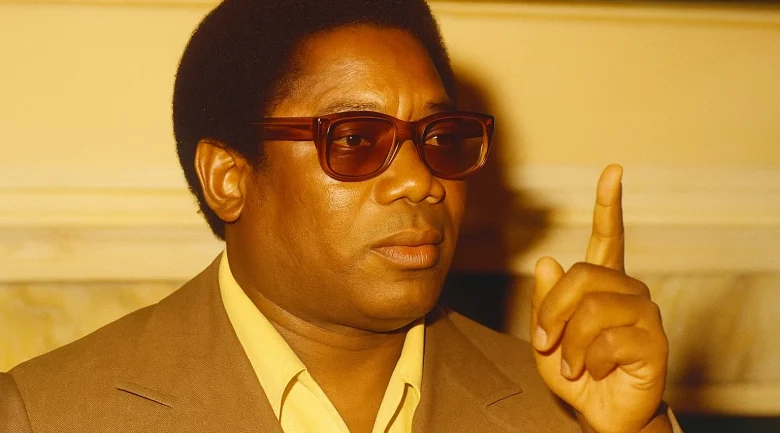
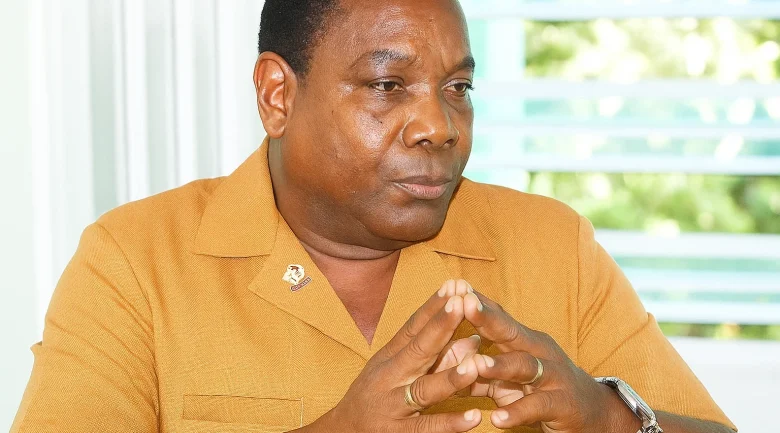
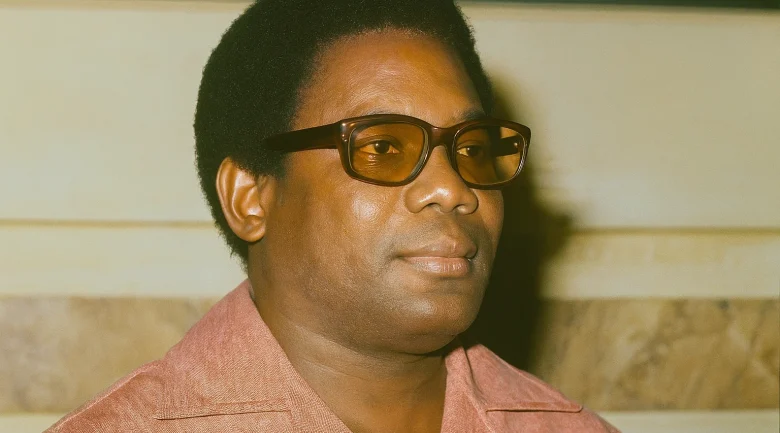
Patrick Roland John (7 January 1938 – 6 July 2021) was a Dominican trade unionist, politician, and sports administrator who became the island’s first Prime Minister upon independence in 1978. His journey from humble beginnings in Roseau’s working-class neighbourhoods to national leadership mirrored Dominica’s struggle for identity, equality, and self-determination. John was a man of drive and paradox, a determined advocate for the common worker who became both celebrated and criticised as the country’s independence leader. His life, extending across politics, public service, and sport, remains one of the most complex and impactful in Dominica’s modern history.
Early Life and Education of Patrick John
Patrick John was born in Roseau, Dominica’s capital, on 7 January 1938, to Augustine and Agatha John. He grew up in Newtown, then called Charlotteville, a vibrant but economically challenged community on the city’s southern edge. Newtown, with its mix of fishermen, dockworkers, and traders, shaped his understanding of working-class hardship and resilience. It was a community known for its toughness and spirit, a place where discipline, self-reliance, and pride in labour were core values.
John attended the Roseau Boys’ School, where he showed aptitude in arithmetic and leadership but left formal education early to help support his family. Like many young men of his generation, he found work on the Roseau docks, unloading ships under gruelling conditions. It was there that he first encountered the stark inequalities between labourers and employers. His early experiences with exploitation and solidarity among workers forged the foundation for his lifelong commitment to unionism and social justice.
Even as a teenager, John was described as outspoken and self-assured. Elders in Newtown recalled that he would often challenge authority when he believed something was unjust. Those traits, courage, stubbornness, and charisma, would later define his political persona.
By the late 1950s, John had become a member of the Dominica Trade Union (DTU), working under labour pioneer Emmanuel Loblack, whose leadership inspired a generation of young unionists. He quickly gained recognition as a persuasive speaker and organiser. In 1960, he helped establish the Waterfront and Allied Workers Union (WAWU), which became a formidable force in defending the rights of dockworkers and labourers across Dominica.
Rise Through Labour and Politics
Patrick John’s rise from stevedore to political leader was rapid. As President of WAWU, he fought aggressively for wage increases and safer working conditions, organising strikes that disrupted colonial commerce but won major concessions for workers. His fearless negotiating style and ability to mobilise large crowds earned him both admiration and resentment. Employers viewed him as militant; workers saw him as a hero.
His success in labour advocacy naturally led to a career in politics. John joined the Dominica Labour Party (DLP) in the early 1960s, aligning himself with the visionary leadership of Edward Oliver LeBlanc, whose message of self-reliance deeply resonated with him. Under LeBlanc’s mentorship, John served in various government capacities, including Minister of Home Affairs and Minister for Labour, where he gained a reputation for efficiency and decisiveness.
When LeBlanc resigned in 1974, frustrated by internal dissent and elite criticism, Patrick John was chosen as his successor. His ascension marked a new chapter in Dominica’s political history, a shift from LeBlanc’s gentle idealism to John’s assertive, pragmatic nationalism.
As Premier, John pursued full independence from Britain. He believed that sovereignty was essential for national dignity and economic growth. On 3 November 1978, that dream was realised when Dominica became an independent republic within the Commonwealth. John stood proudly at the forefront of the ceremony, hoisting the Dominican flag before cheering crowds on the Bayfront. For a moment, he embodied the nation’s aspirations for progress and unity.
Leadership, Achievements, and Controversies
As Dominica’s first Prime Minister, Patrick John envisioned transforming the island’s economy through industrialisation and foreign investment. His government pursued plans to establish manufacturing zones, attract offshore financing, and modernise the port infrastructure. He also emphasised agricultural self-sufficiency and launched community housing schemes for the poor.
However, his administration faced serious challenges. The post-independence economy faltered under global inflation, high unemployment, and dependence on a struggling banana industry. Many Dominicans felt that independence had brought pride but not prosperity. John’s secretive negotiations with foreign financiers, some involving questionable offshore banking ventures and mercenary-linked proposals, eroded public trust.
Critics accused him of authoritarian tendencies, noting his use of the Prohibited and Unlawful Societies and Associations Act (the Dread Act) to suppress crime, but which also targeted young men associated with the Rastafarian movement. While he argued that maintaining order was necessary, it deepened tensions between the government and the youth.
The political climate deteriorated in 1979, culminating in the May 29th 1979 Uprising: Dominica’s Bloody Tuesday, when unions and civic organisations led mass protests against his administration. The demonstration, initially peaceful, turned violent after police opened fire, killing Phillip Timothy. The tragedy triggered a national crisis that forced John to resign within weeks.
Though his premiership ended abruptly, his influence on Dominica’s independence movement remained undeniable. Supporters continued to hail him as the father of the nation’s sovereignty, a man whose flaws could not erase his achievements.
Life After Politics and Role in Football
After leaving office, Patrick John’s life took a different direction. In 1981, he was linked to the failed Operation Red Dog conspiracy, a plot by foreign mercenaries to overthrow the government of Prime Minister Eugenia Charles. Although John denied orchestrating the plan, he was convicted of conspiracy and sentenced to twelve years in prison, serving five before his release in 1986.
Following his release, he distanced himself from politics but found a new mission in sports administration. His lifelong passion for football led him to serve as President of the Dominica Football Association (DFA), where he remained a central figure for decades. Under his leadership, Dominica joined FIFA and CONCACAF, gaining international recognition and access to development grants.
John was instrumental in establishing structured football competitions and advocating for improved sporting facilities, including upgrades at Windsor Park. Despite occasional controversies over governance, his impact on sports was widely acknowledged. He helped develop youth programs, nurtured local talent, and brought Dominica into regular competition within the Caribbean Football Union.
John continued to serve his community through civic projects and mentorship of young Dominicans interested in leadership and public service.
Illness, Character, and Legacy
In later life, Patrick John faced serious health issues, including heart complications and kidney disease, which led to frequent hospitalisations. Despite physical decline, he remained mentally sharp and politically engaged, often giving interviews reflecting on his years in office. His writings and statements revealed a man still proud of his achievements but introspective about his mistakes.
Friends described him as disciplined, articulate, and deeply patriotic, though sometimes stubborn and unyielding. He lived modestly in Goodwill, Roseau, spending time with his wife Desmondia and their three children. He found solace in family, faith, and sport, occasionally attending football matches and community gatherings.
Patrick John passed away on 6 July 2021 at the Dominica-China Friendship Hospital, aged 83. His death was met with tributes from across the Caribbean. Prime Minister Roosevelt Skerrit called him “a symbol of national pride,” while others remembered him as a man whose courage and conviction shaped the birth of a nation.
His story remains one of complexity and humanity, of triumph, controversy, and perseverance. He was a leader who rose from the docks of Roseau to the highest office, who embodied both the promise and perils of independence, and who, despite his flaws, left a legacy that continues to define Dominica’s political and social landscape.


