
Prime Minister of Dominica
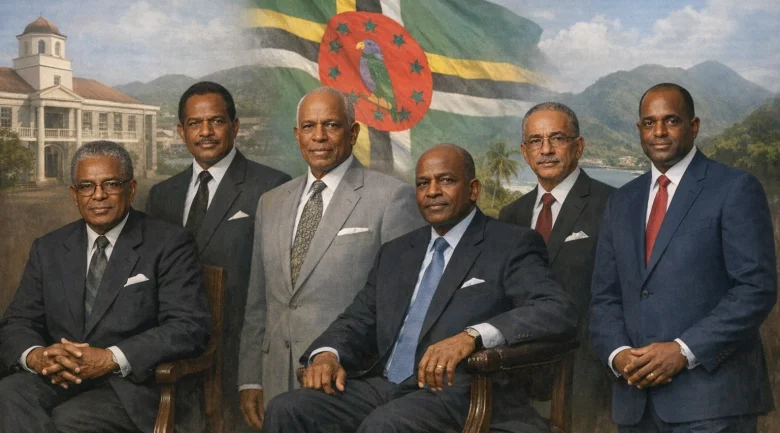
The Prime Minister of Dominica serves as the head of government and the primary architect of the nation’s sovereign path. Since the transition to an independent republic on November 3, 1978, this office has evolved into a global symbol of climate advocacy and regional statesmanship. Tasked with presiding over the Cabinet and commanding the House of Assembly, the Prime Minister is the pivot point for all national development, legislative strategy, and international diplomacy.
This role represents the highest level of executive authority under the Westminster system, balancing constitutional traditions with a modern mandate for national resilience. From steering economic policy to representing the island on the world stage, the Prime Minister remains the foundational leader responsible for safeguarding the nation’s integrity and driving its future-ready agenda.
History and Establishment of the Office of the Prime Minister
The office of the Prime Minister was formally established on November 3, 1978, with the ratification of the Constitution of Dominica. This milestone marked the island’s transition from a British Associated State to a fully sovereign republic. Patrick Roland John, who had served as the final Premier, was sworn in as the nation’s inaugural Prime Minister, signifying the birth of a new era in Caribbean governance.
Historically, the role evolved from the earlier positions of Chief Minister (1960–1967) and Premier (1967–1978). While these previous roles held authority over internal affairs, the 1978 Constitution granted the Prime Minister full executive power over both domestic and international policy. Today, the office stands as the highest symbol of the nation’s democratic independence, rooted in the Westminster tradition but adapted to meet the unique challenges of a modern island state.
Primary Duties and Responsibilities of the Prime Minister
The Prime Minister’s official roles encompass a range of executive, legislative, and diplomatic functions critical to national governance:
- Executive Leadership: Presiding over the Cabinet of Ministers to formulate national policy and direct the administrative machinery of the state.
- Constitutional Advisory: Advising the President on the appointment of government ministers, the dissolution of Parliament, and other high-level constitutional matters.
- Legislative Strategy: Directing the government’s legislative agenda within the House of Assembly to ensure the passage of laws that support national development.
- Global Representation: Serving as the nation’s chief diplomat at international forums and within regional organisations like CARICOM and the OECS.
- National Resilience: Overseeing the strategic implementation of the Climate Resilience and Recovery Plan (CRRP) and the National Resilience Development Strategy 2030.
- Economic Stewardship: Guiding major infrastructure projects and investment programs, including the International Airport project and renewable energy initiatives.
- Crisis Management: Coordinating national responses to emergencies and natural disasters in collaboration with technical agencies and disaster management offices.
The Prime Minister’s portfolio is expansive, reflecting a modern mandate to balance traditional governance with the urgent demands of climate resilience and economic innovation.
Historical List of Dominica’s Prime Ministers
Since independence, the Commonwealth of Dominica has been led by several distinguished individuals who helped shape the island’s modern political and social framework.
Summary of the Prime Ministers of the Commonwealth of Dominica, including terms of office and core contributions to national development since 1978.
| Prime Minister | Term of Office | Key Leadership Contribution |
| Patrick Roland John | 1978–1979 | Inaugural leader; finalized the Independence Constitution. |
| Oliver Seraphin | 1979–1980 | Led national recovery efforts following Hurricane David. |
| Dame Mary Eugenia Charles | 1980–1995 | First female regional PM; focused on fiscal discipline. |
| Edison James | 1995–2000 | Pioneered agricultural diversification and the CBI program. |
| Roosevelt Douglas | 2000 | Strengthened regional unity and global diplomatic ties. |
| Pierre Charles | 2000–2004 | Championed healthcare reform and economic stabilization. |
| Osborne Riviere | 2004 | Ensured constitutional continuity during national mourning. |
| Roosevelt Skerrit | 2004–Present | Architect of the World’s First Climate Resilient Nation. |
Patrick Roland John (1978-1979)
Patrick Roland John served as Dominica’s inaugural Prime Minister, succeeding as Premier and leading the island to complete independence from Great Britain. A former trade unionist and Mayor of Roseau, his tenure was defined by the monumental task of establishing a new sovereign state. However, his administration was short-lived, marked by domestic civil unrest during the May 29th 1979 Uprising and controversial international dealings that eventually led to his resignation. Despite his turbulent exit, he is historically recognised for finalising the constitutional framework that birthed the nation.
Oliver Seraphin (1979-1980)
Oliver “O.J.” Seraphin served as the interim Prime Minister during one of the most physically and economically challenging chapters in Dominican history. Taking office following the resignation of Patrick John, he was immediately tasked with leading the national recovery efforts after the catastrophic Hurricane David in 1979. Seraphin’s leadership focused on humanitarian aid and the restoration of basic infrastructure, providing a steady hand during a transitional “interim” period. His brief term served as a critical bridge, ensuring democratic continuity until the landmark general elections of 1980.
Dame Mary Eugenia Charles (1980-1995)
Dame Mary Eugenia Charles, often revered as the “Iron Lady of the Caribbean,” was the first female Prime Minister in the region and the Commonwealth of Dominica’s longest-serving leader. As the co-founder of the Dominica Freedom Party (DFP), she stabilised the nation’s democracy following several coup attempts and modernised the economy through fiscal discipline. Her international profile rose significantly during the 1983 Grenada intervention, where she played a pivotal role in regional security. Her 15-year legacy is characterised by the expansion of the rule of law and massive infrastructural modernisation.
Edison Chenfil James (1995-2000)
Edison James led the United Workers Party (UWP) to victory in 1995, marking a shift toward economic liberalisation and privatisation. His administration focused heavily on agricultural diversification, particularly on modernising the banana industry amid changing European trade regulations. James is credited with initiating major public works and promoting the Citizenship by Investment (CBI) program as a secondary source of revenue for national development. His term reflected an era of transition as the nation sought to decrease its dependence on traditional colonial-era trade protections and embrace global market competitiveness.
Roosevelt “Rosie” Douglas (2000)
Roosevelt Douglas, a veteran socialist activist and charismatic leader of the Dominica Labour Party (DLP), served a brief but impactful eight-month term before his untimely passing. Known for his global connections, “Rosie” focused on repositioning the nation within the international community and fostering stronger regional unity through CARICOM. His vision was to bridge the gap between the English-speaking Caribbean and the wider world, advocating for social justice and youth empowerment. Although his tenure was short, his “World Citizen” approach remains a cornerstone of the DLP’s modern diplomatic philosophy.
Pierre Charles (2000-2004)
Pierre Charles ascended to the premiership during a period of intense economic pressure. A humble and dedicated statesman from Grand Bay, he prioritised healthcare and education reforms while navigating a rigorous fiscal stabilisation program under the International Monetary Fund (IMF). Charles is remembered for his “servant leadership” style and his commitment to maintaining social safety nets despite national budget constraints. Tragically, his tenure was cut short by his death in office, but he is celebrated for his personal integrity and his role in steadying the national economy.
Osborne Riviere (2004)
Francis Osborne Riviere served as the acting Prime Minister following the sudden death of Pierre Charles. A seasoned diplomat who previously served as the Minister for Foreign Affairs, Riviere provided the necessary stability and continuity required during a period of national mourning. His brief leadership ensured that the government remained functional and the transition to a younger generation of leaders was seamless. Though he did not seek the permanent position, his professional stewardship is noted as a vital contribution to the nation’s democratic stability.
Roosevelt Skerrit (2004-Present)
Roosevelt Skerrit is the longest-serving Prime Minister in the history of the Commonwealth of Dominica, taking office at the age of 31. His administration has been defined by the vision of making Dominica the “World’s First Climate Resilient Nation” following the devastation of Hurricane Maria in 2017. Under his leadership, the nation has seen unprecedented growth in the Digital Economy, the launch of the massive International Airport Project, and the advancement of the Geothermal Development Project. His tenure represents a modern era of proactive diplomacy and large-scale infrastructural transformation.
Prime Minister’s Role in Modern Policy and Resilience Building
Under the Prime Minister’s leadership, Dominica has embraced a forward-looking national agenda, focusing on major infrastructure projects, renewable energy initiatives, and the expansion of the digital economy. Policies such as the Resilient Dominica Physical Plan (RDPP) aim to mitigate the risks of climate change. In contrast, international partnerships with organisations such as the Caribbean Development Bank support sustainable development goals.
The Prime Minister is elected indirectly through parliamentary elections. The Electoral Office oversees elections to ensure fairness, transparency, and public trust in the process, maintaining the country’s vibrant democratic system.
From forging partnerships under the Commonwealth of Dominica umbrella to promoting tourism ventures through the Discover Dominica Authority, the Prime Minister represents the island’s interests regionally and internationally. Dominica’s leadership in climate resilience is now globally recognised.
Faced with the impacts of tropical storms, global economic shifts, and growing demands for sustainability, the Prime Minister’s role remains dynamic. Projects like the Dominica Geothermal Development Project and investment in green energy initiatives reflect a vision for a future-ready economy.
Legacy of Leadership
The statesmanship within the Commonwealth of Dominica is a chronicle of elite resolve and vision. From the architects of independence to the pioneers of the world’s first climate-resilient nation, each leader has brought a unique calibre of brilliance to the highest office.
This succession represents a masterclass in resilience, balancing the gravity of the Westminster system with a bold, modern defiance against global challenges. Their collective impact remains the bedrock of the nation’s integrity and its shining future.


