

Mary Eugenia Charles
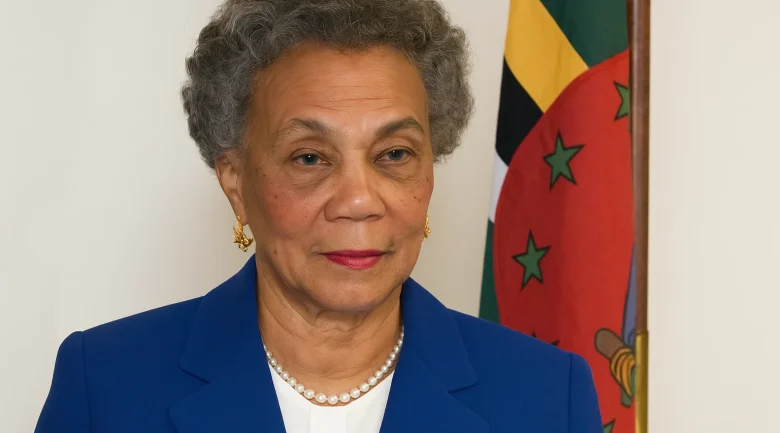
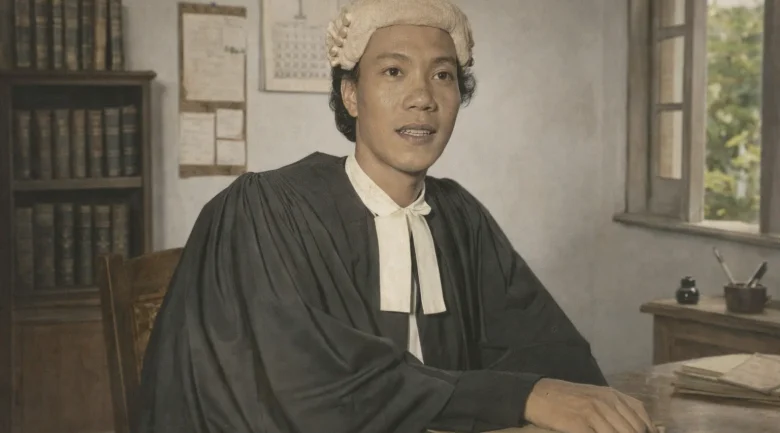
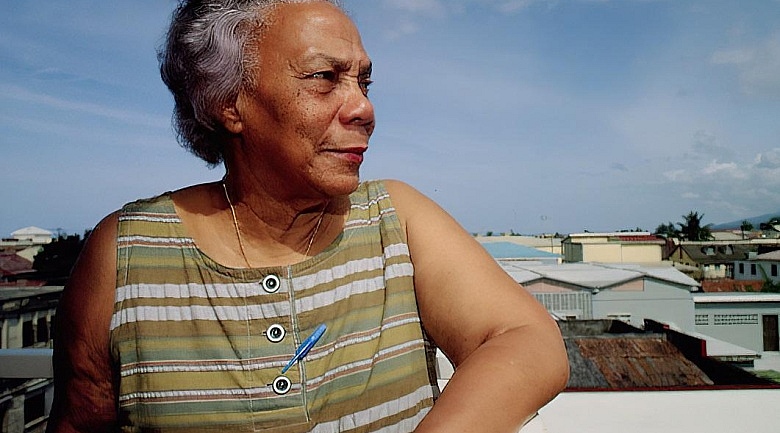
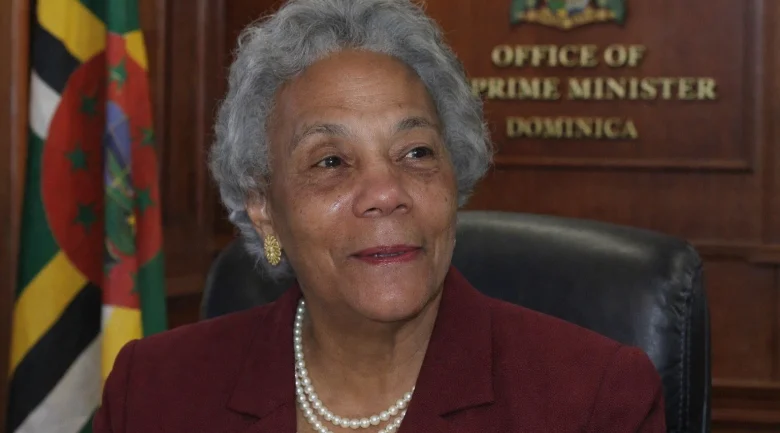
Mary Eugenia Charles stands among the most influential political leaders in Dominica’s modern story. Her leadership offers a compelling lens on small-state resilience, demonstrating how powerful leadership in modest nations can impact global narratives. Her rise from a Pointe Michel childhood to the Office of Prime Minister brought a level of steadiness and clarity that the island urgently needed during years of political turmoil, disaster recovery, and social transformation. She blended legal discipline with a calm but unmistakably firm leadership style, becoming a national figure long before regional and international audiences began watching her closely. Her years in office shaped governance, institutions, and expectations of public responsibility in ways that continue to influence how Dominicans think about leadership today.
Political Life and Historical Influence
During her formative years in Pointe Michel, she was placed in the heart of a close-knit coastal community where family, church life, and village cooperation were part of the day-to-day rhythm. Born in 1919 to John Baptiste Charles, a businessman who exported lime products, and Josephine Charles, who maintained a steady household, she grew up in an environment where self-discipline, service, and education held significant value. These influences guided her approach to public life and shaped how she judged decisions, behaviours, and responsibilities in government.
She attended the Convent High School in Roseau before continuing her studies in Canada and later the United Kingdom. Her time at the University of Toronto, the London School of Economics, and the Inner Temple placed her among the few Dominican women who entered the legal profession during the mid-twentieth century. Those years abroad gave her a firm academic grounding and connected her with students and legal thinkers from across the Caribbean and Commonwealth. When she returned to Dominica to practise law, colleagues recalled her disciplined preparation, careful use of legal authority, and preference for clear argument rather than emotional appeal. Her courtroom work earned respect for its precision and her steady approach to constitutional matters.
Her legal work, especially during periods when public confidence in government was strained, helped build her reputation as someone who valued fair process and understood how institutions should function. Clients trusted her, and opponents respected her ability to stay firm without becoming theatrical. These qualities eventually carried into national politics.
Early Life, Legal Career, and Public Voice
By the late 1960s, she had begun speaking publicly on political issues, often through radio commentaries that addressed civic responsibility and the need for orderly governance. Listeners who tuned in heard a voice that avoided exaggeration but did not soften criticism. She warned about poor financial management, questioned the use of state resources, and highlighted the risks of weakening the country’s constitutional protections. Her commentaries attracted a strong following among professionals, business owners, educators, and younger Dominicans seeking steadier guidance during a period of regional change.
In 1968, she helped create the Dominica Freedom Party, which positioned itself as a movement that emphasised rule-guided governance, democratic decision-making, and stable administration. Charles became one of its central figures. In Parliament, she asked pointed questions and challenged vague or inconsistent explanations. Her approach was not confrontational for effect, but firm, as lawyers push for clarity during cross-examination. Many civil servants recall the early years of her leadership style as structured and careful, grounded in a belief that good governance required patience and method.
During the 1970s, she formed early alliances with civic organisations and members of the labour movement who shared concerns about the direction of public life. She worked alongside figures such as Roosevelt Douglas and other leaders who would later contribute to significant protest actions in the decade. These relationships helped place her at the centre of national development that soon reshaped Dominica.
1979 Crisis, National Transition, and Rise to Office
The political situation reached crisis levels in 1979 under Prime Minister Patrick John. A series of security bills introduced by his administration caused widespread concern. Many Dominicans believed the proposed laws threatened civil liberties and would allow the government to consolidate power at a time when the country was already fragile. Protests grew into a national movement involving unions, business owners, student groups, community associations, and church organisations. Charles’s legal background made her a prominent critic of the bills. She argued that they weakened the protections guaranteed by the Constitution and undermined the state’s stability.
The unrest widened as economic pressures mounted. In May 1979, Dominicans converged in Roseau in demonstrations that became known as the May 29th 1979 Uprising: Dominica’s Bloody Tuesday, one of the most significant civic actions in the island’s history. Government offices came under intense scrutiny, and national pressure eventually forced Patrick John to resign. In this turbulent environment, the Committee for National Salvation was formed to guide the country through the transition. Charles played a significant role in this process, urging calm, lawful transition, and the formation of an interim government capable of restoring stability.
Her involvement in the crisis cemented her status as a national stabiliser. Citizens who had once listened to her radio commentaries now saw her shaping events during a period when the island was trying to hold itself together. Her legal training helped her navigate the tension between protest movements and the need for institutional order.
Hurricane David had struck just months earlier, in August 1979, leaving widespread destruction across Dominica. The country faced a daunting combination of political collapse and physical devastation. In the 1980 general election, the Dominica Freedom Party won decisively. On July 21 of that year, Mary Eugenia Charles became the first woman elected Prime Minister in the Caribbean.
Leadership and Domestic Reform
Throughout her years in office, she was characterised by discipline, structure, and a firm belief in strengthening administrative systems. She inherited a country still recovering from Hurricane David and facing serious economic challenges. Roads were damaged, public infrastructure needed rebuilding, and the civil service lacked organisation after years of political instability.
Charles focused on restoring functional government and creating an environment where institutions could operate without disruption. Her administration prioritised road reconstruction, rural electrification, agricultural rehabilitation, and improvements to the education system. In agriculture, she worked to stabilise the banana industry, which remained central to rural livelihoods. She encouraged diversification, though shifts in global trade and the slow evolution of agricultural infrastructure made this problematic.
Her foreign policy approach emphasised cooperation among small states facing common vulnerabilities. Her public comments about constitutional restoration and regional security received international attention. She worked with Caribbean leaders such as Tom Adams of Barbados and Kennedy Simmonds of St. Kitts and Nevis, building regional relationships grounded in trust and shared responsibility.
How she navigated ties with the United States government during that period also increased Dominica’s visibility. While her decisions sparked debate in some Caribbean circles, she maintained that constitutional order and security were essential to the region’s stability.
On the domestic front, Charles pressed for greater administrative coherence. Civil servants were expected to follow clear procedures, maintain proper records, and avoid political interference in daily operations. Her firm approach sometimes created tension with unions and activists, but it also helped stabilise public administration during a period when the country needed a reliable decision-making framework.
She led the Dominica Freedom Party through three consecutive general elections. By the mid-1990s, internal disagreements and shifting electoral preferences weakened the party. In 1995, she announced her retirement from political life. Her departure marked the end of an era and allowed Dominicans to reflect on a period defined by structural reform, political steadiness, and the restoration of public confidence.
Public Criticism and Political Controversies
Throughout her time at the helm of government, she attracted both criticism and admiration, and several disputes have shaped how different groups remember her tenure. Labour relations were a recurring fault line. Trade union leaders and sections of the public service sometimes argued that wage restraint and tight fiscal policy under her administration left limited room for negotiation, especially after the economic shocks of the early 1980s. Others felt that her emphasis on discipline was necessary to stabilise a fragile post-independence economy.
One of the most frequently cited disputes came in the period leading up to the 1995 general election, when opposition leader Edison James and the United Workers’ Party accused the Dominica Freedom Party government of placing listening devices in the party’s offices. A commission of inquiry was appointed to investigate those bugging allegations and concluded that the claims were unfounded. Charles then brought a libel action against James over the accusations, and he eventually agreed to compensate her and issue a public apology, a development that supporters saw as vindication of her insistence on personal integrity.
Her foreign affairs strategy also brought debate. As chair of the Organisation of Eastern Caribbean States, she supported the 1983 intervention in Grenada and appeared publicly alongside US President Ronald Reagan to justify it. Regional observers were divided, with supporters applauding her approach as safeguarding stability in small Caribbean states and critics uneasy about external cooperation, a contrast that earned her the title Iron Lady of the Caribbean.
Inside the DFP, her long dominance created tensions of its own. Younger activists and some long-serving members sought a broader leadership circle and greater internal consultation, particularly as the party’s electoral strength waned in the 1990s. She rarely spoke publicly about these disagreements, but the decline of the DFP after she stepped down showed how closely its fortunes had been tied to her personal leadership. For many Dominicans, these controversies do not erase her influence; instead, they sit alongside her achievements, reflecting a leader who made firm choices amid intense national and regional pressure.
Legacy, Retirement, and National Memory
After leaving office, Charles lived quietly in Pointe Michel, remaining an interested observer of regional trends. She contributed occasionally to discussions on governance, stability, and development across the Eastern Caribbean. She passed away in 2005, prompting tributes from political leaders, civil society organisations, and ordinary citizens.
Over time, national memory has preserved the expectations she set for public conduct and responsible leadership. Many Dominicans remember her calm voice, her carefully chosen words, and her ability to steady the country during difficult years. She influenced how future leaders approached governance and helped define the standards by which public decisions were judged.
Observers of the period highlight the value for students, policymakers, and citizens who continue to seek lessons in national resilience. Her years in office demonstrated that even a small country can play a meaningful role in regional affairs when leadership is grounded in clarity, discipline, and an understanding of how institutions shape a nation’s well-being.


