

Dominica Constitutional Conference
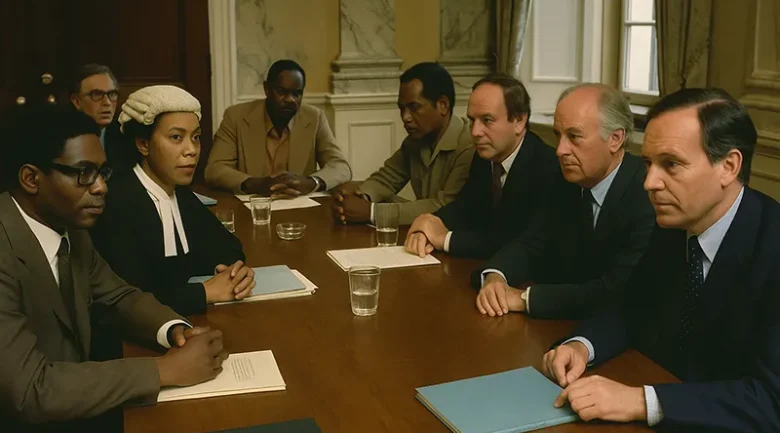
The Dominica Constitutional Conference held in May 1977 at Marlborough House in London marked a pivotal moment in Dominica’s modern political development. Convened less than a year after the historic Salisbury Declaration of 1976, the conference brought together key Dominican leaders and British officials to finalise the country’s post-colonial governance framework. It served as the legal and diplomatic forum where the future structure of the island’s independent statehood was debated, agreed upon, and shaped into a constitutional draft.
Premier Patrick Roland John led Dominica’s delegation, while Mary Eugenia Charles represented the opposition Dominica Freedom Party. The British government was represented through the Foreign and Commonwealth Office, which was overseen by parliamentary officials, including Evan Luard, then Under-Secretary of State for Foreign Affairs. This delegation’s makeup ensured government and opposition input, reflecting a broader commitment to political inclusiveness despite the underlying tensions between the ruling and opposition parties.
Core Debates on Governance and Representation
One of the central issues at the Dominica Constitutional Conference was the fundamental structure of the new state. The government proposed retaining the British monarch as Head of State, with a Governor-General serving as the official representative of the Crown in Dominica. In contrast, the opposition championed a republican system, seeking an executive president with direct authority and broader national representation.
While consensus was not reached on adopting a republic, agreement was struck to proceed with a constitutional monarchy model. The final structure included a unicameral House of Assembly, comprising 21 elected members and 9 nominated members, with the intent of balancing electoral representation and appointed expertise. The structure allowed the Prime Minister to advise on some appointments, while others would be reserved for opposition consultation, ensuring multiple voices in the legislative process.
The judiciary, public service, and fundamental rights were also discussed, though not in exhaustive detail. Many of these institutional elements were to be defined further within Dominica’s local parliamentary sessions and national consultations in the months following the London conference.
Consultation and Ratification Back Home
After the London meetings ended, the proposed draft constitution was returned to Dominica for further local scrutiny. Public consultations were held in several villages and towns, facilitated through town hall meetings, parliamentary debates, and media outreach. The government promoted the draft as a balanced document ensuring continuity and stability, while critics, particularly from the Dominica Freedom Party, argued it left too much executive power unchecked.
The legal draft underwent multiple revisions and was tabled before Dominica’s Legislative Assembly. By late 1977, a version acceptable to both local political forces and the British government had emerged. This would become the Dominica Constitution Order 1978, signed in the UK and brought into effect on November 3, 1978, the day Dominica became an independent state.
Legacy of the 1977 Conference
The Dominica Constitutional Conference holds historical significance not only for its immediate results but for the way it enshrined democratic negotiation in the country’s founding. While the meeting did not resolve all political disagreements, it set a national precedent for legal reform through structured consultation. The resulting Constitution remains in force today, albeit with several amendments over the decades to reflect evolving political realities.
The conference also solidified the reputations of key figures. Patrick John, despite later political turmoil, is remembered for his leading role in securing independence. Eugenia Charles, later Prime Minister, is noted for her rigorous push for checks and balances in executive governance. The conference remains a defining moment in Dominica’s path to sovereign governance.


