



Dreadlocks
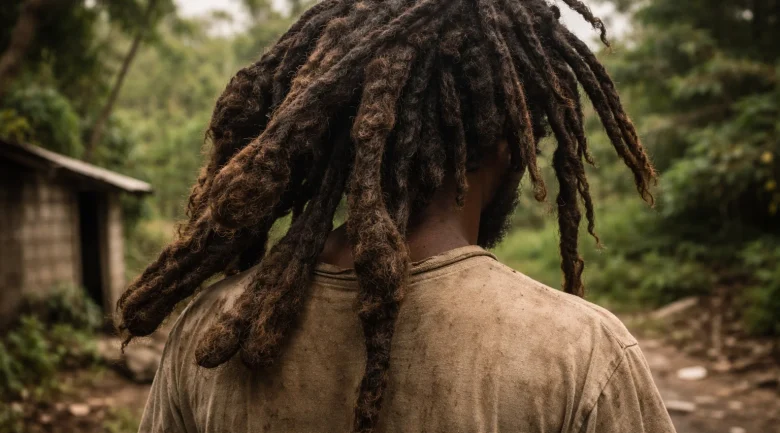
The history of dreadlocks in Dominica is bound closely to a period of intense social upheaval, spiritual awakening, and state-sponsored persecution. While dreadlocks are currently a common sight across the Nature Isle, worn by farmers, artists, and professionals alike, they were once the primary marker of an unlawful society. During the 1970s, the act of matting one’s hair into locks was a radical political statement, a rejection of the colonial Babylonian system in favour of a natural, Afrocentric identity. This aesthetic choice was not merely about fashion; it was the outward manifestation of a profound internal shift among youth seeking to redefine what it meant to be a person of African descent in a postcolonial Caribbean society.
The Emergence of the Dread Identity (1970–1974)
In the early 1970s, a movement of young Dominicans began to distance themselves from the traditional, Eurocentric social structures of the post-colonial state. Influenced by the Black Power movement and the growing Rastafari consciousness in Jamaica, these youth adopted dreadlocks as a symbol of their “Ital” (natural) lifestyle and their commitment to African redemption. For these individuals, dreadlocks were a covenant with nature. They abandoned the grooming standards imposed by the British-influenced school and church systems, viewing the comb and the razor as tools of colonial conformity.
This withdrawal was often both physical and symbolic. Many who wore locks moved into the island’s mountainous interior, establishing communal agricultural settlements. They sought to live off the land, far from the urban centres of Roseau and Portsmouth, which they viewed as corrupt and spiritually bankrupt. Interestingly, many of the early Dreads were highly educated youth, graduates of the prestigious O-Level and A-Level systems, who used their analytical skills to deconstruct the colonial state, eventually embracing the Rasta identity as the ultimate form of rebellion against a system they believed offered them certification but no true liberation.
The Dread Act and the Criminalization of a Hairstyle
The increasing visibility of locked youth in the mountains, coupled with rising tensions over land rights and political dissent, led to a period of moral panic among the island’s elite. This culminated in the passing of the Prohibited and Unlawful Societies and Associations Act of 1974, universally known as the Dread Act. This legislation effectively criminalised the wearing of dreadlocks. Under the Act, any person appearing to be a Dread (defined primarily by their hair) could be arrested without a warrant and held without bail.
The most notorious aspect of the legislation was Section 9, which provided immunity to any citizen who killed or injured a Dread found within a private dwelling. This led to a brutal era of state-sanctioned violence where young men were hunted in the forests. Many were forcibly “shorn” (had their locks cut) in public squares to strip them of their identity and mana. This was a form of ritual humiliation intended to break the movement’s spirit. Statistics from this era are chilling; estimates suggest that between 21 and 25 young men lost their lives during the enforcement of the Dread Act, with hundreds more facing detention or physical assault between 1974 and 1981.
Evolution and Current Social Status
The decade of conflict left deep scars on the Dominican psyche, but it also paved the way for the eventual acceptance of Rastafarianism. Following the repeal of the Dread Act on February 16, 1981, under the administration of Eugenia Charles, the perception of dreadlocks shifted from outlawry to cultural heritage. The social integration of the Dread was a slow but steady process that redefined the island’s national identity.
Currently, some of the island’s most successful organic farmers are members of the Rasta community. Their expertise in Ital farming is now seen as a vital asset to the nation’s food security and climate resilience goals. Furthermore, dreadlocked musicians and artisans have become global ambassadors for the Nature Isle, with the aesthetic becoming a core part of the island’s tourism branding as a destination for wellness and natural living. Today, dreadlocks are worn by individuals in the civil service, the legal profession, and the education sector, marking a complete reversal of the 1970s, when a person with dreadlocks would be barred from such institutions.
Statistical Context of the Transformation
The shift in the status of dreadlocks can be measured through the lens of institutional participation. In the 1970s, it was statistically impossible for a person with locks to hold a government post or attend a prestigious secondary school. Currently, national census and education reports indicate a diverse practitioner population.
- Agricultural Contribution: Rasta farmers currently manage a significant percentage of the island’s certified organic acreage.
- Educational Integration: Since the 1990s, there has been a steady increase in the number of students with locks graduating from the Dominica State College, formerly a space that would have been hostile to their appearance.
- Legal Precedents: Over the last 40 years, legal challenges across the Caribbean have solidified the right to wear dreadlocks as a matter of religious and cultural freedom, a direct evolution from the dark days of the 1974 Act.
Today, the locks are seen as a crown of resistance that blossomed into a pillar of national resilience. The transition from being “shot on sight” to being celebrated as a vital part of the Waitukubuli identity represents the true independence of the Dominican spirit.


References
-
1.
UNESCO: Cultural Heritage and the Rastafari Movement https://unesdoc.unesco.org/ark:/48223/pf0000138944
-
2.
Dominica After The Dread Act · History of The Rastafarians https://domfari.omeka.net/exhibits/show/rastahistory/after-the-dread-act
-
3.
Rasta Life - Zion Valley Dominica https://zionvalleydominica.wordpress.com/rasta-life/