

Leroy Etienne
Leroy Etienne’s political impact is rooted in Dominica’s most volatile era. As a prominent member of the Movement for a New Dominica (MND) and a figure in the Dread culture, he brought together radical political theory and the grounded reality of the Nonm Te during the 1970s. His activism was defined by a rejection of the post-colonial status quo and a commitment to land reform, which eventually placed him in the direct crosshairs of the state’s security apparatus.
The Ideological Genesis: From Student to Radical
Leroy Etienne emerged into the political spotlight during the late 1960s, a period defined by the global rise of Black Power and the local fallout from the Hoffman Affair. Like many of his contemporaries, including Desmond Trotter and Rosie Douglas, Etienne was disillusioned by the Edward LeBlanc and Patrick John administrations, which he viewed as maintaining the structures of British colonial rule under the guise of Associated Statehood.
Etienne became a key organiser for the MND, focusing specifically on mobilising youth in Roseau and agricultural workers in Saint George Parish. He was instrumental in the production and distribution of the radical paper Twavay, where he often argued for a cultural revolution to accompany political independence. His rhetoric was centred on the reclamation of African identity and the rejection of the Babylonian economic system that favoured foreign estate owners over local subsistence farmers.
The 1974 Carnival and the Legal Crucible
The turning point in Etienne’s life occurred during the 1974 Carnival festivities. Following the shooting of American tourist John Jirasek, the government launched a massive crackdown on the MND leadership. While Desmond Trotter was the primary figure charged and convicted of the murder, Leroy Etienne was deeply entangled in the legal and political aftermath.
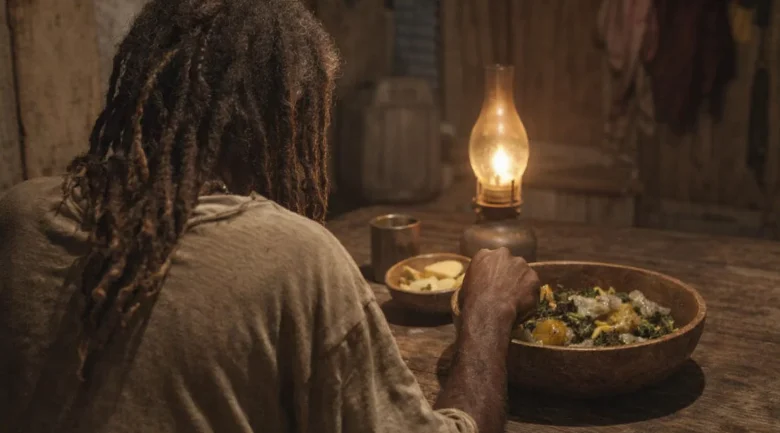
The state used the incident to frame the entire Dread movement, of which Etienne was a visible leader, as a terrorist organisation. This period of intense surveillance and harassment culminated in the passage of the Prohibited and Unlawful Societies and Associations Act (Dread Act). Etienne, refusing to trim his hair or abandon his “I-tal” lifestyle, became a symbol of the movement’s resilience. Unlike those who chose a more moderate path to avoid the draconian penalties of the Act, Etienne remained a forest-dweller and a political agitator, navigating the precarious space between the hills of Fond Figues and the urban underground.
The Battle for the Hills: Resistance and Survival
During the mid-to-late 1970s, Etienne was a primary organiser of the communal camps in the island’s interior. These camps were designed to be self-sufficient agricultural units, but the government viewed them as paramilitary training grounds. Etienne was frequently cited in police reports of the era as a “dangerous radical” who facilitated the movement of supplies and information between the rural insurgents and the international solidarity networks.
His leadership was characterised by a specific focus on Land Sovereignty. Etienne argued that as long as the best lands remained under the control of the Crown or foreign corporations, the Dominican people would never be truly free. This stance made him a hero to the dispossessed youth but an enemy of the landed elite who supported the Dominica Defence Force (DDF). His ability to evade capture during the search-and-destroy missions of the late 70s added a layer of folk-hero status to his reputation.
Later Years and Historical Legacy
Following the repeal of the Dread Act in 1981 and the restoration of constitutional norms, Leroy Etienne transitioned into a role as a cultural elder. In the years leading up to the present day, his contributions have been re-evaluated by historians who view the 1970s not as a period of criminality, but as a necessary, albeit violent, adjustment of the national identity.
Etienne remained a staunch advocate for the rights of the Rastafarian community, often appearing at symposiums to discuss the trauma inflicted by the state during the Dread era. His life stands as a testament to the power of unwavering conviction in the face of systemic oppression. In the current political discourse of the Commonwealth of Dominica, the name Leroy Etienne is synonymous with the struggle for land, dignity, and the uncompromising truth of the post-independence generation.


References
-
1.
Workers Vanguard No. 94 (January 1976) https://www.marxists.org/history/etol/newspape/workersvanguard/1976/0103_02_04_1976.pdf