

Desmond Trotter (Ras Kabinda Habre Selassie)
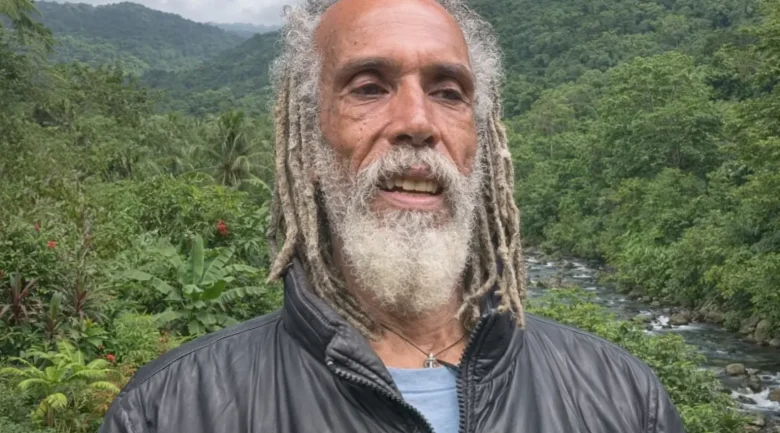
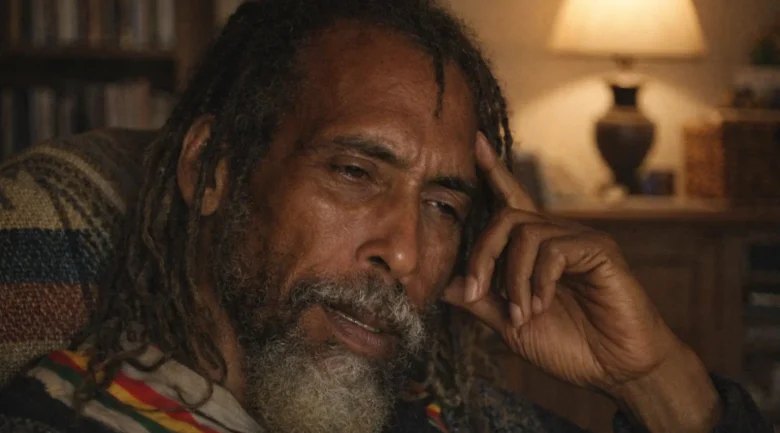
Desmond Trotter, now known by his spiritual name Ras Kabinda Habre Selassie, stands as one of the most consequential and polarising figures in Dominican history. His life traces a rare and uninterrupted arc from youthful rebellion, through state prosecution and international controversy, to spiritual repatriation and elderhood in Africa. Few Dominicans have so deeply shaped debates on justice, power, resistance, and identity across both national and global stages.
His story cannot be reduced to a single episode or legal case. It unfolds instead as a continuous engagement with authority, from colonial classrooms and post-colonial institutions to prisons, protest movements, and finally the Rastafarian homeland in Ethiopia. Across five decades, Trotter’s life has remained anchored in ideas of dignity, self-determination, and moral opposition to what he and his supporters understood as systemic oppression.
Early life and formative years (1953–1968)
Desmond was born on September 15, 1953, in Roseau. He was raised at 28 Great Marlborough Street, in the heart of the capital, at a time when the island was undergoing significant political and social change. The final years of British colonial rule coincided with rising expectations of autonomy, yet daily life for many working-class families remained shaped by rigid authority structures and economic inequality.
His childhood unfolded amid these tensions. Roseau in the 1950s and 1960s was a compact but intensely political space, where trade unionism, church authority, and emerging party politics intersected in visible ways. From an early age, Trotter observed how power operated at close range, not as an abstraction but as a lived experience.
He attended St. Mary’s Academy, one of Dominica’s most prestigious secondary institutions. There, his intellectual development accelerated, but so did his resistance to authority. A widely cited incident during his teenage years involved a teacher physically assaulting a student in front of others. This moment became decisive. It crystallised his view that discipline, religion, and colonial hierarchy were intertwined instruments of control.
In response, Trotter helped organise student opposition and walkouts, actions that were unprecedented at the school and rare in Dominican secondary education at the time. He began reading extensively, gravitating toward the works of Kwame Nkrumah, Frantz Fanon, Amílcar Cabral, and other thinkers associated with African liberation and anti-colonial struggle. These texts shaped a political consciousness that rejected incremental reform in favour of structural change.
Entry into public service and political awakening
After leaving school, Trotter entered the civil service, working as a Votes Clerk in the Traffic Department of the Dominica Police Force. His duties involved receiving licence fees and processing records, placing him within the operational core of the state. This employment offered financial stability, but it also exposed him to the bureaucratic mechanics of authority that he increasingly questioned.
Outside working hours, his political activity intensified. By the early 1970s, he became a central figure in the Movement for a New Dominica, a radical organisation that rejected both the Dominica Labour Party and the Dominica Freedom Party. The movement drew inspiration from Caribbean Black Power activism and emphasised rural empowerment, economic justice, and racial consciousness.
Trotter’s primary contribution lay in political communication. He edited and published several influential texts that circulated widely despite limited resources. Twavay, written partly in Creole, challenged elite land ownership and economic concentration. Black Cry introduced Pan-African ideas to Dominican youth, while Manicou Movements advanced more militant critiques of state power. These publications established him as the intellectual voice of a uniquely Dominican expression of Rastafari-inflected political resistance, often described locally as Dread consciousness.
Escalation and the 1974 murder case
By 1974, relations between the state and radical groups had deteriorated sharply. The Patrick John administration increasingly viewed Dread activists as an existential threat. Surveillance intensified, public rhetoric hardened, and the political climate became volatile.
During Carnival in February 1974, an American tourist, John Albert Jirasek, was shot and killed in Roseau. Trotter was arrested and charged with the murder. The case immediately drew intense attention.
The prosecution alleged that Trotter confessed to a witness, identified in court as Camella Lawrence, and that the murder weapon, a .32 revolver, was found in a bucket he was carrying. Trotter denied all allegations, asserting that he had been selected as a scapegoat due to his political prominence. At the time, he claimed to be on medical leave, suffering from bronchitis and a serious burn injury to his foot.
His defense team included prominent regional figures, notably Maurice Bishop and Brian Alleyne. The defence challenged the credibility of witness testimony and raised questions about the physical feasibility of the prosecution’s narrative. Despite these efforts, Trotter was convicted in November 1974 and sentenced to death by hanging.
The Dread Act and international mobilisation
The conviction intensified domestic and international outrage. Shortly thereafter, the government enacted the Prohibited and Unlawful Societies and Associations Act of 1974, widely known as the Dread Act. The legislation effectively criminalised Rastafarian identity, authorised lethal force against suspected Dreads, and penalised anyone who sheltered or assisted them.
The law provoked condemnation abroad. The Free Desmond Trotter campaign formed rapidly, with support from activists, academics, and organisations across the Caribbean, North America, and Europe. Figures such as Walter Rodney publicly supported the campaign. Amnesty International and other human rights groups raised concerns about the trial and broader repression.
The international response made execution politically untenable. While the conviction was upheld on appeal, Trotter’s sentence was commuted to life imprisonment. He remained incarcerated at Stock Farm State Prison as tensions within Dominican society continued to mount.
The 1979 uprising and legal resolution
Between 1974 and 1979, Dominica entered a period of escalating unrest. Economic hardship, political repression, and growing resistance culminated in the May 29th 1979 Uprising, which led to the collapse of the Patrick John administration.
During the disorder, Trotter escaped from prison and sought refuge in the island’s interior. When the Interim Committee for National Salvation assumed authority, his case was revisited. He was subsequently granted a full pardon and acquittal, bringing an official end to one of the most controversial legal proceedings in the island’s history.
Repatriation and life in Ethiopia
Following his release, Trotter spent time in the United Kingdom before pursuing repatriation, a central Rastafarian aspiration. In 1992, he relocated to Shashamane, Ethiopia, adopting the name Ras Kabinda Habre Selassie.
In Shashamane, he became a respected elder within the Rastafarian community. His life there has included herbal practice, farming, and sustained advocacy related to land rights and community recognition. He has been involved in negotiations with Ethiopian authorities regarding land tenure for repatriates and has hosted Caribbean visitors, scholars, and officials seeking to understand the Rastafari experience in Africa.
Legacy and historical weight
Desmond Trotter’s life occupies a singular position in Dominican history. He remains a figure through whom questions of justice, state power, resistance, and spiritual identity are continually revisited. His survival of capital punishment, endurance through imprisonment, and eventual resettlement in Africa have ensured that his story remains central to discussions of Caribbean political memory and Rastafarian history.
Today, Ras Kabinda Habre Selassie resides in Shashamane, Ethiopia, continuing to live according to the principles that shaped his youth. His life narrative stands not as myth or abstraction, but as a documented passage through some of the most turbulent moments in Dominica’s modern past.


References
-
1.
The Desmond Trotter Case https://domfari.omeka.net/exhibits/show/desmond_trotter/articles
-
2.
Desmond Trotter Appellant v The Queen Respondent [ECSC] https://dominica.vlex.com/vid/desmond-trotter-appellant-v-807488901
-
3.
Desmond Trotter | - Dread Rastafari and Ethiopia https://dreadrastafariandethiopia.wordpress.com/tag/desmond-trotter/
-
4.
(PDF) THE WAR ON DREADS IN DOMINICA https://www.academia.edu/44917135/THE_WAR_ON_DREADS_IN_DOMINICA_FROM_DEMOCRACY_TO_PAPADOCRACY_1