

Free Desmond Trotter Campaign
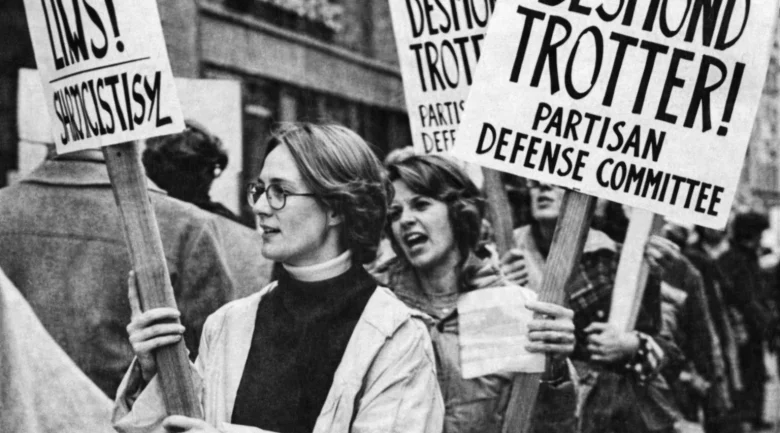
The Free Desmond Trotter Campaign stands as a landmark human rights struggle, marking a collision between Black Power activism and a state system intent on suppressing the emerging Rastafarian “Dread” subculture within the historical record of Dominica. The campaign was not merely a legal defence for one man; it was an international movement that exposed the judicial biases of the post-colonial Caribbean and eventually forced a total re-evaluation of the island’s legislative approach to dissent.
The Case of John Jirasek and the 1974 Trial
The genesis of the campaign lies in the events of the 1974 Carnival in Roseau. On the night of the festivities, John Jirasek, a white American tourist, was fatally shot. The administration of Prime Minister Patrick John, already under pressure from landowners to curb the Dread insurgency, quickly moved to link the murder to the Movement for a New Dominica (MND), a radical organisation advocating for land reform and Afrocentric consciousness.
Desmond Trotter (later known as Ras Kabinda), a 22-year-old civil servant and editor of the radical paper Twavay, was arrested alongside Roy Mason. Trotter was the intellectual voice of the MND, known for his critiques of the Babylonian colonial remnants in the Dominican government. His arrest was immediately viewed by his peers as a frame-up intended to decapitate the leadership of the movement.
The Prosecution’s Case and the Trial
The trial of The Queen v. Desmond Trotter and Roy Mason was the most politically charged event of the decade. The prosecution rested almost entirely on two pillars: a weapon allegedly found in Trotter’s possession and the testimony of a key witness.
- The Witness Testimony: The primary witness was Camilia Lawrence (Francis), a young woman who claimed she was with Trotter when he allegedly boasted about killing a “white man.” The defense, led by the young Grenadian lawyer Maurice Bishop (who would later lead the Grenadian Revolution), argued that Lawrence was coerced by the police into providing a false statement.
- The Murder Weapon: Police affidavits claimed that a .32 revolver was found in a bucket Trotter was carrying. Trotter maintained that the bucket had been out of his possession for several hours and that the weapon had been planted by the Special Service Unit (SSU) to ensure a conviction.
- The Verdict: While Roy Mason was found not guilty, Desmond Trotter was convicted and sentenced to hang. The announcement of the death penalty sparked riots in Roseau and led to the formation of the first local defense committees.
The Internationalisation of the Campaign
Following the death sentence, the local Free Desmond Trotter efforts quickly expanded into a global phenomenon. The campaign became a rallying point for the Pan-African movement, socialist organisations in Europe, and human rights defenders who saw Trotter as a prisoner of conscience.
Key Pillars of the Frame-Up Theory
The campaign organised its messaging around three critical failures in the Dominican judicial process that suggested a political conspiracy:
- The Witness Recantation: In 1976, while Trotter was on death row, Camilia Lawrence fled to Antigua and issued a formal recantation. She stated that the Dominica police had threatened her with prosecution for an unrelated crime unless she testified against Trotter.
- The Privy Council Rejection: Despite the witness recantation, the British Privy Council refused Trotter leave to appeal on technical grounds, arguing that the new evidence should be handled by the local Dominican executive rather than the court. This refusal sparked international outrage over the colonial legal structures of the Associate State.
- The 10,000 Signature Petition: A massive grassroots drive in Dominica managed to gather over 10,000 signatures, nearly a fifth of the island’s population at the time, demanding a stay of execution and a new trial.
The Coalition of Solidarity
The campaign was sustained by a diverse network of international organisations that pressured the Patrick John administration to commute the sentence. This coalition provided the funding for legal appeals and ensured the case remained in the global headlines.
- Amnesty International (AI): AI designated Trotter a prisoner of conscience and included his case in their 1975 and 1977 global reports. They argued that the death penalty was being used as a tool of political suppression rather than a deterrent for crime.
- Caribbean Labour Solidarity (CLS): Based in London, this group, along with the Caribbean People’s Solidarity Campaign, organized pickets outside the Dominica High Commission in the UK. They distributed pamphlets titled Desmond Trotter in Hell to highlight the brutal conditions of his imprisonment.
- Regional Leaders: Figures like Maurice Bishop and Rosie Douglas used their international platforms to frame Trotter as a victim of neo-colonial fascism, linking his case to the broader struggle for Caribbean independence.
The Hurricane David Escape and the Legacy
The campaign reached an unexpected climax on August 29, 1979, when Hurricane David, one of the most powerful storms in history, devastated the island. The prison in Roseau was partially destroyed, and in the ensuing chaos, Desmond Trotter and several other prisoners walked out of the facility.
Unlike common fugitives, Trotter remained a figure of public interest. By then, the Patrick John government had fallen due to the May 29th 1979 Uprising, and the interim government was less inclined to hunt down a political martyr. Trotter eventually returned to society, having seen his death sentence commuted to life imprisonment earlier in the decade due to the relentless international pressure.
The Impact on Dominican Law
Success for the Free Desmond Trotter Campaign was closely tied to the 1981 legislative move that abolished the Dread Act. The campaign demonstrated that the state’s attempt to criminalise the Rastafarian identity through the judicial system was not only a violation of human rights but also a catalyst for international condemnation.
In the current legal environment, the Trotter case is frequently cited in the Commonwealth of Dominica as a cautionary tale about the use of emergency powers and the dangers of witness-based prosecutions in high-stakes political trials. The move toward digital record-keeping and forensic accountability in the 2020s is seen by many as a direct historical response to the frame-up culture that defined the 1970s.


