



Pneumonia in Dominica
Pneumonia remains a critical public health concern within the primary healthcare framework of the Commonwealth of Dominica. Characterised as an acute respiratory infection that inflames the alveolar air sacs in one or both lungs, it is a significant driver of morbidity, particularly among vulnerable populations such as infants, the elderly, and individuals with underlying non-communicable diseases (NCDs). While pneumonia often occurs as a severe complication of circulating seasonal viruses, it is actively managed in Dominica through decentralised clinical surveillance, national immunisation programs, and integrated protocols supervised by the Ministry of Health, Wellness and Social Services.
Etiology and Environmental Drivers
The clinical presentation of pneumonia on the island is classified into community-acquired pneumonia (CAP) and hospital-acquired pneumonia. In Dominica, the primary biological agents responsible for the condition reflect both regional epidemiological patterns and localized environmental triggers:
- Bacterial Pathogens: Streptococcus pneumoniae remains the primary bacterial agent responsible for severe community-acquired cases. Other observed bacterial causes include Haemophilus influenzae type b (Hib).
- Viral Pathogens: Viral pneumonia frequently develops secondary to seasonal respiratory infections. The primary drivers include Influenza A, Influenza B, Respiratory Syncytial Virus (RSV), and SARS-CoV-2.
- Climate Dependencies: Case distributions exhibit definitive fluctuations aligned with Dominica’s microclimates and seasonal shifts. Pronounced spikes in acute respiratory infections occur during the wet season (June to November), where elevated humidity and storm-related indoor crowding facilitate droplet transmission. Furthermore, the dry season increases exposure to Saharan dust incursions, which are a prominent respiratory irritant, exacerbating underlying asthma or chronic obstructive pulmonary disease (COPD) and predisposing patients to secondary bacterial pneumonia.
Epidemiological Surveillance and Vulnerable Groups
Public health data compiled by the Health Information Unit (HIU) indicates that while pneumonia affects all demographics, morbidity and mortality are heavily concentrated within specific high-risk cohorts.
Neonatal and Pediatric Vulnerability
Historically, assessments by international partners such as UNICEF underscore that neonatal pneumonia, alongside birth asphyxia and prematurity, represents an area of ongoing focus within infant mortality statistics. The risk is highest among children aged 2 to 59 months. Pediatric management relies heavily on early detection of severe acute respiratory infection (SARI) clinical markers by community nurses.
Geriatric and Comorbid Demographics
Among adults, severe pneumonia hospitalizations are predominantly observed in individuals over the age of 65. The clinical prognosis is heavily influenced by the presence of comorbidities, notably diabetes mellitus, chronic cardiovascular disease, and chronic respiratory illness. Statistical tracking establishes that severe influenza-like illnesses (ILI) progressing to pneumonia account for a steady baseline of seasonal hospital admissions at the main referral facility.
Institutional Framework and Clinical Management
The management of pneumonia in Dominica is fully integrated into the country’s decentralised primary healthcare system, which is divided into seven structural health districts.
Primary and Secondary Triage
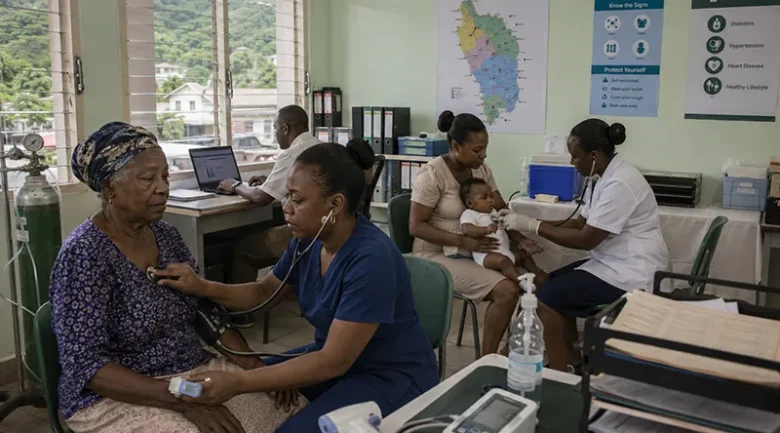
Initial presentations of acute respiratory infections are evaluated at the network of 52 community health centres and type II clinics. District nurses utilise standardised clinical protocols to evaluate respiratory rates, oxygen saturation levels, and chest retractions to differentiate between mild upper respiratory infections and pneumonia. Cases displaying signs of respiratory distress, severe hypoxemia, or systemic sepsis are immediately referred to secondary care.
Clinical Infrastructure
Advanced clinical management, requiring supplemental oxygen therapy, intravenous antibiotics, and continuous monitoring, is centralized at the Dominica China Friendship Hospital (DCFH) in Roseau. Diagnostic confirmation relies on localized radiographic imaging (chest X-rays) and laboratory assessments.
Previously, molecular diagnostic capabilities required shipping specialized samples to the Caribbean Public Health Agency (CARPHA) in Trinidad, resulting in structural reporting delays. Currently, the laboratory infrastructure at the DCFH utilizes multiplex polymerase chain reaction (PCR) panels, allowing for the rapid, simultaneous identification of viral pathogens (such as Influenza and RSV) directly on-island, which directly informs targeted clinical interventions.
Public Health Interventions and Prevention
The Ministry of Health, Wellness and Social Services utilizes a multi-tiered preventative strategy combining routine immunizations with civic education spearheaded by the Health Promotion Unit.
National Immunisation Registry (NIR) and EPI
The primary mechanism for reducing bacterial pneumonia incidence is managed via the Expanded Programme on Immunisation (EPI), launched in Dominica in 1977. All vaccine monitoring is tracked digitally through the National Immunisation Registry (NIR), a specialized sub-module of the District Health Information Software 2 (DHIS2) platform.
The primary clinical tracking metrics and preventative shifts include:
- The Hexavalent Transition: The Ministry of Health retired the traditional pentavalent series in favour of the Hexavalent (6-in-1) vaccine, which integrates protection against Diphtheria, Tetanus, Pertussis, Hepatitis B, Polio, and Haemophilus influenzae type b (Hib). Following its roll-out across the 52 health centres, the NIR recorded a 12% increase in schedule compliance among infants in rural health districts.
- PCV-20 Integration: To address seasonal spikes in respiratory illnesses, Dominica became one of the first OECS nations to adopt the 20-valent Pneumococcal Conjugate Vaccine (PCV-20). This vaccine is administered as a “Life-Course” priority to both infants and seniors aged 65 and older.
- National Vaccination Targets: Public health outreach aims to maintain a primary national vaccine coverage rate of 95% across all antigens. Currently, general coverage stands at 90%, with targeted catch-up programs addressing localized immunity gaps.
National Influenza Vaccination Campaign
To mitigate viral-induced pneumonia among adults, the government executes an annual National Influenza Vaccination Campaign during the final quarter of the year, preceding peak regional tourism and festival periods. The vaccine is distributed free of charge across all health districts, with prioritized implementation for healthcare professionals, pregnant women, the elderly, and individuals living with non-communicable diseases.
Integrated Surveillance Guidelines
To strengthen national capabilities, the Ministry of Health collaborates directly with the Pan American Health Organization (PAHO) to implement National Integrated Surveillance Guidelines. These protocols form a core component of the centralized Digital Health Library infrastructure, ensuring that syndromic reporting of pneumonia, influenza, and other emerging respiratory pathogens transitions into a highly responsive, digitally monitored system.
References
-
1.
Official Dominica Health Climatic Bulletin - 2026 https://weather.gov.dm/images/docs/health_climatic_bulletin_v1i1.pdf
-
2.
DR. CORY: Fight pneumonia, save a child https://dominicanewsonline.com/news/homepage/columns/dr-cory/dr-cory-fight-pneumonia-save-child/
-
3.
Saharan dust and respiratory health: Understanding the link between airborne particulate matter and chronic lung diseases (Review) https://pmc.ncbi.nlm.nih.gov/articles/PMC11210815/
-
4.
Invasive pneumococcal disease in Latin America and the Caribbean: Serotype distribution, disease burden, and impact of vaccination. A systematic review and meta-analysis https://pmc.ncbi.nlm.nih.gov/articles/PMC11210815/
-
5.
Burden and serotype distribution of invasive Pneumococcal disease among high-risk patients from Latin America and the Caribbean: A systematic review and meta-analysis https://www.sciencedirect.com/science/article/pii/S1201971225004692