




Dominica Defence Force
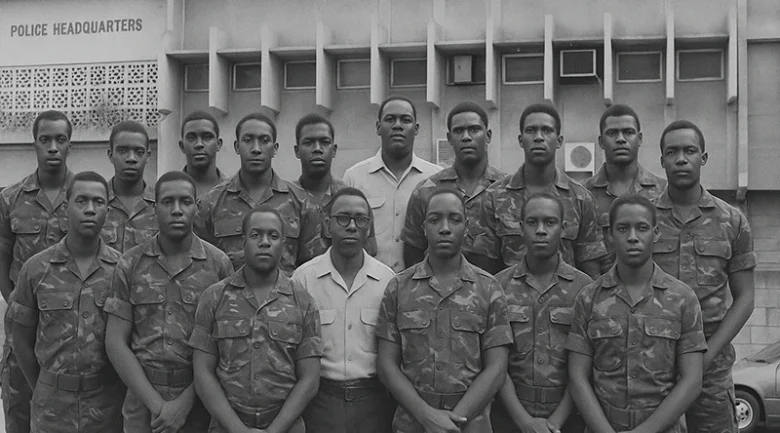
The Dominica Defence Force (DDF) played a key role in Dominica’s transition into self-governance and post-independence stability. Although now defunct, the DDF represented the island’s early aspirations to establish a national security apparatus based on discipline, ceremonial pride, and self-reliance. From its re-establishment in 1967 to its disbandment in 1981, the DDF was at the heart of significant national events, bridging the military traditions of colonial history with the realities of modern Caribbean governance.
Dominica Defence Force, Origins and Re-establishment (1967)
Dominica’s earliest militias date back to the colonial period, when local volunteers were organized to support the British administration. However, the modern Dominica Defence Force was officially re-established in 1967 under Premier Edward LeBlanc as part of Dominica becoming an Associated State of the United Kingdom, Major Lyndon Earle Johnson was appointed as Commandant and tasked with organizing and training a formal unit to represent the island in national and regional affairs.
- The DDF was modelled after British military structures.
- Uniforms were produced locally.
- Major Johnson led early training with later assistance from British military advisors.
- The reformation of the DDF coincided with Dominica’s growing emphasis on self-governance and local leadership.
Structure, Roles, and Responsibilities
The DDF was a small but fully functional military unit with both ceremonial and operational duties. While not a large-scale armed force, it held symbolic importance in the nation’s development.
Key responsibilities included:
- Participating in ceremonial events, including parades and state occasions.
- Supporting disaster response and civil defense efforts.
- Offering auxiliary security alongside the Commonwealth of Dominica Police Force.
- Overseeing and training members of the Dominica Cadet Corps to foster discipline and youth leadership.
The DDF also collaborated with regional partners and played a supportive role in emergency and civil security situations, operating closely with units such as the Dominica Special Service Unit and Coast Guard.
Coup Attempts and Disbandment (1981)
The dissolution of the DDF came amid political unrest. In 1981, two serious incidents undermined its credibility:
- Operation Red Dog: A failed foreign-led coup attempt aimed at restoring former Prime Minister Patrick John to power. This incident involved American and Canadian mercenaries and garnered international headlines.
- Internal Coup Attempt: Led by Major Frederick Newton, the then-head of the DDF. This domestic plot involved an attack that resulted in the death of a police officer.
These events deeply shook public confidence and led Prime Minister Dame Eugenia Charles to disband the Dominica Defence Force permanently in 1981. Major Newton was later convicted and executed—Dominica’s last use of the death penalty.
Aftermath and Present-Day Security
Since 1981, Dominica has remained one of the few countries globally without a standing army. National defense and security responsibilities now fall entirely to:
- The Commonwealth of Dominica Police Force
- The Special Service Unit (SSU)
- The Dominica Coast Guard
Additionally, Dominica is a member of the Regional Security System (RSS), a Caribbean alliance that allows for shared defense and mutual aid in times of regional crisis.
Legacy and National Memory
Though short-lived, the Dominica Defence Force left a meaningful imprint. Its existence symbolized a step toward full sovereignty and national organization during a transformative era. Veterans such as Major Earle Johnson remain respected for their service, particularly in the areas of youth leadership, civil preparedness, and national pride.
Remnants of the DDF’s spirit endure through ceremonial traditions maintained by the Cadet Corps and the enduring commitment to national resilience within Dominica’s civic institutions.


