



Anopheles Argyritarsis
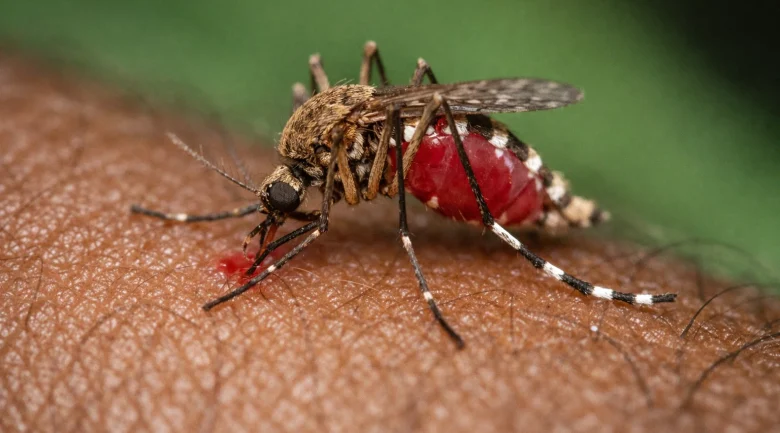
The Anopheles argyritarsis is a species of mosquito within the family Culicidae, notably recognized as one of the few Anopheles species present in the Commonwealth of Dominica. Unlike its coastal relative, Anopheles aquasalis, which thrives in brackish water, Anopheles argyritarsis is primarily associated with freshwater environments. This species is considered a secondary or potential malaria vector for Dominica; however, it has not facilitated local transmission of the disease since the island was declared malaria-free in the 1960s.
Taxonomy and Identification
Anopheles argyritarsis belongs to the Nyssorhynchus subgenus of the genus Anopheles. It is part of a complex of species that are morphologically similar, requiring precise entomological examination for definitive identification.
- Physical Characteristics: The adult is characterized by a dark body with light-colored spots on the wings. A defining feature of this species is the presence of snowy-white scales on the last three segments of the hind tarsi (the feet of the mosquito), which distinguishes it from many other local Anopheles species.
- Resting Position: Like all anophelines in Dominica, the adult rests with its proboscis, head, and abdomen in a straight line at an angle to the surface, appearing to stand on its head.
Habitat and Ecological Distribution
In Dominica, Anopheles argyritarsis is more widely distributed across the interior than the salt-tolerant A. aquasalis. It is typically found in areas with clean, slow-moving or stagnant freshwater.
- Breeding Sites: Common larval habitats include the edges of rivers, sunlit pools, hoofprints, and irrigation ditches. They prefer water with some emergent vegetation or algae, which provides protection from predators.
- Altitudinal Range: This species can inhabit higher elevations than many other mosquitoes, occasionally found in the foothills of the Northern Forest Reserve and the Morne Trois Pitons National Park.
- Environmental Preference: It is generally a sun-loving species, with larvae often found in water bodies exposed to direct sunlight rather than deep forest shade.
Public Health and Historical Context
While Anopheles argyritarsis is a known vector of malaria (Plasmodium vivax) in parts of Central and South America, its role in Dominica’s medical history was secondary to other species.
Historical Status
During the pre-eradication era in Dominica (prior to 1950), A. argyritarsis was monitored by colonial health authorities. While it was found in proximity to human dwellings in rural areas, it did not exhibit the same high biting density as coastal vectors.
Current Monitoring
The Ministry of Health, Wellness and Social Services continues to monitor the presence of this species through the Vector Control Unit.
- Vector Competence: The species remains competent to carry malaria, meaning that if an infected person (an imported case) is bitten by A. argyritarsis in Dominica, the mosquito could theoretically transmit the parasite to another person.
- Surveillance Data: Routine larval dipping surveys in rural communities frequently identify A. argyritarsis in agricultural drainage systems.
| Characteristic | Anopheles argyritarsis | Anopheles aquasalis |
| Water Type | Fresh (Sunlit) | Brackish (Swampy) |
| Dominican Range | Interior/Inland | Coastal/Estuarine |
| Malaria Status | Potential Vector | Historical Primary Vector |
| Abdominal Tip | White hind tarsi | Darker hind tarsi |
Behavior and Control
Anopheles argyritarsis is primarily crepuscular, with peak activity occurring just after sunset. In Dominica, it is observed to be facultative in its feeding habits, meaning it will feed on both humans and domestic animals (cattle and dogs), depending on availability.
Control Measures:
In line with the Standards for public health, the government of Dominica employs the following for freshwater anophelines:
- Source Reduction: Clearing vegetation from the edges of streams and drains near residential areas to eliminate larval shelters.
- Biological Control: Introduction of native predatory insects and fish in permanent freshwater pools.
- Surveillance: GPS mapping of breeding sites to predict population surges following heavy rainfall events.


References
-
1.
1966 study by Stone and Knight: Mosquitoes of Dominica https://www.govinfo.gov/content/pkg/GOVPUB-SI-PURL-gpo19184/pdf/GOVPUB-SI-PURL-gpo19184.pdf