




The National Medical Laboratory has introduced in-country polymerase chain reaction (PCR) testing for leptospirosis, a major development expected to significantly strengthen Dominica’s disease surveillance and public health response capabilities.
The Ministry of Health, Wellness and Social Services announced that the new testing service became operational on June 21, 2026, allowing healthcare providers to diagnose leptospirosis cases in real time without having to send samples overseas for analysis. Health officials say the advancement will improve the speed and accuracy of diagnosis while supporting earlier treatment and intervention.
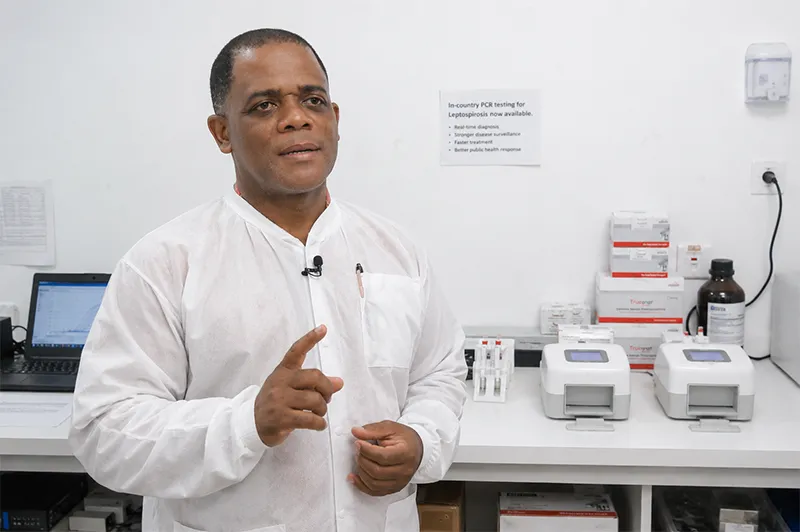
Laboratory Superintendent Eric Carbon described the implementation of leptospirosis PCR testing as an important milestone in the modernization of laboratory services in Dominica.
According to Carbon, the service has been made possible through the introduction of a mobile PCR testing platform, which has substantially expanded the National Laboratory’s diagnostic capabilities.
“The speed of detection and in real time will allow us to have results in a very short order. So these are very important developments that the National Lab has undergone,” Carbon explained.
Health officials noted that timely diagnosis is critical in ensuring appropriate patient management, reducing complications and preventing the further spread of infectious diseases. The introduction of local testing is also expected to enhance the country’s capacity to respond rapidly to outbreaks and emerging public health threats.
The National Laboratory indicated that additional diagnostic services are also being developed. These include PCR testing for vaccine-preventable diseases such as measles, expanded gastroenteritis testing for varicella, and additional respiratory virus testing to include Respiratory Syncytial Virus (RSV). Existing PCR testing already covers diseases such as dengue, chikungunya, Zika, Oropouche virus, influenza, COVID-19, mpox and tuberculosis.
Carbon encouraged medical practitioners at both primary and tertiary healthcare facilities to continue submitting specimens from suspected cases of communicable diseases to support ongoing surveillance efforts.
He also urged members of the public, particularly farmers, to remain vigilant during the hurricane season. Carbon noted that leptospirosis, which is commonly transmitted through contact with water contaminated by the urine of infected animals, including rodents, poses an increased risk during periods of heavy rainfall and flooding.
The expansion of PCR testing services forms part of the Ministry of Health’s broader investment in modern laboratory diagnostics aimed at improving national preparedness and strengthening Dominica’s public health system.
This article is copyright © 2026 DOM767