



Striped Dolphins in Dominica
The striped dolphin is a truly spectacular cetacean known for performing dazzling, high-energy flips out in the deep blue sea! These beautiful animals are a regular part of the rich marine life surrounding the Commonwealth of Dominica, specifically hunting across the deep underwater trenches of our offshore Exclusive Economic Zone (EEZ). While local boat tours spend most of their time looking for giant resident sperm whales near the coast, heading further off the western shores gives lucky travelers a rare chance to see these colorful open-ocean speedsters playing in the waves.
Taxonomy and Physical Characteristics
The striped dolphin belongs to the family Delphinidae and is closely related to other regional small odontocetes (toothed whales) in the genus Stenella, such as the pantropical spotted dolphin (Stenella attenuata) and the spinner dolphin (Stenella longirostris).
Morphological Description
- Dimensions and Build: Striped dolphins possess a streamlined, moderately robust body. Regionally, adults typically reach lengths of 2.0 to 2.5 meters and weigh between 110 to 160 kilograms, with males averaging slightly larger than females.
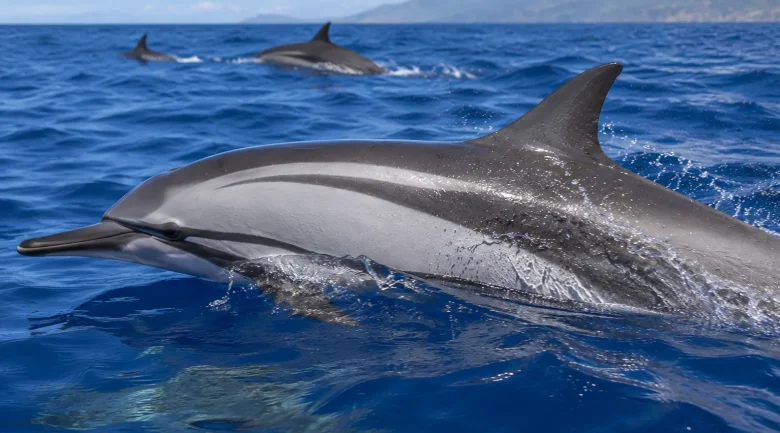
- Distinctive Striping: The species is defined by its complex lateral color patterns. A dark blue-grey or brownish-grey cape covers the dorsal surface, while the ventral side ranges from white to light pink. Two prominent, dark dark-grey or black stripes originate from the eye: one extends downward along the flank to the flipper insertion point, while the second runs continuously along the side toward the anus.
- Cranial Features: The beak is prominent, slender, and sharply demarcated from the sloping melon (forehead). The jaw contains 40 to 50 small, curved teeth on each side of both the upper and lower jaws, specialized for grasping slippery prey.
- Appendages: The species has a distinct, falcate (curved) dorsal fin located mid-back and dark, narrow flippers that taper to a point.
Behavior and Foraging Ecology in Dominican Waters
The bathymetry of Dominica’s western coast is defined by a narrow continental shelf that rapidly descends into deep underwater canyons, providing an optimal habitat for pelagic open-ocean species relatively close to land.
Social Dynamics and Locomotion
Striped dolphins are highly gregarious, traveling in cohesive, fast-moving schools or pods that typically range from 10 to several dozen individuals in Caribbean waters, though open-ocean herds can number in the hundreds. They exhibit spectacular aerial acrobatics, including high-arching leaps, somersaults, and “roto-tailing” (vigorous tail-spinning during jumps). When disturbed or traveling at speed, an entire pod may engage in synchronized breaching, creating significant surface spray. While they occasionally associate with other regional cetaceans, they are generally less prone to prolonged bow-riding on small vessels compared to bottlenose or spotted dolphins.
Diet and Deep-Water Foraging
Stenella coeruleoalba is a specialized predator feeding primarily on mesopelagic organisms. Its diet consists of:
- Small mesopelagic fish (predominantly lanternfish of the family Myctophidae)
- Oceanic squids (families Histioteuthidae and Ommastrephidae)
- Pelagic crustaceans
The species utilizes advanced echolocation to forage at depths between 200 and 700 meters. Foraging activity intensifies during nocturnal periods, coinciding with the vertical migration of mesopelagic prey toward upper ocean layers.
Conservation Status and Regulatory Protections
Globally assessed as Least Concern on the IUCN Red List of Threatened Species, regional sub-populations of striped dolphins face localized anthropogenic threats within the Eastern Caribbean.
Regional Treaties and Maritime Agreements
Dominica administers protections for pelagic cetaceans through several international environmental frameworks:
- The SPAW Protocol: Under Annex II of the Specially Protected Areas and Wildlife Protocol of the Cartagena Convention, to which Dominica is a state party, the striped dolphin is classified as a strictly protected species. This framework prohibits any intentional taking, commercial possession, or disturbance of the animals.
- The Agoa Sanctuary: Dominica’s territorial boundaries cooperate conceptually with this regional marine mammal sanctuary established in the adjacent French West Indies, supporting transboundary population monitoring and data exchange within the Eastern Caribbean Islands Important Marine Mammal Area (IMMA).
National Resource Management
Within Dominica’s national waters, management policies overseen by the Fisheries Division aim to mitigate threats to cetacean populations:
- Bycatch and Gear Interactions: The primary threat to striped dolphins in regional waters is incidental mortality resulting from entanglement in pelagic driftnets, gillnets, and longline fishing gear, particularly around Fish Aggregating Devices (FADs). The Fisheries Division promotes sustainable gear configurations and monitoring to minimize interactions.
- Eco-Tourism and Acoustic Disturbance: While striped dolphins are typically found further offshore than primary whale-watching tracks, encounters during deep-sea excursions are subject to the national whale watching regulations managed by the Forestry, Wildlife and Parks Division. These guidelines mandate controlled vessel approaches, low speeds, and limited interaction times to prevent acoustic masking and behavioral distress.


