



Pantropical Spotted Dolphin in Dominica
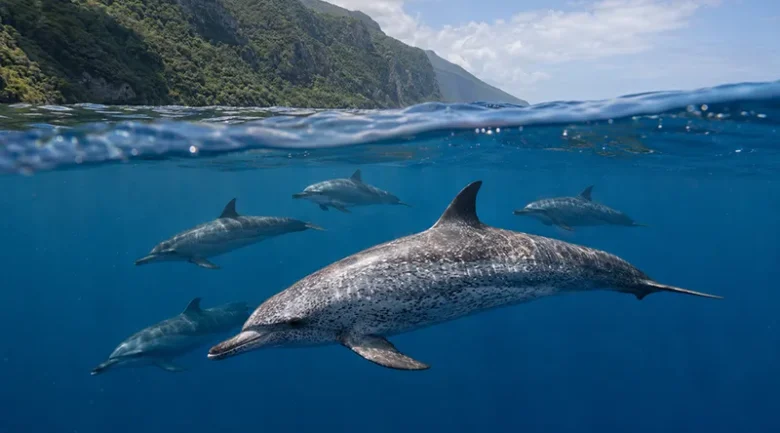
The pantropical spotted dolphin serves as the true ecological backbone of the Commonwealth of Dominica’s marine mammal biomass. While iconic sperm whales dominate public attention, this highly abundant cetacean patrols the Exclusive Economic Zone (EEZ) in massive, socially complex schools. Environmental monitoring shows these toothed mammals feeding heavily along the western coast. Here, steep submarine drop-offs concentrate massive amounts of prey, creating a vital, highly productive habitat that sustains their thriving populations year-round.
Taxonomy and Physical Characteristics
The pantropical spotted dolphin belongs to the family Delphinidae. In the oceanic waters of the Eastern Caribbean, the regional population consists of the offshore subspecies, Stenella attenuata attenuata.
Morphological Description
- Dimensions and Build: Adults typically reach lengths of 1.6 to 2.6 meters and weigh between 90 to 120 kilograms, exhibiting a slender, highly streamlined body built for fast, agile swimming.
- Coloration Patterns: The species features a distinct dark grey dorsal cape that runs from the head down past the narrow, sickle-shaped (falcate) dorsal fin. The lower flanks and belly are a much lighter grey.
- Spotting Progression: Individuals are born completely spotless, closely resembling juvenile bottlenose dolphins (Tursiops truncatus). As they age, they accumulate a complex pattern of white spots over their dark dorsal cape and dark spots across their lighter undersides.
- Cranial Features: The beak is long and narrow, characterized by bright white lips and a distinctly white-tipped snout, which serves as a reliable field diagnostic marker for researchers and tour operators.
Behavior and Foraging Ecology in Dominican Waters
The bathymetric profile of western Dominica, where deep-sea trenches plunge close to the shoreline, allows pelagic species like Stenella attenuata to remain close to the island year-round.
Diet and Diel Migration
Pantropical spotted dolphins are opportunistic feeders that target mesopelagic (mid-water) fish, cephalopods (squid), and small crustaceans. They track the diel vertical migration of their prey, which rises toward the ocean surface under the cover of darkness. While they feed primarily at night in deeper waters, they are frequently observed during the day resting or socializing in shallower coastal areas between 100 and 300 meters deep.
Social Structures and Group Dynamics
In Dominican waters, these dolphins travel in tight-knit social units or “schools” that typically number between 20 to several hundred individuals. They are highly gregarious and frequently form mixed-species groups with other local cetaceans, most notably spinner dolphins (Stenella longirostris) and Fraser’s dolphins (Lagenodelphis hosei). Known for their high-energy surface behaviours, they regularly engage in acrobatic breaching, side-slaps, and high, spinning leaps. They are also enthusiastic bow-riders, often approaching maritime vessels to ride the pressure waves created by the hull.
Conservation, Threats, and Regulatory Frameworks
Despite high global population figures, localized groups of Stenella attenuata in the Lesser Antilles face specific anthropogenic pressures.
Regional Marine Sanctuaries
Dominica’s territorial waters fall within the broader network of regional marine mammal protections. The country is a signatory to the Specially Protected Areas and Wildlife (SPAW Protocol) under the Cartagena Convention, which lists the pantropical spotted dolphin under Annex II as a strictly protected species. Additionally, their migratory pathways frequently cross into the neighbouring Agoa Sanctuary in the French West Indies, making the species a target for collaborative, transboundary marine mammal research and conservation management within the Eastern Caribbean.
Operational Protections in Dominica
Within Dominican jurisdiction, the Sperm Whale Reserve Act provides blanket regulatory oversight for all cetaceans travelling along the leeward corridor. Under this legal framework, industrial threats are actively managed:
- Artisanal Fishery Interactions: Pantropical spotted dolphins are vulnerable to accidental entanglement or bycatch in pelagic driftnets and Fish Aggregating Devices (FADs). The Fisheries Division monitors local gears to mitigate these impacts.
- Whale-Watching Codes of Conduct: As a staple species for local marine eco-tourism, encounters are governed by strict operational guidelines managed by the Forestry, Wildlife and Parks Division. Commercial vessels must maintain non-aggressive approaches, drop to no-wake speeds within proximity, and limit interaction times to minimise acoustic and behavioural disturbance.


