
Retirement in Dominica
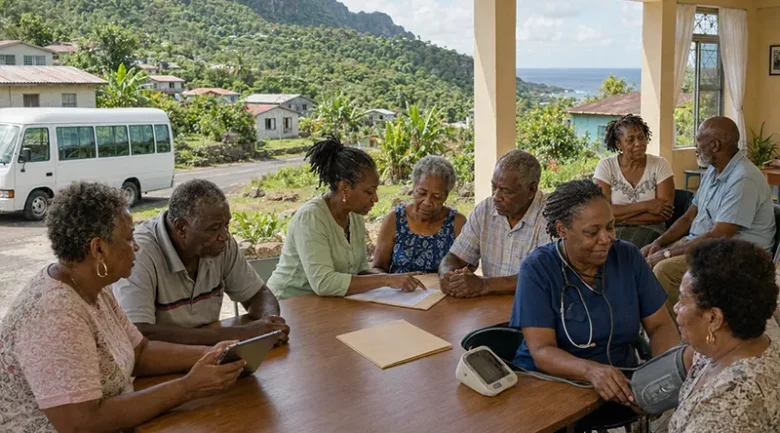
The retirement journey in Dominica marks an exciting new chapter shaped by official social security rules, health support programs, and changing population trends! For citizens, regional neighbors, and returning diaspora members, stepping into retirement means exploring helpful public services, local financial options, and friendly community elder care teams located all across our island.
As the national population adapts to global aging trends and low domestic fertility rates, the state’s formal structures, specifically the Dominica Social Security (DSS) system and the Ministry of Health, Wellness and New Health Investment, have faced ongoing modernisations to ensure financial sustainability and comprehensive care for the elderly population. Below outlines the legislative, statistical, economic, and institutional realities that define the retirement landscape within the Commonwealth of Dominica.
Demographic Overview and Population Aging
The retirement landscape is heavily shaped by the island’s underlying demographic data. According to national population and vital statistics registries, Dominica is experiencing a clear demographic shift characterised by structural population ageing, declining fertility rates, and a contraction of the domestic labour pool.
Key Population Indicators
The absolute population sits at approximately 66,205 residents. The national growth profile indicates a natural contraction rate of approximately -0.46% per year, primarily driven by a domestic fertility rate of 1.5 births per woman, well below the global replacement standard of 2.1, alongside historical trends of outward youth migration.
| Age Cohort | Percentage of Total National Population |
| Youth (Ages 0–14) | 17.9% |
| Working Age (Ages 15–64) | 69.1% |
| Elderly (Ages 65+) | 13.0% |
Life Expectancy Data
The average life expectancy at birth stands at approximately 71.3 years. When broken down by gender, typical global variances emerge: the female population reaches an average life expectancy of approximately 77 years, while the male population averages 72 years. Concurrently, Dominica is historically recognized for a high per-capita concentration of centenarians, particularly in rural windward and coastal communities, which places specialized long-term demands on regional public health resources and community-based support networks.
Institutional Pension Framework: Dominica Social Security (DSS)
The core economic foundation for formal retirement in Dominica is managed by Dominica Social Security, a statutory corporate body established under the Social Security Act (Chapter 31:01). The DSS operates a mandatory social insurance scheme funded through co-contributions from employers, employees, and self-employed individuals.
Statutory Pensionable Age and Phased Adjustments
The statutory pensionable age, the age at which an insured individual becomes legally eligible to receive a full, unreduced age pension, is established at 65 years. This baseline follows a series of structural legislative amendments designed to stabilise the fund’s long-term dependency ratio. However, the legal framework preserves an Early Retirement Option for individuals who choose to transition out of the active workforce before the standard statutory horizon:
- Minimum Eligibility Threshold: Individuals can formally opt to receive their Age Pension starting at 60 years.
- Actuarial Reduction Rate: Taking early retirement triggers a permanent statutory reduction rate of 0.5% per month for every full month prior to the age of 65 that the benefit is drawn.
- Total Early Benefit Penalty: An individual claiming their pension immediately upon turning 60 experiences a permanent 30% reduction in their baseline monthly pension payout.
Benefit Computations and Contribution Metrics
The statutory calculation of the monthly DSS Age Benefit depends on two variables: the total number of weekly contributions recorded across an individual’s working life and their Average Annual Insurable Earnings (AAIE). The AAIE is determined by calculating the average income from the best 10 of the final 15 years of covered employment prior to retirement.
To secure eligibility for a lifelong periodic pension, an individual must accumulate a minimum of 500 weekly contributions (equivalent to approximately 10 full working years based on a standard 52-week contribution year). If an individual reaches the age of 65 with fewer than 500 weekly contributions, they do not qualify for a recurring pension. Instead, they receive a one-off Age Grant, calculated as a lump-sum payment equal to three times the average weekly insurable earnings for every 50 weekly contributions recorded.
Financial and Economic Environment of Retirement
Retirement planning and fiscal management within Dominica are influenced by the country’s macro-financial frameworks, banking infrastructure, and tax regulations.
Currency Framework and Monetary Stability
Dominica uses the Eastern Caribbean Dollar (XCD), which is issued and managed by the Eastern Caribbean Central Bank (ECCB). The currency has been pegged to the United States Dollar (USD) at a fixed exchange rate of $2.7169 Eastern Caribbean Dollars to 1.00 United States Dollar since 1976. This long-standing peg provides structural monetary stability and predictable exchange rates for retirees who rely on foreign-denominated assets, international annuities, or fixed financial investments from North America or Europe.
Cost of Living Dynamics
The overall cost of living in Dominica varies between domestic production sectors and imported goods. As an import-dependent island nation, retail items, manufactured electronics, processed foods, and automotive fuel carry higher prices due to international freight expenses and domestic port duties. Conversely, locally grown agricultural produce, fresh seafood, and domestic water services remain affordable, particularly outside the capital city of Roseau.
Commercial electricity consumption, managed by the Dominica Electricity Services Limited (DOMLEC), is subject to fluctuations based on global fuel surcharge variances. However, ongoing national investments in geothermal energy infrastructure aim to stabilize long-term utility expenses. Property taxes are low compared to North American benchmarks; Dominica does not impose a general annual municipal land tax on residential properties, though urban commercial assets are subject to localized structural assessments.
Personal Income Tax Regulations
Under the Income Tax Act (Chapter 67:01), retirees enjoy specific statutory tax exemptions designed to protect fixed incomes:
- Pension Income Exemption: Statutory pension payouts received directly from the Dominica Social Security system are completely exempt from personal income tax.
- Foreign Pension Provisions: Income derived from certified foreign pensions or international retirement funds earned by residents is generally not taxed at source by the domestic revenue authority.
- Standard Personal Allowance: Income from alternative local investments, commercial leases, or part-time consulting work falls under the standard personal allowance threshold, which exempts the first $30,000 XCD of annual income from taxation.
Healthcare Systems and Wellness Infrastructure
Access to healthcare is a primary structural consideration for individuals navigating retirement in Dominica. The national health strategy uses a centralised public health system combined with emerging private localised clinics.
Public Health Structure and Primary Care
The Ministry of Health, Wellness and New Health Investment operates a decentralized primary care model divided into seven distinct health districts. This network includes more than 40 localized community health centers and type-A clinics, ensuring that basic medical services, monthly chronic disease checkups, and prescription access are available within a 30-minute travel radius from any residential community.
The main public referral facility is the Dominica China Friendship Hospital (DCFH) located in Goodwill. This facility provides advanced secondary care services, including specialized oncology care, a dedicated intensive care unit, cardiology monitoring, and expanded emergency services. For complex tertiary treatments not available locally, residents typically utilize regional medical pipelines to larger medical centers in Martinique, Barbados, or further abroad.
Institutional Support and Civil Society
The public sector’s medical work is supported by civil society organizations that address gaps in preventative care and lifestyle maintenance. The Dominica Planned Parenthood Association (DPPA) assists with community health tracking, while specialised non-governmental organisations provide educational materials and support services for managing chronic conditions like hypertension and diabetes, which are prevalent among the senior demographic.
Diaspora Retirement and Structural Re-Entry
A distinct socioeconomic aspect of retirement in Dominica is the return of the transnational diaspora, citizens who emigrated to the United Kingdom, the United States, or Canada during the mid-to-late 20th century and choose to repatriate upon concluding their professional careers abroad.
The Returning Residents Programme
To encourage the return of skilled citizens and repatriate international capital, the government administers the Returning Residents Programme through the Customs and Excise Division. This program provides specific fiscal incentives to returning nationals who have resided continuously overseas for a minimum of 10 years:
- Household Effects Exemption: Qualified individuals receive a 100% import duty exemption on personal clothing, household furniture, and domestic appliances.
- Tools of Trade Allowance: A full customs duty exemption is applied to tools, professional equipment, and technical instruments necessary for continuing a lifestyle craft or trade.
- Vehicle Importation Provisions: Returning residents can import one motor vehicle for personal use free of standard customs duties, subject to specific vehicle age limits and environmental surcharges.
Practical Re-Entry Procedures
To qualify for these fiscal benefits, applicants must submit a formal application pack to the Customs and Excise Division, including verified proof of foreign residence (such as utility records, tax transcripts, or consecutive employment contracts) and a valid Dominican passport or birth certificate.
Additionally, international retirees must navigate the mandatory Certificate of Life protocol required by foreign pension boards (such as the UK Department for Work and Pensions or the US Social Security Administration). These documents must be witnessed and certified biannually by an approved domestic authority, such as a local Justice of the Peace, Notary Public, or registered medical practitioner, to ensure the continuous payout of overseas retirement benefits into Dominican bank accounts.
Procedural Comparison: Legal Status of Retirees
The administrative requirements and legal options for individuals retiring in Dominica depend heavily on their citizenship status. The table below details the different procedural paths:
| Regulatory Feature | Native & Returning Citizens | CARICOM Single Market (CSME) Nationals | Non-Regional Foreign Nationals |
| Right of Residency | Absolute constitutional right of entry and permanent abode. | Eligible for permanent stay under Skilled Nationality or Right of Establishment frameworks. | Requires an annual residency permit extension or permanent residency status. |
| Real Estate Acquisition | Unrestricted land purchasing rights across all parishes. | Governed by regional reciprocity codes; may require minimal registration filing. | Subject to the Alien’s Land Holding Regulation Act, requiring an official license fee. |
| Work Restrictions | Full authority to engage in domestic business or employment. | Permitted to work if holding a certified CSME Qualifications Certificate. | Strictly prohibited from local employment unless granted a specific work permit. |
| Customs Exemptions | Eligible for full duty-free entry via the Returning Residents Programme. | Standard regional exemptions apply based on CARICOM single-market guidelines. | Subject to full national customs duties on all imported personal items and vehicles. |


