




Human Trafficking in Dominica
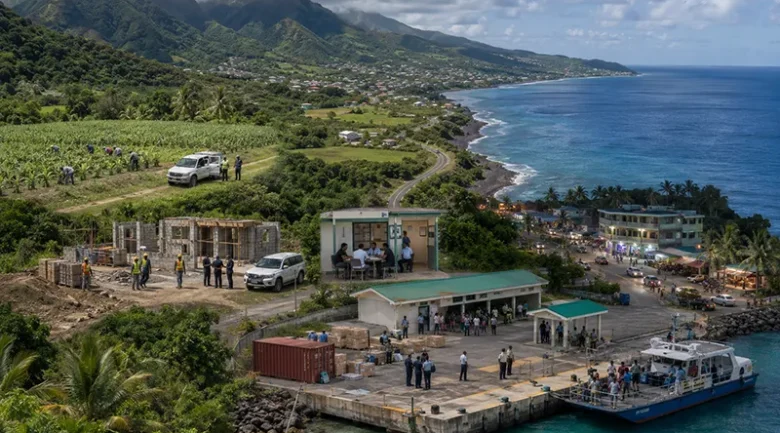
Human Trafficking in Dominica constitutes a low-volume but structurally complex criminal enterprise that intersects with regional migration crises, economic inequality, and the geography of the Caribbean archipelago. As a sovereignty situated directly between the French overseas departments of Guadeloupe and Martinique, the Commonwealth of Dominica functions as both a destination and a critical transit hub for transnational human trafficking and smuggling networks. The phenomenon primarily manifests as forced labour within the agricultural, construction, and domestic service sectors, alongside sex trafficking hidden within the island’s informal entertainment and nightlife industries. Because the crime is highly obscured, it presents profound challenges to the state’s law enforcement agencies, judiciary, and social protection mechanisms.
Geopolitical and Historical Context
To understand the mechanics of human trafficking in Dominica, one must examine the island’s unique geographical position within the Eastern Caribbean. Dominica is characterized by rugged, mountainous terrain and an expansive, porous coastline. This topography makes the island highly attractive to maritime smugglers and traffickers who exploit unmonitored entry points to move people across the Leeward and Windward Islands.
Historically, the country has maintained a small, open economy heavily reliant on agriculture, eco-tourism, and citizenship by investment (CBI) programs. However, its economic stability has been repeatedly disrupted by catastrophic weather events, notably Tropical Storm Erika in 2015 and Hurricane Maria in 2017. These natural disasters caused massive internal displacements, depleted state resources, and severely weakened domestic labour market regulations. The resulting economic desperation created a fertile ground for human trafficking, as local populations faced increased vulnerability to fraudulent recruitment schemes promising overseas employment, while state surveillance apparatuses were forced to redirect resources toward basic physical reconstruction.
Simultaneously, Dominica has been impacted by broader geopolitical upheavals within the Caribbean basin. The protracted political and economic collapse of Haiti, combined with ongoing socio-economic crises in Venezuela and economic hardships in the Dominican Republic, has triggered unprecedented waves of irregular migration across the region. Transnational criminal networks have capitalised on this mass displacement, shifting from opportunistic migrant smuggling to systematic human trafficking. These networks utilise Dominica as a temporary staging ground or a trans-shipment node, moving vulnerable individuals through the island chain toward wealthier destinations in Europe or North America via the neighbouring French territories.
Statutory Frameworks and Gaps
The primary legal instrument enacted to combat human trafficking within the Commonwealth of Dominica is the Transnational Organized Crime (Prevention and Control) Act, 2013. This omnibus statute formally incorporates the United Nations Convention against Transnational Organized Crime and its supplementing Palermo Protocol into domestic jurisprudence. The Act provides a comprehensive statutory definition of human trafficking, designating it as the recruitment, transportation, transfer, harbouring, or receipt of persons via threat, force, coercion, abduction, fraud, or deception for the explicit purpose of exploitation.
Under this legislation, the state prescribes severe criminal penalties, mandating substantial terms of imprisonment and punitive fines to reflect the gravity of the offense. When an infraction involves minors or displays aggravating parameters, such as institutional complicity or the use of weapons, the judicial framework permits maximised sentencing guidelines. Furthermore, the Transnational Organized Crime (Prevention and Control) Act, 2013 operates in tandem with the Sexual Offences Act (Chapter 10:37), providing prosecutors with secondary statutory leverage when trafficking cases involve commercial sexual exploitation or forced prostitution.
Despite this statutory framework, international legal observers and regional judicial indices highlight three systemic gaps within the current legislative matrix:
- The Absence of Corporate Accountability: The current legal framework focuses almost exclusively on individual criminal liability, failing to provide robust mechanisms to hold corporate entities, private labor recruitment agencies, or shell companies civilly and financially liable for exploiting trafficked labor within domestic supply chains.
- The Omission of Recruitment Fee Prohibitions: National labor statutes do not explicitly prohibit third-party labor recruiters from charging job-seekers exorbitant administrative fees. This legislative silence allows recruiters to legally impose structural debts onto migrant workers prior to arrival, creating an immediate conduit for debt bondage.
- The Indistinct Parameters on Internal Child Exploitation: While the general framework penalizes the trafficking of minors, domestic statutes lack detailed, standalone provisions addressing the specific nuances of trafficking children for forced criminal activity or internal agricultural labor bondage.
Conflating Trafficking with Smuggling
One of the most persistent operational hurdles within Dominica’s domestic security apparatus is the widespread conflation of human trafficking with human smuggling. This conceptual confusion is prevalent not only within local media coverage but also among frontline law enforcement, border control personnel, and judicial officers.
By definition, human smuggling is a voluntary, contractual arrangement where an individual pays a third party to facilitate unauthorised entry across an international border; the transaction terminates upon arrival. Human trafficking, conversely, is a crime predicated entirely on ongoing exploitation, coercion, and the denial of fundamental human rights, regardless of whether a border was crossed legally or illegally.
In Dominica, because individuals frequently enter the country via irregular maritime routes facilitated by smugglers, authorities routinely treat all undocumented migrants strictly as immigration violators or smuggling accomplices. When a vessel carrying irregular migrants is intercepted off the coast of Roseau or Portsmouth, the immediate state response typically emphasises arrest, detention, and rapid deportation under standard immigration protocols.
This fast-tracked approach bypasses the critical mandate for proactive victim identification. Because border agents frequently fail to apply specialised screening protocols to determine if force, fraud, or coercion was used during the journey, actual trafficking victims are systematically criminalised. They are processed through the magistrate courts for illegal entry, detained alongside standard penal populations, and repatriated without ever receiving the legal protections, psychological support, or immunity from prosecution guaranteed to them under international anti-trafficking conventions.
Vulnerability Typologies: Demographics of the Exploited
The profile of trafficking victims in Dominica reveals distinct demographic patterns that mirror regional socio-economic disparities. The market is overwhelmingly segmented along lines of nationality, gender, and the nature of the economic sector involved.
The Haitian Transit and Labor Demographic
Haitian nationals constitute the most visible and heavily targeted demographic within Dominica’s irregular migration and trafficking landscape. Driven by the catastrophic security situation and systemic poverty in their home country, many Haitians are lured to Dominica by informal networks operating under false pretences. Recruiters frequently target individuals in Port-au-Prince or Cap-Haïtien, promising them legitimate agricultural work, construction jobs, or guaranteed, safe maritime passage to the United States or the French West Indies.
Upon arriving in Dominica, often channelled through northern towns like Portsmouth, these individuals discover that the realities on the ground contradict the promises made by recruiters. Trapped by the reality of their undocumented status, many are funnelled into the agricultural sector, working on remote banana, coffee, or root crop farms. In these isolated geographic settings, they are subjected to conditions of forced labour, working extreme hours for sub-minimum wages, or facing total wage withholding. Traffickers utilise the constant threat of reporting them to the immigration authorities as a psychological mechanism to enforce compliance and prevent flight.
Migrant Women in the Entertainment Sector
A distinct subset of the trafficking market involves foreign women arriving from the Dominican Republic, Venezuela, and Colombia. These individuals are frequently recruited to work in Dominica’s service and entertainment sectors, with advertisements promising lucrative employment as barmaids, waitresses, spa technicians, or hospitality staff.
Once in the country, their passports and travel documents are routinely confiscated by managers or club owners under the guise of safekeeping or to secure administrative visa processing. The employers then present the women with inflated, fraudulent debts covering their airfare, entry visas, and housing costs. To liquidate this manufactured debt, the victims are forced into commercial sex or exploitative bar-brothel environments. The isolation resulting from language barriers, the absence of local social support networks, and the fear of arrest by the Dominica police effectively traps these women within cycles of severe debt bondage.
Law Enforcement and Judicial Dynamics
The enforcement of anti-trafficking mandates falls under the jurisdiction of the Commonwealth of Dominica Police Force (CDPF), working in conjunction with the Immigration Department and the Joint Regional Communications Centre (JRCC). Despite the existence of specialised training programs periodically provided by international agencies like the International Organisation for Migration (IOM) and Interpol, the national track record for successfully prosecuting human trafficking remains critically low.
Dominica’s judiciary is independent and modelled on the British common law system, with the Eastern Caribbean Supreme Court serving as the superior court of record. However, the judicial process is heavily burdened by structural inefficiencies, acute understaffing, and a lack of specialised courts to handle complex, transnational organised crime. Anti-trafficking investigations frequently stall at the evidentiary stage. Because the legal system relies heavily on the physical testimony of victims to secure convictions, any delay in court proceedings works directly in favour of the traffickers. Over extended periods, victims, often detained in ad-hoc facilities or left without income, frequently choose deportation or disappear from the jurisdiction rather than waiting indefinitely for a trial date, forcing prosecutors to abandon cases due to a lack of evidence.
Furthermore, independent criminal investigations and regional monitoring databases indicate that sporadic, opportunistic corruption among state-embedded actors impairs law enforcement efforts. While systemic institutional corruption is not considered widespread, low-level complicity among customs officials, port authorities, and immigration agents allows trafficking networks to operate. This complicity typically manifests as the look-the-other-way acceptance of bribes at minor maritime ports, the unauthorised issuance of extension stamps on visitor visas, or the leaking of operational data regarding planned police raids on venues suspected of housing trafficked individuals.
Institutional Protection Gaps and Civil Society Responses
The capacity of the Dominican state to provide adequate protection and rehabilitation services to victims of human trafficking is severely constrained by a lack of dedicated fiscal resources and specialised infrastructure.
The Shelter Crisis
Currently, Dominica does not maintain a permanent, government-run shelter dedicated exclusively to victims of human trafficking. When a victim is identified or rescued during a law enforcement operation, the Social Welfare Division is forced to rely on ad-hoc accommodation strategies. These include renting rooms in commercial hotels, utilising general-population domestic violence shelters, or partnering with private-sector individuals willing to provide temporary housing.
These makeshift arrangements present extreme security and human rights vulnerabilities:
- Security Breaches: Commercial hotels and general shelters lack the specialized, armed security infrastructure necessary to protect high-risk trafficking witnesses from retaliation, intimidation, or recapture by organized criminal syndicates.
- Inadequate Gender and Age Segregation: Ad-hoc housing often struggles to maintain strict separation between adult female victims, male labour trafficking survivors, and unaccompanied minors, compromising the psychological rehabilitation of the victims.
- Lack of Specialized Psycho-Social Care: General shelter staff are rarely trained in trauma-informed care specifically tailored for survivors of prolonged captivity, debt bondage, or severe sexual exploitation.
The Role of Non-State Actors
Because the state’s welfare safety net is constrained, the burden of care frequently shifts to non-governmental organizations (NGOs) and civil society groups. The Dominica Red Cross plays an important role, offering emergency medical supplies, clothing, and psychological first aid to individuals rescued from maritime vessels or exploitative labour sites.
Concurrently, faith-based organisations, such as local parish chapters of the St. Vincent de Paul Society, step in to provide discrete community-level integration support, language translation services, and food security for migrant workers who have escaped abusive employers. However, these organisations operate on minimal budgets and lack the legal authority to grant asylum, issue work permits, or provide formal witness protection, limiting their efficacy to short-term humanitarian relief rather than structural protection.
Paths Toward Comprehensive Structural Reform
Addressing the multi-faceted threat of human trafficking in Dominica requires a comprehensive shift away from purely reactive law enforcement measures toward a proactive, victim-centered structural approach. The sustainability of the nation’s security and human rights architecture depends on the execution of targeted reforms across several key institutional sectors.
Strengthening Border Technology and Inter-Agency Protocols
The Immigration Department and Coast Guard require integration into modernised regional intelligence networks. Implementing advanced biometric tracking and secure data-sharing systems at all official ports of entry will enable authorities to identify known traffickers and monitor suspicious travel patterns involving vulnerable routes.
Crucially, the Ministry of National Security must formalise and enforce mandatory Standard Operating Procedures (SOPs) for frontline personnel. These protocols must legally compel border agents to decouple immigration enforcement from victim identification. Every irregular migrant intercepted in Dominican waters or on land must be screened independently for indicators of trafficking using standardised, trauma-informed interview techniques before any deportation order can be executed.
Legislative Updates and Labor Market Regulation
Parliament must draft a Counter-Trafficking Act to eliminate existing statutory ambiguities. This includes enacting explicit laws against the charge of recruitment fees by third-party brokers and establishing clear corporate liability frameworks that penalise businesses utilising forced labour.
The Ministry of Labour must scale up its inspectorate capacity, empowering labour officers to conduct unannounced, rigorous inspections of remote agricultural estates, construction sites, and entertainment venues. These inspectors must be trained to recognise the subtle indicators of modern slavery, such as document retention, substandard housing conditions, and psychological coercion.
Investment in Protection Infrastructure
The state must allocate a dedicated, ring-fenced budgetary provision to establish a secure, permanent, specialized recovery facility for trafficking survivors. This facility must provide comprehensive medical screening, continuous psychological care, legal counsel, and vocational training, ensuring that victims can recover safely while actively assisting state prosecutors.
By building resilient institutional frameworks, strengthening regional intelligence partnerships, and prioritizing the fundamental human rights of the migrant population, Dominica can successfully disrupt the operations of transnational criminal networks and uphold its commitments under international humanitarian law.


References
-
1.
UNODC UNTOC Dominica Country Profile https://www.unodc.org/unodc/en/organized-crime/intro/review-mechanism-untoc/country-profile/dominica.html
-
2.
The Organized Crime Index: Dominica Profile https://ocindex.net/country/dominica/1000
-
3.
IOM Organizes First Counter-Trafficking Training for Officials and Civil Society in Dominica https://www.iom.int/news/iom-organizes-first-counter-trafficking-training-officials-and-civil-society-dominica
-
4.
IOM Concludes Two-Day Training on Human Trafficking for Immigration and Law Enforcement Officers in Dominica, Bolstering Border Security https://dominicanewsonline.com/news/homepage/homepage-carousel/iom-concludes-two-day-training-on-human-trafficking-for-immigration-and-law-enforcement-officers-in-dominica-bolstering-border-security/
-
5.
3 Dominicans Detained in St. Maarten on Suspicion of Human Trafficking https://dominicanewsonline.com/news/homepage/3-dominicans-detained-on-suspicion-of-human-trafficking/
-
6.
COMMENTARY: Child Trafficking and the Paradox of Technology https://dominicanewsonline.com/news/homepage/homepage-carousel/commentary-child-trafficking-and-the-paradox-of-technology/