




Transnational Organized Crime (Prevention and Control) Act, 2013
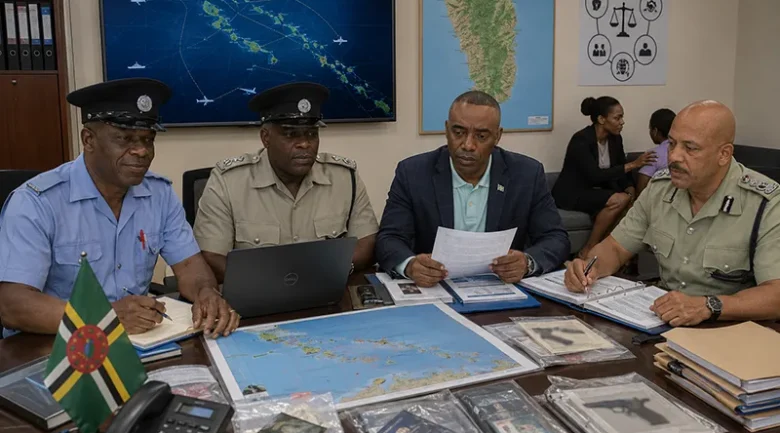
The Transnational Organized Crime (Prevention and Control) Act, 2013 (Act No. 13 of 2013) is a comprehensive statute enacted by the Parliament of the Commonwealth of Dominica. It provides a modern, robust legal framework designed to prevent, combat, and suppress organised criminal syndicates operating across international borders. The Act gives full domestic legal effect to the United Nations Convention Against Transnational Organized Crime (the Palermo Convention) and its supplementary international protocols. These include the Protocol to Prevent, Suppress and Punish Trafficking in Persons, Especially Women and Children; the Protocol Against the Smuggling of Migrants by Land, Sea and Air; and the Protocol Against the Illicit Manufacturing of and Trafficking in Firearms, Their Parts and Components and Ammunition.
As an essential component of Dominica’s criminal law architecture, Act No. 13 of 2013 targets the operational methods of modern criminal networks. It establishes severe criminal offenses for organizing, facilitating, or participating in illicit syndicates. The Act implements stringent penalties for human trafficking, migrant smuggling, and the illegal arms trade, while equipping law enforcement and judicial authorities with advanced investigative mechanisms and cross-border cooperation protocols. The legislation balances national security with international human rights obligations, incorporating dedicated protective frameworks for witnesses, justice system participants, and victims of exploitation.
Legislative Background and Global Mandate
The introduction of the Transnational Organized Crime (Prevention and Control) Act, 2013 arose from Dominica’s commitments as a signatory to global anti-crime treaties. During the late twentieth and early twenty-first centuries, the rise of global trade and regional maritime traffic highlighted vulnerabilities within domestic legal systems across the Eastern Caribbean. Traditional criminal codes were frequently insufficient for prosecuting complex, multi-jurisdictional conspiracies where crimes were planned in one nation but executed in another.
To address these vulnerabilities, the international community established the Palermo Convention in 2000. Following extensive regional consultations and policy development under the guidance of international bodies like the United Nations Office on Drugs and Crime (UNODC), Dominica formally drafted and passed Act No. 13 of 2013. The statute was subsequently brought into operational effect via a formal Commencement Order issued by the Minister responsible for Justice. This integrated the state into a unified global enforcement network designed to disrupt illicit financial flows, dismantle smuggling operations, and prosecute international criminal actors.
Key Statutory Definitions and Jurisdictional Thresholds
Part I of the Act contains a detailed set of statutory definitions that establish the boundaries of its jurisdiction. For a crime to be prosecuted under this specific framework, the state must establish that the underlying offense is both serious and transnational in nature.
Serious Offence
Under Section 2(1), a serious offence is defined as any infraction for which the sentence is fixed by law, or an offence for which a person may be sentenced to a term of imprisonment of at least four years or more. This threshold ensures that the exceptional investigative and prosecutorial powers granted under the Act are reserved for major criminal activity rather than minor, summary infractions.
Organized Criminal Group
The statute defines an organised criminal group as a structured group consisting of three or more persons that exists for a period of time and acts in concert. The group must operate with the primary purpose of committing one or more serious offenses to obtain, directly or indirectly, a financial or other material benefit.
The Transnational Legal Criteria
Section 4(3) sets out the conditions under which an offense is legally classified as transnational. The prosecution must prove that the offense meets at least one of the following criteria:
- It is committed in more than one country.
- It is committed in one country, but a substantial part of its preparation, planning, direction, or control takes place in another country.
- It is committed in one country, but involves an organized criminal group that engages in criminal activities in more than one country.
- It is committed in one country, but has substantial effects in another country.
Organized Criminal Activity and Judicial Interference
Part II of the Act targets the infrastructure of criminal syndicates and attempts to disrupt or compromise the administration of justice.
Participation and Membership
Section 5 criminalises direct involvement within a syndicate. A person who intentionally agrees with one or more other persons to commit a serious offense for financial or material gain commits an offense. The law establishes flexible criteria for proving group membership. Under Section 5(2), a court may conclude that an individual belongs to an organized criminal group if the person admits to membership, is identified as a member by a competent parent or guardian, habitually associates with known members, adopts the distinct names, colours, symbols, or representations of the group, or receives any direct financial or material benefit from the group.
Interference with Justice System Participants
To protect the integrity of criminal proceedings, Section 6 targets actions aimed at witnesses, judicial officers, or law enforcement personnel. It is a severe offense to use or threaten physical force, use intimidation, or promise financial or material benefits to induce false testimony, interfere with the giving of testimony, or obstruct the production of evidence.
Section 7 provides a vital evidentiary standard for prosecutors. It explicitly states that when prosecuting an offence related to judicial interference, it is not necessary to prove that the accused had specific knowledge of the exact nature of the crime under investigation, nor is it necessary to prove that the accused knew the specific identities of all members of the organised criminal group. This prevents high-ranking syndicate leaders from using insulated organisational structures to evade liability.
Trafficking in Persons and Migrant Smuggling
Part III establishes the legislative framework for combating human trafficking and the smuggling of migrants. It makes a clear statutory distinction between the non-consensual exploitation of trafficking victims and the illegal cross-border transport of smuggled migrants.
Trafficking in Persons
Section 8(1) criminalises the acts of organising or facilitating the entry, proposed entry, exit, or proposed exit of any person into or out of Dominica for the explicit purpose of exploitation. Under the statute, “exploitation” includes the exploitation of the prostitution of others, sexual exploitation, forced labor, slavery, servitude, or the unlawful removal of human organs or tissue.
Crucially, Section 9 invalidates the defense of consent. It states that if the prosecution proves that force, deception, coercion, abduction, fraud, or the abuse of power was used, it is legally irrelevant whether the victim initially consented to the intended exploitation.
Smuggling of Migrants
Section 11 targets the commercialisation of irregular migration. It criminalises the intentional facilitation of the unlawful entry of any person into Dominica who is not a national or a lawful permanent resident. This offence requires proof that the smuggling was conducted to obtain a direct or indirect financial or material benefit. Section 12 establishes aggravated offences for migrant smuggling if the offence is carried out under circumstances that endanger the lives or safety of the migrants, or subjects them to inhuman or degrading treatment.
Illicit Trafficking in Firearms and Ammunition
Part IV provides law enforcement with mechanisms to combat the illegal arms trade, which poses a significant threat to internal security and drives violent crime across regional borders.
Illicit Manufacturing
The Act criminalizes the unauthorized manufacturing or assembly of firearms, their essential parts, components, or ammunition. To be lawful, manufacturing must occur within a government-sanctioned facility and each weapon must be marked in accordance with international tracing standards at the time of manufacture.
Illicit Trafficking
It is a major offense under this Part to import, export, transport, transship, or otherwise move firearms, ammunition, or related components into, through, or out of Dominica without proper authorization from national licensing authorities. The law penalizes the altering, defacing, obliterating, or removing of unique serial numbers or identifying marks on firearms. This provision allows law enforcement to collaborate with international tracing systems to track the origins of seized contraband.
Advanced Investigative Techniques and Special Powers
To combat sophisticated transnational syndicates that utilise encrypted communications and complex corporate structures, the Act provides special powers to the Commonwealth of Dominica Police Force (CDPF) and customs authorities. These specialised investigative tools require judicial oversight to prevent abuse while ensuring gathered evidence remains admissible in court:
- Controlled Deliveries: This technique permits illicit shipments of drugs, weapons, or victims of trafficking to pass through Dominica’s territory with the full knowledge and surveillance of law enforcement authorities. This allows investigators to trace the complete logistical chain and identify high-level coordinators rather than arresting low-level couriers.
- Electronic Surveillance: Law enforcement officials may apply to a Judge of the High Court for an intercept order. This order authorises the covert monitoring and recording of wire, electronic, or oral communications linked to individuals suspected of participating in an organised criminal group.
- Undercover Operations: The Act establishes legal protocols for undercover agents to infiltrate criminal networks. It provides these agents with limited civil and criminal immunity for actions necessarily undertaken during an authorized operation.
Judicial Penalties, Forfeiture, and Mutual Legal Assistance
Confounded individuals prosecuted on indictment before the High Court face severe penalties designed to strip criminal organizations of their profitability.
Penal Structure
Convictions for participating in an organized criminal group, human trafficking, or weapons smuggling carry extensive prison terms, often ranging from ten years to life imprisonment, along with substantial financial fines. The law targets corporate entities as well; if a body corporate is found liable for facilitating transnational organized crime, the court can impose multi-million-dollar fines, revoke corporate licenses, and order the compulsory liquidation of the business entity.
Forfeiture of Assets
The Act works alongside asset forfeiture laws. Upon conviction, the High Court can order the permanent forfeiture to the State of any property, real estate, vessel, vehicle, aircraft, or financial instrument used to commit or facilitate the transnational crime. It also mandates the seizure of all direct or indirect proceeds derived from the criminal enterprise.
International Cooperation and Mutual Legal Assistance
Because transnational crime involves multiple jurisdictions, Part V of the Act provides mechanisms for international cooperation. It empowers the Attorney General of Dominica to receive and process formal requests from foreign judicial authorities for:
- The taking of evidence or statements from individuals.
- The facilitation of the voluntary appearance of witnesses or experts in foreign courts.
- The execution of searches, seizures, and temporary asset freezes.
- The inspection of sites, structures, and financial records.
Furthermore, offenses under the Transnational Organized Crime Act are designated as extraditable offenses under the Extradition Act. This ensures that foreign fugitives cannot utilize Dominica as a jurisdictional safe haven to escape prosecution.


