

Homelessness in Dominica
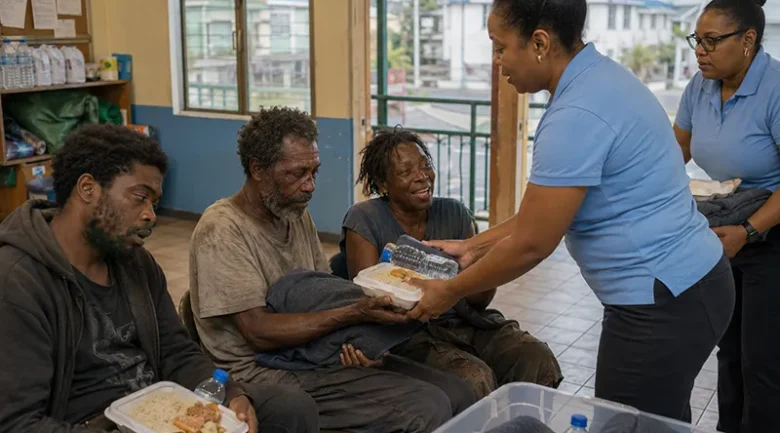
In Dominica, the structural, systemic, and socio-economic dynamics of homelessness present a multi-layered challenge distinct to the island’s physical geography and legislative history. Unlike in larger continental jurisdictions where chronic lack of shelter is primarily driven by macro-industrial real estate trends and extensive urban decay, the state of being unhoused or transient within the Commonwealth of Dominica is strongly associated with extreme hydrometeorological events, changes to family networks, localised rural-to-urban migrations, and long-standing public safety laws. In the domestic framework, homelessness manifests in two distinct patterns: visible street vulnerability concentrated within urban towns like Roseau and Portsmouth, and widespread, episodic disaster-induced displacement caused by catastrophic Atlantic hurricanes.
Administratively, the island addresses the operational needs of vulnerable and unhoused citizens through the Ministry of Housing and Urban Development, in collaboration with the Ministry of Finance, Economic Development, Climate Resilience and Social Security. Because institutional tracking systems have historically faced data collection constraints, civil society organisations, non-governmental organisations (NGOs), and religious bodies, most notably Community Hostel Inc., formerly operating as the Grotto Home for the Homeless, serve as the primary providers of institutional care and long-term rehabilitation. As the government continues executing its structural mandate to transform Dominica into the world’s first fully climate-resilient nation under the Climate Resilience and Recovery Plan (CRRP), reforming institutional safety nets and modernising public assistance frameworks remain a core national priority.
Typologies of Shelter Vulnerability
To establish a clear baseline for policy analysis, public health interventions, and legislative oversight, homelessness within the unique geographic and cultural context of Dominica is classified into three specific structural categories.
Chronic Street Homelessness (Urban Vagrancy)
This visible form of homelessness occurs primarily within the commercial and administrative zones of Roseau (including Newtown, Pottersville, and the Roseau Market perimeter) and to a lesser extent along the bayfront of Portsmouth. This concentration affects the management of public spaces, particularly in retail zones and heritage tourism sites. Local business owners frequently raise concerns regarding sanitation, unauthorised overnight loitering on shop verandas, and persistent panhandling, which can influence the experience of international cruise ship visitors.
Individuals within this demographic often deal with complex, intersecting challenges, including:
- Advanced age and physical disabilities.
- Untreated psychiatric disorders or cognitive impairments.
- Substance dependence issues.
- The breakdown of traditional, multi-generational family care structures.
In local social service records, these individuals are frequently grouped under the broader umbrella of “destitute and less fortunate persons” or described under older legal terms as street transients.
Disaster-Induced Displacement
Dominica’s location makes it highly vulnerable to severe weather events, making climate disasters a major driver of temporary and episodic homelessness. The passage of Tropical Storm Erika in 2015 and Hurricane Maria in 2017 caused severe destruction across the island’s steep, mountainous topography, fundamentally changing the nature of housing vulnerability.
Hidden or Precarious Homelessness
A widespread but less visible variation of shelter insecurity in Dominica involves individuals and families living in deeply unstable, overcrowded, or structurally compromised conditions. This include families co-habiting in substandard or partially repaired houses following major storms, or individuals relying on short-term arrangements with relatives across different villages. While these individuals may not sleep directly on public streets, they lack long-term security of tenure and safe, sanitary living conditions.
Public Health and Emergency System Pressures
Street vulnerability places a continuous demand on state-funded healthcare systems. Unhoused individuals frequently present with complex, co-occurring needs, including chronic physical illnesses, advanced age-related frailties, open wounds, and acute psychiatric crises.
Because specialized, long-term psychiatric accommodation is limited, the primary burden of emergency medical stabilization falls on the emergency wards of the Dominica China Friendship Hospital. Additionally, during mandatory national evacuations for tropical storms or hurricanes, law enforcement and disaster management personnel must dedicate significant operational resources to locate, round up, and securely house street transients within designated public shelters.
Data, Numbers, and Statistical Indicators
Because homelessness fluctuates due to economic factors and weather events, tracking exact numbers presents challenges. However, specific institutional assessments, disaster records, and NGO registries provide verified indicators of shelter insecurity on the island:
- Urban Transients (Baseline Assessment): A specialised spatial assessment of homelessness in the City of Roseau identified 68 individuals living long-term on the streets. Demographically, the population showed a pronounced gender imbalance, with 92% being male and 8% female.
- Institutional Residential Care: Records from the Dominica Red Cross Society indicate that the Grotto Home (managed by Community Hostel Inc. at Bellevue Rawle) maintains an average stable capacity of approximately 40 to 42 residents under continuous institutional care, typically averaging 28 males and 12 females.
- Disaster-Induced Displacement: Catastrophic weather events serve as the largest driver of temporary homelessness on the island:
- Tropical Storm Erika (2015): Triggered massive flash floods and mudslides that completely destroyed or placed at immediate risk over 1,400 homes, instantly leaving more than 800 households without shelter.
- Hurricane Maria (2017): Damaged or completely destroyed an estimated 90% of the national housing stock, displacing the vast majority of the population into temporary communal facilities and emergency shelters.
- Historical Precedent (Hurricane David, 1979): Left approximately 60,000 citizens temporarily homeless, representing roughly 75% of the island’s total population at that time.
Institutional History of Civil Care
Because public infrastructure historically focused on broad social security grants, direct institutional housing and medical support for the unhoused population have relied heavily on dedicated civil society initiatives.
Colonial Roots and the Move to Stadium Grounds
The formalisation of organised care for the destitute and unhoused population in Roseau began in 1976, initiated by Sister Madeleine Millecamps of the Missionary Sisters of the Immaculate Heart of Mary (ICM). Recognising a clear gap in public facilities for the elderly and vulnerable street transients, Sister Madeleine and a dedicated group of local volunteers established a centralised feeding and shelter program.
This initiative led directly to the founding of the Grotto Home for the Homeless, a non-profit organization located on public land that now forms part of the Windsor Park Sports Stadium complex. The facility served as a vital community safety net, providing regular hot meals, basic clothing, medical attention, and overnight shelter to dozens of citizens who would otherwise have been exposed to public streets.
The Dominica Club Transition and Structural Delays
In October 2007, the Government of Dominica acquired the original Grotto Home property and its surrounding land to clear the way for two major public works: the construction of the Windsor Park Sports Stadium and the expansion of the Dominica Grammar School. In exchange, the state provided a $500,000 XCD compensation package and arranged to temporarily relocate the residents to the old Dominica Club house on High Street in Roseau.
While the temporary facility accommodated roughly 50 residents, it faced significant structural limitations as a long-term care setting. To provide a permanent solution, the government granted a two-acre parcel of public land at Bellevue Rawle (Stockfarm) for the construction of a modern, multi-phase care facility valued at over $2.5 million XCD. However, the construction process faced extended delays due to multiple factors:
- Rising material costs and a lack of continuous capital financing.
- The depletion of the initial property sale funds.
- Poor initial construction practices that required panels, walkways, and windows to be fully replaced to meet health and safety standards.
- Mandatory adjustments ordered by the Environmental Health Unit, which required moving the central septic tank away from the kitchen facility at an additional cost.
During this extended transition, Hurricane Maria’s passage in 2017 severely damaged both the temporary High Street residence and the incomplete Bellevue Rawle structure, creating a complex logistical challenge for the home’s board of directors.
Modern Reorganization: Community Hostel Inc.
To modernize its operations, secure diverse funding streams, and improve administrative standards, the institution formally rebranded as Community Hostel Inc. In 2018, the organisation successfully transferred its residents into the newly completed Bellevue Rawle facility in Stockfarm.
Today, the Bellevue Rawle facility operates under a structured model designed to accommodate up to 100 individuals across consecutive execution phases:
- Phase 1 (Dormitory Blocks): Three separate dormitory spaces equipped with accessible bathrooms, designed to provide safe, comfortable living conditions for permanent residents.
- Phase 2 (Administrative Core): A central main building housing administrative offices, a dedicated examination room for visiting doctors, staff quarters, a commercial-grade kitchen, laundry rooms, a dining hall, and a quiet chapel area.
- Phase 3 (Outreach Integration): Dedicated space to expand the institution’s long-standing soup kitchen program, providing nutritional support to non-resident vulnerable individuals from surrounding districts.
To maintain operations, cover commercial medical expenses, and pay staff salaries, the institution relies on a mixed financial model combining public and private support. The Government of Dominica provides a regular bi-annual subvention grant and funds the Supervisor’s salary, while corporate donors like Republic Bank Dominica and CIBC FirstCaribbean International Bank contribute targeted funding to support essential initiatives, including the home’s Diaper Drive and its sustainable on-site farming project.
Statutory Provisions and Public Space Enforcement
The legal management of homelessness, public loitering, and transient behavior in Dominica is governed by summary criminal laws that trace their structural roots back to British colonial legislation.
The Small Charges Act (Chapter 10:39)
The primary legal instrument relating to public transient conduct is Part II of the Small Charges Act (Chapter 10:39) of the Laws of Dominica. The statute does not penalise the condition of being unhoused itself, but establishes specific definitions and penalties for behaviours associated with public vagrancy:
- Section 49 (Idle and Disorderly Persons): Classifies individuals who persistently beg or solicit alms in public places, or those who cause a public nuisance and refuse to move after an explicit warning from a police officer, as idle and disorderly. Convictions can result in summary fines ranging from $75 XCD to $250 XCD or short-term imprisonment up to one month.
- Section 43 (Rogues and Vagabonds): Applies to individuals found loitering in public spaces, private yards, or shipping wharves under circumstances that suggest an intent to commit an indictable offense. This classification carries stricter penalties, including up to six months of imprisonment.
Modern Law Enforcement Realities
In contemporary policing across Dominica’s parishes, the strict penal clauses of Chapter 10:39 are rarely used to incarcerate vulnerable or unhoused individuals. International reporting bodies, including the United Nations Human Rights Council (UNHRC), indicate that law enforcement agencies and the Magistrate’s Courts treat these public order clauses primarily as tools for managing public spaces rather than as a mechanism for criminalizing poverty.
Instead of pursuing formal criminal prosecutions, police units typically coordinate with social workers from the Social Welfare Division to redirect vulnerable individuals toward family networks or established care institutions like Community Hostel Inc.
Public Sector Housing Recovery Frameworks
To address the root causes of disaster-induced homelessness and eliminate reliance on temporary emergency shelters, the Government of Dominica has launched large-scale public housing initiatives designed to build long-term climate resilience.
The Housing Dominica Project: The Housing Revolution
Following the extensive devastation of Hurricane Maria, the Office of the Prime Minister established the Housing Dominica initiative, widely known as the Housing Revolution Programme. Funded primarily through national revenues from the Citizenship by Investment (CBI) program, this macro-scale public sector effort aims to construct over 5,000 modern, climate-resilient homes for displaced and low-income families across the island.
These state-built properties are distributed across vulnerable communities, such as Bellevue Rawle, Jimmit, Roseau Valley, and various rural communities, and are engineered to meet strict structural resilience standards:
- Reinforced concrete foundations anchored firmly into solid subsoil layers.
- Impact-resistant glass installations and heavy-duty hurricane shutters.
- Monolithic reinforced concrete roof slabs designed to resist Category 5 hurricane wind loads, preventing the structural failures common in traditional timber roofs.
The Housing Recovery Project (HRP)
Operating as a specialized project implementation unit under the Ministry of Housing and Urban Development, the Housing Recovery Project (HRP) is a comprehensive initiative designed to help low-income homeowners recover from disaster-related losses. Backed by a $40 million USD credit facility from the World Bank, the HRP provides direct financial grants and technical design support to eligible citizens whose homes were destroyed or severely damaged.
The execution of HRP housing grants follows a strict regulatory process to ensure new structures conform to modern safety standards:
- Vulnerability and Title Verification: Applicants must demonstrate formal ownership or long-term secure tenure of the land and pass an evaluation verifying economic need and exposure to natural hazards.
- Standardized Resilient Designs: Beneficiaries select from a portfolio of pre-approved architectural plans engineered by structural experts to maximize wind resistance, optimize natural ventilation, and include proper retaining walls on steep slopes.
- Strict Planning Compliance: Every construction project is closely monitored by HRP technical officers and must receive formal environmental and structural clearance from the Physical Planning Division under the Physical Planning Act No. 5 of 2002.
- Tranche-Based Disbursal: Funds are disbursed in structured stages tied directly to successful field inspections, ensuring that foundations, frame reinforcements, and ring beams comply fully with the national Building Code before final completion.
Public Perception and Cultural Attitude Dynamics
Public attitudes toward unhoused citizens in Dominica reflect a complex mix of traditional community cohesion, religious charity, and occasional urban frustration.
Collective Empathy and Social Cohesion
At the community level, the social fabric of Dominica is rooted in the concept of koudmen (communal helping hands) and close family accountability. Consequently, public perception leans heavily toward recognizing the humanity of unhoused individuals. Many citizens actively practice daily charity, providing food, clothing, and small financial assistance to familiar local characters.
Societal views generally do not blame the individual for their poverty; instead, homelessness is widely understood as a tragic outcome of severe mental illness, sudden family abandonment, or catastrophic personal loss from past hurricanes.
Stigma, Misunderstandings, and Frustrations
Despite a compassionate baseline, public stigma persists regarding individuals who deal with severe, untreated substance dependence or volatile psychiatric conditions. When instances of aggressive panhandling or public disturbance occur in busy commercial spaces, public commentary sometimes shifts toward demands for stricter policing.
A common point of tension centers on family responsibility. Communities often express frustration when relatively prosperous family networks appear to abandon their elderly or mentally ill relatives, leaving them to rely on public streets and charity.
Human Rights Frameworks and Legal Reform Perspectives
The intersection of housing vulnerability, public space regulation, and social protections in Dominica continues to shape conversations among regional legal bodies, national policy makers, and human rights organizations.
Key Policy Challenges
Social policy analysts highlight three core institutional challenges that complicate efforts to address chronic and temporary homelessness on the island:
- The Data Constraints Gap: The absence of regular, census-wide statistical tracking specifically focused on homelessness limits the ability of public agencies to measure the shifting needs of the street transient population over time.
- Mental Health Infrastructure: A significant percentage of chronically unhoused individuals face underlying psychiatric conditions. Addressing street vulnerability requires expanding community-based mental health programs alongside direct shelter provision.
- The Cost of Climate Adaptation: Building structural resilience to Category 5 standards increases the baseline cost of public housing projects. This dynamic requires the state to carefully balance its capital resources between emergency response infrastructure and long-term social welfare programs.
Regional Legal Alignment
The conversation surrounding summary public order laws in Dominica is influenced by wider legal trends within the Organization of Eastern Caribbean States (OECS) and the Caribbean Court of Justice (CCJ). Regional courts have increasingly ruled that older, vaguely worded colonial-era vagrancy laws are unconstitutional because they give wide discretion to law enforcement and can inadvertently penalize individuals based on their economic status.
While Dominica’s parliament continues to prioritise direct housing construction and structural recovery programs, local legal reform advocates favour updating the Small Charges Act. Transitioning toward modern, rights-aligned public safety legislation would allow the state to address street vulnerability through social services, economic inclusion programs, and dedicated public healthcare infrastructure.


References
-
1.
Natural Disasters and Homelessness in Dominica https://borgenproject.org/homelessness-in-dominica/
-
2.
Homelessness an Issue to Be Dealt with Humanely, Says National Security Minister https://dominicanewsonline.com/news/homepage/news/homelessness-an-issue-to-be-dealt-with-humanely-says-national-security-minister/
-
3.
Work on New Grotto Home Facility Expedited https://news.gov.dm/news/news-items/work-on-new-grotto-home-facility-expected-to-be-expedited
-
4.
Small Charges Act, Chapter 10:39 https://www.dominica.gov.dm/laws/chapters/chap10-39.pdf
-
5.
Daniel James replaces Ainsworth Irish as president of Grotto Home https://dominicanewsonline.com/news/homepage/homepage-carousel/daniel-james-replaces-ainsworth-irish-as-president-of-grotto-home/
-
6.
Rotary Club of Dominica enacted repairs to Grotto Home for the Homeless https://www.rotary-dominica.org/rotary-club-of-dominica-enacted-repairs-to-grotto-home-for-the-homeless/
-
7.
Commonwealth of Dominica Disaster Risk Reduction Country Profile, 2014 https://www.dipecholac.net/docs/files/786-cd-dominica-web.pdf
-
8.
Growing Concerns Raised over Increased Number of Vagrants in Roseau https://dominicanewsonline.com/news/homepage/news/growing-concerns-raised-over-increased-number-of-vagrants-in-roseau/
-
9.
Dominican Government Continues to Change Lives with Housing Revolution Programme https://www.cbiu.gov.dm/news/dominica/dominican-government-continues-to-change-lives-with-housing-revolution-programme/
-
10.
Extending Homeless Shelter in Dominica https://www.restorecaribbeanlives.org/post/extending-homeless-shelter-in-dominica
-
11.
Fine Foods Inc. Makes Generous Donations to Grotto Home for the Homeless and Office of Disaster Management (ODM) https://emonewsdm.com/fine-foods-inc-makes-generous-donations-to-grotto-home-for-the-homeless-and-office-of-disaster-management-odm/