


Sister Madeleine Millecamps
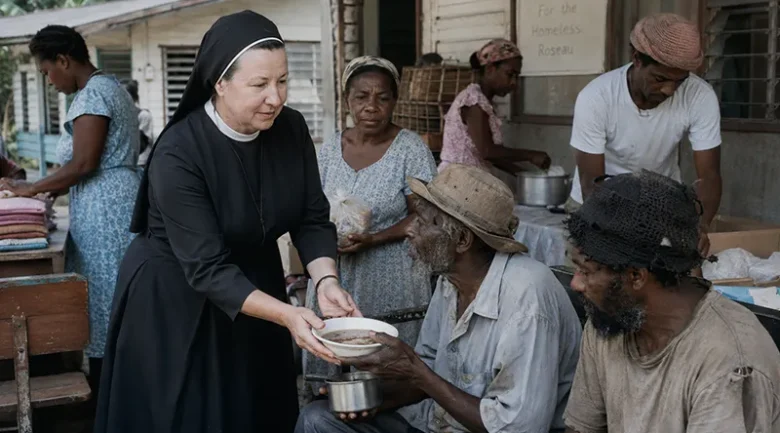
Sister Madeleine Millecamps, ICM, was a Belgian-born Roman Catholic religious sister and missionary who dedicated decades of service to social welfare and development in Dominica. As a member of the Missionary Sisters of the Immaculate Heart of Mary (ICM), she had an impactful role in addressing extreme poverty, destitution, and vagrancy on the island. Sister Madeleine is historically recognized as the chief visionary and driving force behind the founding of The Grotto Home for the Homeless, a landmark non-profit institutional refuge established in 1976 to provide structured care, food, and shelter to Roseau’s most vulnerable populations.
Identity and Connection to Dominica
Sister Madeleine Millecamps was a foreign missionary who was a Dominica-impact figure. She operated primarily out of the ICM religious community houses in Newtown and Roseau. At a time when state-sponsored social safety nets for the destitute were minimal, she transformed the Catholic Church’s local charitable outreach into an organised civic institution, leaving a long-term legacy in Dominica’s social infrastructure.
Early Life and Missionary Training
She entered the congregation of the Missionary Sisters of the Immaculate Heart of Mary (traditionally known as the Belgian Sisters), an international religious order founded by Mother Marie Louise De Meester to specialize in education, healthcare, and pastoral care in developing nations. Following her formal religious profession and theological training, she was assigned to the Caribbean province and deployed to the Commonwealth of Dominica, joining an established network of Belgian sisters who had served the island since 1922.
Missionary Service and Social Activism
Upon her arrival, Sister Madeleine was stationed within the urban and suburban parishes of southwest Dominica. She initially supported the congregation’s ongoing educational and domestic ministries, working from the ICM house located in Newtown, Roseau, positioned behind the Our Lady of Fatima Church. Here, she managed regional supply storerooms that channeled clothing and food distributions to low-income families.
By the early 1970s, Sister Madeleine shifted her focus toward the visible problem of unhoused individuals, elderly vagrants, and mentally vulnerable persons living on the streets of the capital city. Moving on foot through Roseau in the early mornings, she independently organised feeding initiatives and basic medical welfare checkups for individuals traditionally classified in local administrative terms as “undesirables” or “vagrants.” Convinced that ad-hoc street feeding was insufficient to address chronic destitution, she began lobbying ecclesiastical authorities and civic leaders for a permanent shelter.
Founding of The Grotto Home for the Homeless
In 1976, Sister Madeleine, alongside a small network of local civic volunteers, formally established a sanctuary named the Grotto Home for the Homeless. The initiative launched in a temporary, rudimentary structure located on the grounds of what is today the Windsor Park Sports Stadium. Under her supervision, the home provided an immediate alternative to street sleeping, offering consistent meals, hygienic facilities, and medical advocacy.
Sister Madeleine managed the shelter’s daily operations during its critical foundational years, establishing a structured administration that relied on community donations, local volunteer support, and international missionary funding. Her institutional model successfully shifted the societal approach toward unhoused Dominicans from punitive vagrancy enforcement to rehabilitative, dignified care.
Later Years and Institutional Evolution
As the number of active international ICM sisters in Dominica declined in the late 20th century, Sister Madeleine oversaw the structural transition of the home’s management to Dominican lay leaders and a formal board of directors, ensuring its long-term operational stability. The non-profit organisation she pioneered eventually outgrew its original site, transferring its operations to an expansive, purpose-built residential facility in Bellevue Rawle, which continues to provide care and housing for dozens of residents.


References
-
1.
CARE FOR THE HOMELESS : 100th Anniversary of the ICM Sisters , serving in Dominica https://bernardlauw.wordpress.com/2022/11/03/care-for-the-homeless-100th-anniversary-of-the-icm-sisters-serving-in-dominica/