


Electorate of Dominica
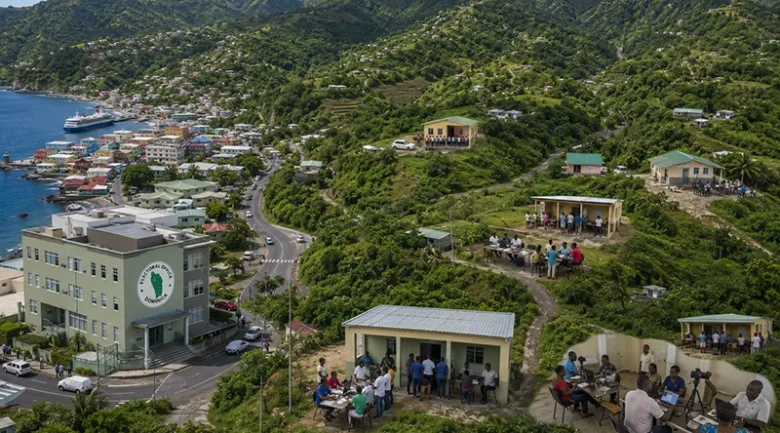
The Electorate of Dominica constitutes the total body of citizens qualified to vote in national general elections within the island. Operating under a parliamentary democracy modelled on the British Westminster system, the electorate plays a definitive role in determining the political composition of the unicameral House of Assembly. In the domestic political sphere, the size, composition, and regulation of the voter’s list are subjects of intense constitutional and sociological debate.
A unique demographic reality defines Dominica’s electorate: the number of registered voters has historically approached or exceeded the island’s estimated home-based adult population. This statistical overlap is driven by a vast, highly politically conscious diaspora that retains voting rights under specific statutory conditions. As of 2026, the electorate is undergoing its most profound structural transformation since independence, characterised by a sweeping national voter confirmation exercise to audit the voter register and roll out the nation’s first biometric voter identification cards.
Constitutional Foundations and Voter Qualifications
The legal definition and rights of the electorate are anchored in Chapter III of the 1978 Constitution of the Commonwealth of Dominica. Section 35 outlines the explicit qualifications and disqualifications for registration as an elector. To be eligible to register and cast a ballot in a national election, an individual must be at least 18 years of age. The constitutional framework grants voting rights not only to born or naturalised Dominican citizens but also to Commonwealth citizens who meet specific residency thresholds.
To register within a particular constituency, an applicant must have resided in Dominica for a continuous period of at least twelve months immediately preceding the registration date and must maintain a continuous residence of at least three months within the specific electoral district.
The Constitution also defines the parameters for voter disqualification. Individuals are barred from joining the electorate if they are certified to be insane or mentally unsound under domestic law, if they are under a sentence of death imposed by a court in any part of the Commonwealth, or if they are serving a sentence of imprisonment exceeding twelve months.
Ultimate administrative authority over the electorate is vested in the Electoral Commission, an independent statutory body established under Section 56 of the Constitution. The Commission is composed of a Chairman appointed by the President on the advice of the Prime Minister, two members appointed on the advice of the Prime Minister, and two members appointed on the advice of the Leader of the Opposition. This balanced composition is designed to safeguard the independence of the registration process and preserve public confidence in the democratic machinery.
The Electoral System and Parliamentary Structure
Dominica’s parliamentary architecture is centered around a 21-seat House of Assembly. The electorate is divided geographically into 21 single-member constituencies, and elections are conducted using the First-Past-The-Post (FPTP) system. Under this mechanism, the candidate who secures a plurality of valid votes cast within a constituency is declared the parliamentary Representative, regardless of whether they achieve an absolute majority.
The parliamentary system also features a non-elected element consisting of nine Senators. The Constitution allows for these Senators to be either elected by the Representatives themselves or appointed by the President. In standard practice, they are appointed: five on the advice of the Prime Minister and four on the advice of the Leader of the Opposition. This hybrid structure means that while the electorate directly chooses the 21 Representatives, the ultimate legislative body includes nominated members who can influence legislative debates and committee assignments.
The political party that secures a majority of the 21 elected seats forms the government, and its leader is appointed Prime Minister by the President. The term of the House of Assembly is constitutionally capped at five years from its first sitting, though the Prime Minister retains the executive prerogative to advise the President to dissolve Parliament and call a snap general election at any point within that window.
Constituency Profiles and Demographic Imbalances
The spatial distribution of Dominica’s electorate reveals significant demographic disparities between urban, suburban, and rural constituencies. Internal migration over the past four decades has steadily shifted the population away from isolated agricultural villages toward the economic hubs surrounding the capital city of Roseau and the northern town of Portsmouth. This shift has created an electoral phenomenon known as malapportionment, in which the statistical weight of an individual vote varies widely across constituencies.
The official registry maintains a baseline of approximately 71,468 registered voters distributed across 100 polling districts. However, the size of individual constituency electorates varies dramatically. Suburban and urban corridors like Roseau North, Mahaut, and Roseau South feature the highest concentrations of voters, driven by housing developments and commercial centralization. Conversely, rural constituencies along the western and eastern coasts, such as Colihaut and Morne Jaune/Riviere Cyrique, retain much smaller electorates.
| Constituency | Number of Polling Districts | Historical Registered Electorate | Geographic/Socioeconomic Profile |
| Roseau North | 7 | 7,315 | Urban/Suburban Hub; Highest population density. |
| Mahaut | 7 | 7,060 | Light Industrial/Suburban Corridor; Rapidly expanding. |
| Roseau South | 9 | 6,874 | Residential Suburbs; High concentration of civil servants. |
| St. Joseph | 5 | 3,867 | Mixed Agricultural and Coastal; Central western region. |
| Grand Bay | 3 | 3,934 | Cultural Hub; Southern agricultural and fishing roots. |
| Roseau Central | 7 | 3,822 | Political and Commercial Capital; High commercial registry. |
| Soufriere | 4 | 3,409 | Tourism and Fishing; Southwestern volcanic valley. |
| Portsmouth | 5 | 3,272 | Secondary Urban Centre; Major northern port and commercial hub. |
| Wesley | 3 | 3,254 | Agricultural and Infrastructure; Site of the international airport project. |
| Marigot | 3 | 2,610 | North-Eastern Hub; Historically aligned with agrarian independence. |
| Salisbury | 4 | 2,631 | Heavy Agricultural Production; Central-west coast. |
| Petite Savanne | 5 | 2,665 | Isolated Southern Villages; High displacement post-disaster. |
| Paix Bouche | 4 | 2,661 | Northern Inlands; Rugged terrain, traditionally agrarian. |
| La Plaine | 7 | 2,562 | Eastern Atlantic Coast; Historically geographically isolated. |
| Salybia | 2 | 2,531 | Kalinago Territory; Communal land ownership, indigenous electorate. |
| Castle Bruce | 5 | 2,850 | Windward Coast; Farming and fishing cooperatives. |
| Vieille Case | 6 | 2,148 | Extreme North Coast; Rugged topography, high diaspora ties. |
| Cottage | 3 | 2,186 | Northern Peninsula; Fishing and small-scale farming. |
| Roseau Valley | 5 | 2,560 | Eco-Tourism Corridor; Mountainous terrain, hydro-resource zone. |
| Morne Jaune/Riviere Cyrique | 3 | 1,726 | Eastern Highlands; Low density, agricultural focus. |
| Colihaut | 3 | 1,531 | Smallest Electorate; West coast fishing village, high emigration. |
The Diaspora Voting Phenomenon and the Five-Year Rule
The defining structural characteristic of the Dominican electorate is the external diaspora. Decades of emigration to the United States, Canada, the United Kingdom, and wealthier Caribbean islands (such as Antigua, St. Martin, and Guadeloupe) have resulted in a transnational population that matches or exceeds the resident citizenry. Unlike many modern democracies, Dominica’s legal framework does not facilitate external voting; there are no provisions for postal ballots, electronic voting, or voting at overseas embassies.
Consequently, for a member of the diaspora to exercise their franchise, they must physically travel to Dominica and cast their ballot at the polling station where they are registered. Under the Registration of Electors Act, a registered voter who leaves the island is legally required to be removed from the active register if they remain continuously absent from Dominica for a period exceeding five years.
However, the enforcement of this “five-year rule” has historically been limited by systemic administrative gaps. The Electoral Office has long lacked a secure, automated data-sharing mechanism with the Immigration Department’s border control systems to track citizens’ departures and prolonged absences. As a result, the national voters’ list has accumulated thousands of names of citizens living permanently abroad.
This administrative gap has shaped national campaign strategies. During competitive election cycles, political parties frequently coordinate and finance charter flights to transport thousands of diaspora voters back to the island for election day. This practice has generated intense legislative debate, with reform advocates arguing it distorts domestic self-determination, while defenders maintain that overseas Dominicans contribute significantly to the economy through remittances and should retain a voice in governance.
The 2024–2026 Electoral Reform and Confirmation Crisis
Following years of civil advocacy, opposition protests, and international recommendations from bodies such as the Organization of American States (OAS) and the Commonwealth Secretariat, the government initiated a comprehensive overhaul of the electoral framework. The state engaged Sir Dennis Byron, a distinguished former President of the Caribbean Court of Justice, as a sole commissioner to draft a modernised suite of legislation. This resulted in the passage of the Registration of Electors Act and the Electoral Commission Act.
The centrepiece of this legislative reform is a mandatory, nationwide Voter Confirmation Exercise. The Electoral Commission designated a statutory twelve-month window, running from September 1, 2025, to August 31, 2026, during which every individual on the historical register must physically present themselves to an electoral officer to confirm their identity, verify their residency status, and capture biometric data. This exercise is explicitly designed to purge the names of deceased individuals and long-term emigrants who have violated the five-year absence rule, resulting in a verified clean list.
In terms of the confirmation process under the new Registration of Electors Act, the Electoral Office received 16,573 applications from October 15, 2025, to April 30, 2026. Yet, only 6,592 or 40% of those applications have been formally approved… representing a significant operational bottleneck.
— Executive Press Briefing, Office of the Prime Minister
By May 2026, this confirmation exercise encountered severe operational challenges. Official data revealed that while over 16,500 voters had applied for confirmation during the initial stages, bureaucratic bottlenecks within the Electoral Office meant that less than half of those files had been successfully processed and approved. Furthermore, the production and distribution of the highly anticipated national voter identification cards faced persistent delays.
Faced with the prospect of an inaccurate or incomplete register as the statutory deadline neared, the Government of Dominica issued an urgent formal request to international agencies, including the Commonwealth Secretariat, the OAS, the Caribbean Community (CARICOM), and the Organisation of Eastern Caribbean States (OECS), seeking external technical missions to audit the confirmation pipeline, expedite the voter ID rollout, and restore operational momentum to the reform process.
Political Polarization and Electorate Behavior
The behavioural dynamics of the Dominican electorate are marked by deep-seated partisan polarisation, primarily divided between the ruling Dominica Labour Party (DLP), which has held executive power since 2000 under the leadership of Prime Minister Roosevelt Skerrit, and the opposition United Workers Party (UWP), alongside smaller entities like the Dominica Freedom Party (DFP) and emerging independent coalitions.
Electoral history shows that voter turnout is highly contingent upon the perceived legitimacy of the electoral process. In standard, fully contested general elections, turnout among the resident population routinely exceeds 60 to 70 percent. However, the trust deficit regarding the uncleaned voters’ list culminated in a major disruption during the December 2022 snap general election.
Citing the absence of the promised electoral reforms and voter ID cards, the UWP and several prominent civil society organisations executed a comprehensive election boycott. The opposition refused to nominate candidates in the majority of the 21 constituencies.
This strategy fundamentally altered standard electorate behaviour: the DLP secured an overwhelming majority of 19 seats, largely uncontested or challenged only by independent political newcomers, and overall voter turnout dropped significantly. The legacy of the 2022 boycott highlights that the long-term stability of Dominica’s democratic system remains tied to transparent governance. Resolving ongoing voter confirmation reforms is vital to restoring a fragile consensus within the national electorate.


References
-
1.
2025 Voter List Sorted by Constituency https://electoraloffice.gov.dm/news/2025-voter-list-sorted-by-constituency
-
2.
Voting in Dominica: Office of the President https://presidentoffice.gov.dm/component/content/article/voting-in-dominica?catid=25&Itemid=101
-
3.
House of Assembly Elections Act (Chapter 2:01) https://www.dominica.gov.dm/laws/chapters/chap2-01.pdf
-
4.
Electoral Office National Legislation Directory https://electoraloffice.gov.dm/index.php/legislation
-
5.
Electoral Officer announces that the process of voter confirmation is proceeding with no interruptions https://dominicanewsonline.com/news/homepage/homepage-carousel/electoral-officer-announces-that-the-process-of-voter-confirmation-is-proceeding-with-no-interruptions/
-
6.
Lists from the Electoral Office are the only Legitimate Source of Elector Infromation https://emonewsdm.com/lists-from-the-electoral-office-are-the-only-legitimate-source-of-elector-infromation/
-
7.
Chief Electoral Officer Outlines Voter Confirmation Process https://emonewsdm.com/chief-electoral-officer-outlines-voter-confirmation-process/
-
8.
Dominica Elections: Preliminary Results Released, Observers to Report on Findings https://thecommonwealth.org/news/dominica-elections-preliminary-results-released-observers-report-findings