

Catching Crabs
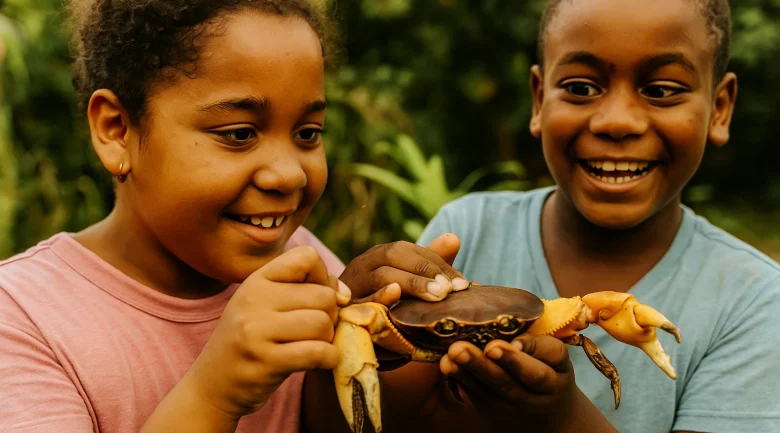
Catching Crabs is a widespread activity that blends subsistence, culture, and ecology in Dominica. From coastal plains to freshwater features and mangrove edges, Dominicans practice crabbing as part of their livelihoods and traditions. The activity is recognised under the Forestry and Wildlife Act and informs sustainable management within the Ecosystem Approach to Fisheries Management (EAFM) Plan for Dominica. It contributes to food security, cultural identity, and conservation awareness, linking communities to the island’s diverse biodiversity.
Methods and Seasonal Practices
Crab catching peaks during the rainy season, when species emerge from burrows and move across landscapes. At night, hunters armed with flashlights and bags collect crabs along paths, fields, and rivers. Coastal communities target the Cardisoma guanhumi (Blue Land Crab) in burrows, while inland hunters focus on the Cyrique in streams. Techniques also include setting traps at burrow entrances, hand digging, and guiding migrating crabs into nets. Captured crabs are often kept in pens and fed coconuts, leaves, or kitchen scraps before sale or cooking.
Species Commonly Caught
Catching crabs in Dominica focuses species adapted to land, forest, and mangrove habitats. Each has ecological and cultural importance:
- Goniopsis Cruentata: A mangrove crab that grazes algae and detritus, supporting estuarine ecosystems and small-scale household consumption.
- Gecarcinus Ruricola (Purple Land Crab): Forest crab migrating to sea for spawning, central to local cuisine, especially during cultural festivities.
- Gecarcinus Lateralis (Blackback Crab): Distinctive orange and black species of dry coastal scrub, hunted at dusk and night.
- Cardisoma Guanhumi (Blue Land Crab): Large burrowing crab, valued for its meat, harvested seasonally under licensing to prevent overexploitation.
- Guinotia Dentata (Cyrique): Freshwater river crab, common in inland streams, prized in soups and stews, a staple for many families.
These crabs, from rivers to mangroves, illustrate how catching sustains families and communities while contributing to the ecology of the coastline.
Cultural and Economic Importance
Catching crabs is a practice that provides food but also represents a cultural foundation in Dominican life. Local dishes like crab callaloo, land crab stew, and cyrique soup are highlights of festivals and household meals. Families often participate together, making crab catching a tradition passed through generations. Economically, crabs are sold in markets, creating seasonal income for fishers, vendors, and rural households. The practice connects rural communities with coastal markets, reinforcing cultural exchange and livelihoods.
Conservation and Sustainable Management
While catching crabs is integral to daily life, unregulated crab harvesting threatens populations. The Forestry and Wildlife Act outlines open and closed seasons, especially for the Blue Land Crab, to ensure reproductive success. Conservation agencies and the National Parks and Protected Areas Act, 1975 safeguard critical habitats such as mangroves, riverbanks, and upland forests. Community-based organizations and cooperatives like the Fond St Jean Fisheries Cooperative play a role in monitoring, while education programs highlight the ecological roles of crabs within Dominican wildlife. These efforts align cultural practices with sustainability, ensuring crab catching remains viable for future generations.


