


Blue Land Crab (Cardisoma guanhumi)
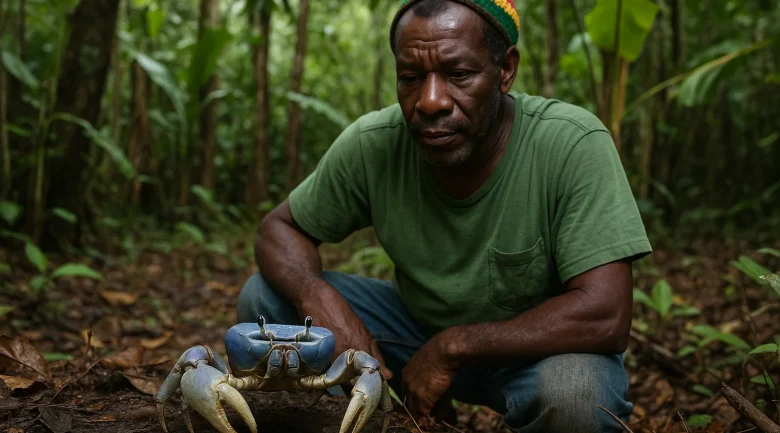
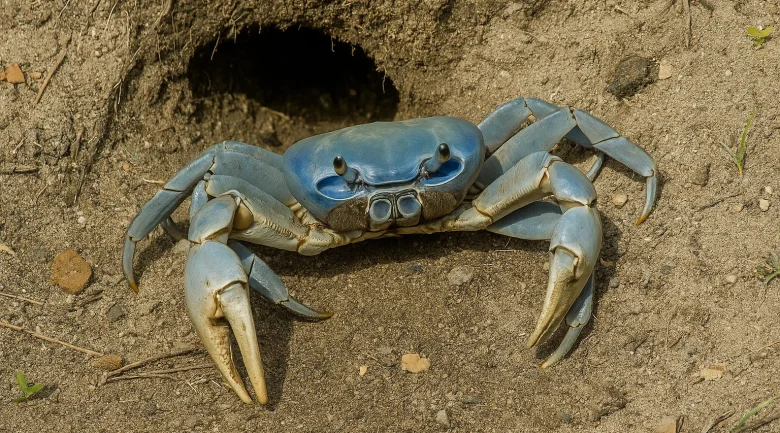
The Blue Land Crab (Cardisoma Guanhumi) is a large terrestrial crab species easily recognised in Dominica by its rounded carapace, long eyestalks, and unequal claws. Its colouration ranges from slate blue to grey or pale brown, while freshly moulted crabs appear lighter until their shells harden. Males typically feature a larger dominant claw and a narrower abdomen. Unlike freshwater crabs such as the Cyrique (Guinotia dentata), this species must access brackish or marine waters to reproduce. Apart from its ecological role in supporting shoreline biodiversity, it is also a familiar presence in Dominican household cooking, making it significant both environmentally and culturally.
This crab is widely distributed across the island, inhabiting coastal plains, mangroves, and agricultural edges where moist soils allow for burrow construction. It is especially common near rivers like the Londonderry River and Toulaman River, as well as in lowland areas around Woodford Hill, Berekua, and the mangrove swamps of Dominica. Its ability to thrive in diverse lowland habitats highlights its importance as one of the most recognizable land crabs in the country’s ecosystems.
Habitat and Distribution of the Blue Land Crab
This crab occupies salt-influenced flats, mangrove fringes, and back-beach thickets, extending into lower Rivers and seepage lines along coastal Ravines. Burrows descend to the water table, creating cool, humid refuges during dry spells and providing protection from predators. Reliable localities include mangrove margins near Indian River and Prince Rupert Bay, low coastal plains around Londonderry and Hampstead, and back-beach scrub east of Castle Bruce and at the Rosalie River mouth. Activity peaks at dusk, at night, and after rainfall, when crabs forage widely and gravid females begin seaward migrations to release larvae. Densities are highest where vegetation, detritus, and gentle salinity gradients coincide.
Diet, Predators, and Role in Ecosystems
Blue land crabs are primarily herbivorous detritivores, grazing leaves, fruits, seedlings, and wrack, with opportunistic scavenging on carrion and small invertebrates. By shredding litter and stirring soils, they speed nutrient cycling, aerate substrates, and influence plant communities that stabilise dunes and mangrove edges. Predators include herons and egrets on open flats, dogs near settlements, and coastal fishes that consume larvae during the marine phase. These land-to-sea connections tie dune scrub, mangroves, estuaries, and nearby reefs emphasing the role of marine conservation, showing how shoreline species support wider ecological processes.
Harvest, Regulation, and Stewardship
The crab is valued in stews and seasoned dishes. Crab hunting is regulated under the Forestry and Wildlife Act, with licence-controlled open seasons and prohibitions inside protected areas administered through the National Parks and Protected Areas Act. Shoreline rules align with the Beach Control Act, guiding vehicle access, lighting, and structures near burrow fields and spawning corridors. Good practice includes avoiding egg-bearing females, respecting closed areas, purging crabs safely before cooking, and keeping crab harvesting away from sensitive mangroves and turtle-nesting beaches. Community clean-ups, riparian and dune vegetation care, and careful lighting near back-beach habitats help sustain populations while protecting the connected network of Rivers, Ravines, and coastal flats that define the species’ range.


