


Cyrique (Guinotia Dentata)
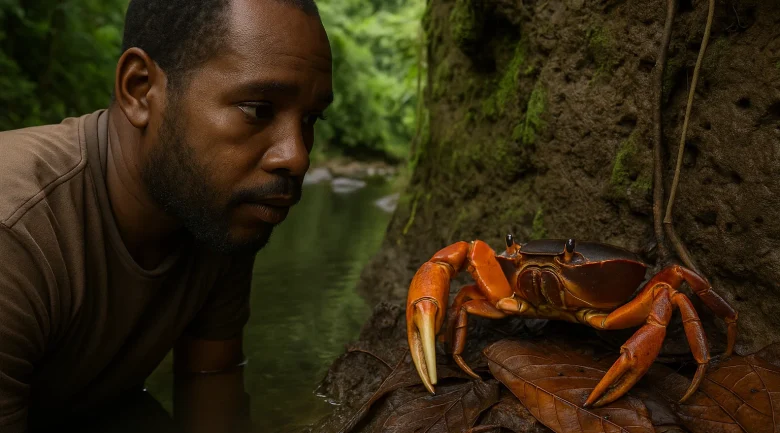
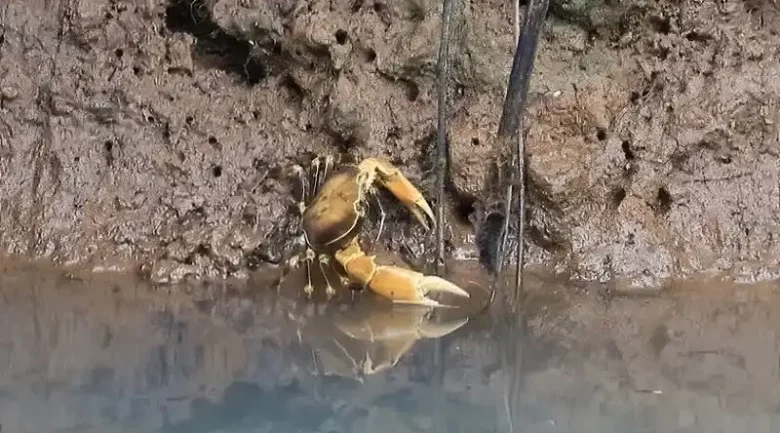
Cyrique (Guinotia dentata) is a medium-sized freshwater crab in Dominica characterised by a rounded yellow-brown to dark-brown carapace and stout, often asymmetric claws. Eyes are set laterally; strong walking legs are suited for rocky runs and root mats. Unlike coastal land crabs, cyrique completes its entire life cycle in fresh water, releasing benthic juveniles rather than marine larvae. It is a familiar species of Crab in Dominica and a staple of riverine foodways.
Cyrique’s Habitat and Distribution
Cyrique thrives in cool, shaded channels with steady flow and clean substrates along Rivers and Ravines. Reliable localities include the Layou Valley, Indian River in Portsmouth, the Pagua River basin, lower Hampstead River, and forested streams within Morne Trois Pitons National Park (Laudat, Eggleston, Trafalgar). On the east coast it is reported from the reaches of the Rosalie River and around Castle Bruce. Individuals shelter beneath stones, among tangled roots, or in shallow burrows, emerging most after dusk, during the night, and following rainfall. Intact riparian canopy supports stable populations by moderating temperature, limiting siltation, and supplying leaf litter.
Diet, Predators, and Role in Ecosystems
An omnivorous scavenger, cyrique feeds on fallen leaves, biofilm algae, aquatic insects, small snails, tadpoles, and occasional carrion; soft fruits dropping into channels are also taken. Predators include herons and egrets on open riffles, kingfishers over shaded pools, freshwater eels (Anguillidae), and larger predatory fishes in deep runs. By shredding litter and stirring fine sediments, cyrique accelerates decomposition and nutrient cycling, creating microhabitats for insect larvae, shrimps, and juvenile fishes, functions central to ecosystems and biodiversity outcomes in headwaters. Healthy upland corridors feed directly into estuaries and coral reefs, ensuring a strong commitment to Marine Conservation, linking watershed integrity to coastal productivity.
Harvest, Regulation, and Stewardship
Cyrique is harvested for household dishes and village events. Crab hunting is regulated under the Forestry and Wildlife Act, with licence-controlled open seasons and strict prohibitions inside protected areas administered through the National Parks and Protected Areas Act. Good practice includes avoiding egg-bearing females, limiting catch at easy-access hotspots, and keeping streams free of debris, detergents, and agrochemicals. Community river-walks, riparian replanting, careful road works, and local water-quality checks support resilient populations across the Rivers network and steep Ravines that drain forested slopes.


