


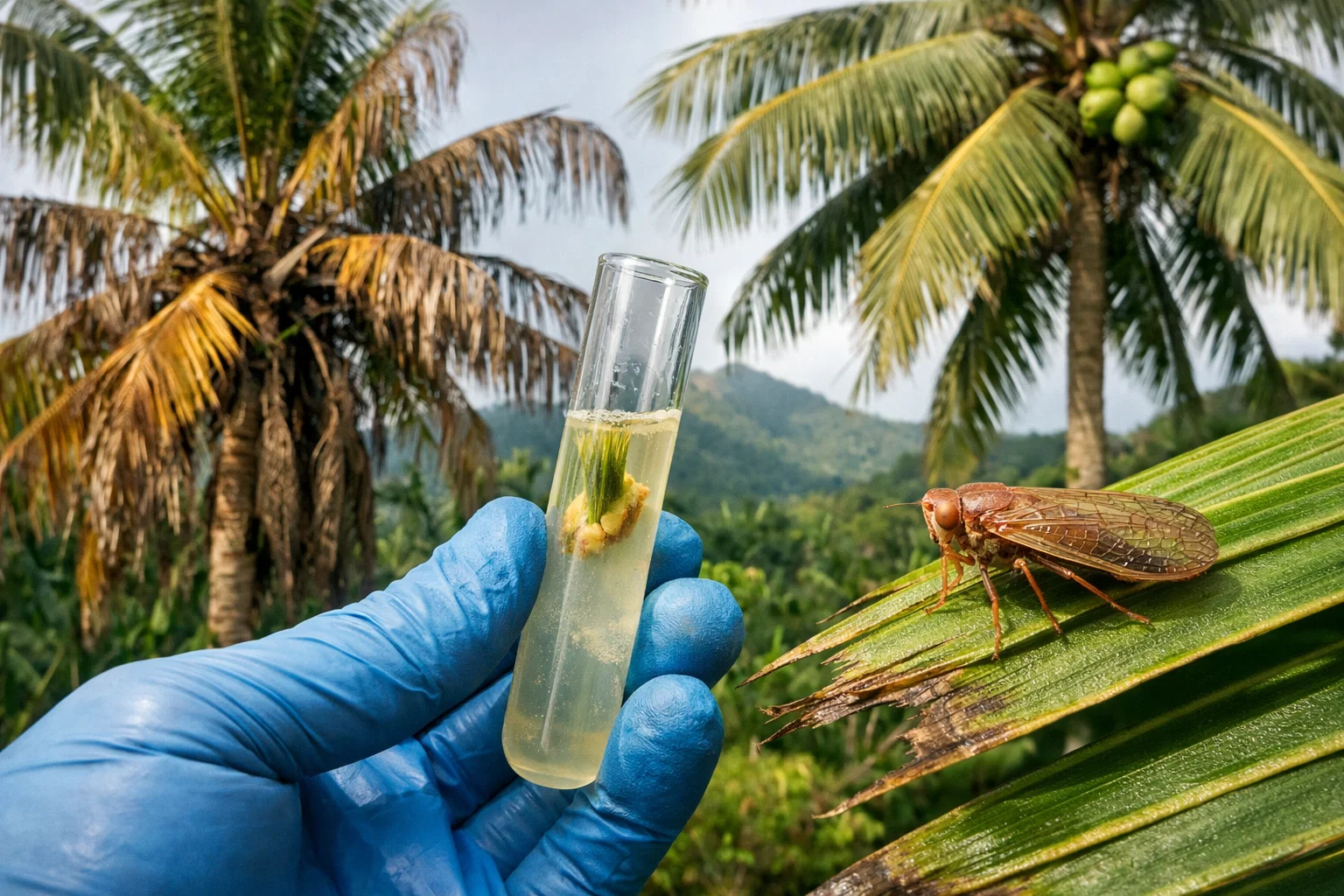

Asian Citrus Psyllid
The Asian Citrus Psyllid (ACP), scientifically identified as Diaphorina citri, is a small, sap-sucking insect in Dominica that serves as the primary biological vector for the bacterium responsible for Citrus Greening, or Huanglongbing (HLB). The presence of this pest has transitioned from a minor entomological concern to a national agricultural crisis. While the insect causes limited direct damage through feeding, its ability to transmit the Candidatus Liberibacter asiaticus bacterium has led to the systemic decline of the island’s citrus industry. Managing the Asian Citrus Psyllid is currently the cornerstone of the Ministry of Agriculture’s strategy to preserve the remaining citrus germplasm and ensure the long-term viability of local lime, orange, and grapefruit cultivation.
Historical Context and Arrival in Dominica
The Asian Citrus Psyllid is native to southern Asia, but it has expanded its range globally alongside the commercial trade of citrus plants.
Detection and Island-Wide Spread
In Dominica, the ACP was first detected and recorded in the early 2000s, several years before the actual Citrus Greening bacterium was confirmed on the island (2012). During the initial years of its arrival, the psyllid was primarily viewed as a pest of ornamental plants such as Orange Jasmine (Murraya paniculata),a common hedge plant in residential areas of Roseau and Portsmouth.
By the mid-2000s, the insect had established robust populations in all major citrus-growing regions, including the Layou Valley, Gommier, and the North Eastern agricultural districts. Its spread was facilitated by the island’s interconnected valleys and the frequent movement of citrus materials between parishes. The humid, tropical climate of the Nature Island provided an ideal environment for year-round reproduction, with no cold winters to naturally check population growth.
Taxonomy and Biological Characteristics
The Asian Citrus Psyllid belongs to the family Psyllidae. It is a specialised feeder that relies entirely on plants within the Rutaceae family.
Physical Description
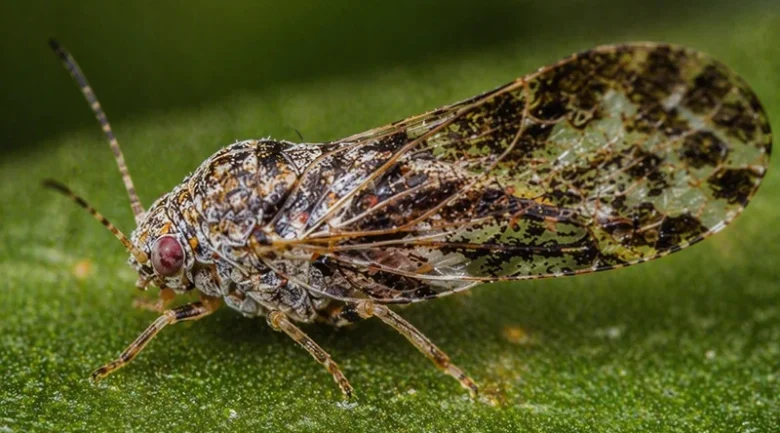
- Adults: The adult ACP is approximately 3 to 4 mm long. It has a mottled brown body and transparent wings with dark spots around the edges. A defining behavioural characteristic of the adult is its feeding posture: it settles on a leaf or stem at a distinct 45-degree angle, with its head down and tail pointed upward.
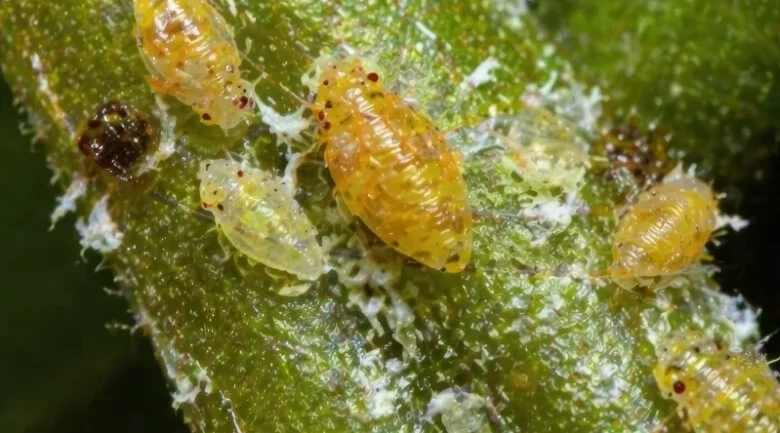
- Nymphs: The juvenile stages (nymphs) are yellowish-orange and lack wings. They are found exclusively on the “flush” (young, tender new growth) of the citrus tree. Nymphs produce long, curly, white waxy filaments as a byproduct of feeding, which are often the first sign a farmer notices during a field inspection.
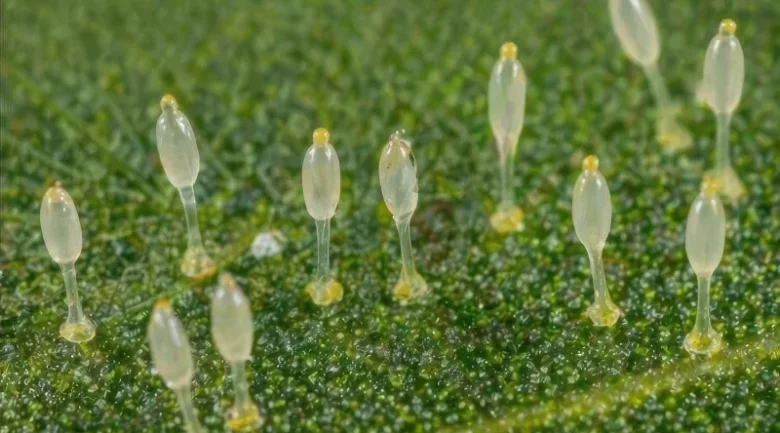
- Eggs: The eggs are tiny, almond-shaped, and bright orange. A single female can lay up to 800 eggs during her lifetime, usually tucked into the crevices of unexpanding leaf buds.
Mechanisms of Disease Transmission
The most critical role of Diaphorina citri in Dominica is its efficiency as a vector for the HLB bacterium.
The Acquisition Phase
When a psyllid feeds on a tree already infected with Citrus Greening, it ingests the bacteria along with the plant sap. The bacteria move from the insect’s gut into its salivary glands. Once an insect is infected, it remains a carrier for the rest of its life (approximately 30 to 50 days).
The Inoculation Phase
As the infected psyllid moves to a healthy tree to feed, it injects the bacteria into the phloem of the new host. In the warm Dominican climate, the transmission can happen in a matter of hours. Because the psyllid is a strong flyer and can be carried long distances by wind, especially during the tropical storm season, the “hop-scotch” spread of the disease from one orchard to the next is difficult to contain.
Direct and Indirect Damage to Citrus
While the transmission of HLB is the primary concern, the Asian Citrus Psyllid also causes physical damage to Dominican citrus groves.
Direct Feeding Damage
High nymph populations feeding on young shoots can cause leaf curling and distortion. The psyllid’s toxic saliva can also cause the tips of new flushes to wither and die, a condition sometimes called burn. This prevents the tree from establishing a new canopy, which is vital for recovery after pruning or hurricane damage.
Secondary Sooty Mold
Like many sap-sucking insects, the ACP excretes honeydew. In the high-humidity environments of parishes like Saint David, this sticky residue is quickly colonised by Sooty Mold (Capnodium spp.). This black fungus covers the leaves, reducing the tree’s ability to photosynthesise and making the fruit aesthetically unpleasing for local and export markets.
National Management and Control Strategies
The Ministry of Agriculture, Fisheries, Blue and Green Economy has developed a comprehensive Integrated Pest Management (IPM) framework to suppress ACP populations.
Biological Control: Tamarixia radiata
Dominica has placed significant emphasis on biological control to align with its Green Island branding. The most successful intervention has been the introduction of the parasitic wasp Tamarixia radiata.
- Mechanism: The female wasp lays an egg underneath the ACP nymph. When the wasp larva hatches, it consumes the psyllid from the inside out.
- Impact: This wasp has become established in several parts of the island, providing a silent layer of protection that reduces the need for heavy chemical spraying in residential and sensitive ecological zones.
Chemical Management
In commercial orchards, chemical control is often necessary to prevent the spread of HLB. The Plant Protection and Quarantine Unit advises farmers on the use of:
- Systemic Insecticides: Such as neonicotinoids (e.g., Imidacloprid) applied as a soil drench, which protects the tree from the inside out.
- Contact Sprays: Used during the flushing periods when psyllid activity is highest.
- Horticultural Oils: Neem-based or petroleum-based oils are used to smother eggs and nymphs, offering a lower-toxicity option for smallholders.
Cultural Practices
- Host Management: Encouraging the removal of Orange Jasmine (Murraya paniculata) hedges, which act as nurseries for the psyllid near citrus orchards.
- Coordinated Spraying: Attempting to synchronize pesticide applications among neighboring farmers to prevent psyllids from simply moving to an untreated farm next door.
Institutional Framework and Legislation
Several administrative bodies and legal instruments within Dominica govern the control of the Asian Citrus Psyllid.
The Plant Protection Act
Under the Plant Protection and Quarantine Act, the Ministry of Agriculture has the authority to:
- Declare quarantine areas where the movement of citrus is restricted.
- Mandate the removal of neglected or heavily infested trees that serve as a source of infection for the rest of the community.
- Regulate the importation of citrus budwood to prevent the introduction of even more virulent strains of the bacteria or the psyllid.
Role of Extension Services
The Division of Agriculture‘s extension officers provide hands-on training for farmers. This includes scouting techniques, such as using yellow sticky traps or tap sampling (tapping branches over a white sheet), to monitor psyllid populations and time interventions accurately.
Data and Economic Significance
The impact of the ACP-HLB complex on Dominica’s economy has been severe.
- Production Decline: Since the psyllid facilitated the spread of HLB, national citrus production has seen an estimated decline of over 50% in marketable yield.
- Export Restrictions: The presence of the psyllid has made it increasingly difficult for Dominica to export fresh citrus to non-infested regional partners, as strict phytosanitary certifications are required to ensure no live insects are transported.
- Research and Development: Organizations like CARDI and IICA continue to provide data to the Government of Dominica regarding psyllid resistance to certain chemicals and the efficacy of local predatory ladybird beetles.
Future Outlook and Resilience
The future of the Dominican citrus industry depends on successfully containing the Asian Citrus Psyllid. While eradication is no longer considered possible, the goal is to keep population levels below the threshold where they can cause rapid disease spread.
Emerging strategies include the use of certified clean plants produced in insect-proof screenhouses and the investigation of psyllid-resistant citrus varieties. By combining rigorous surveillance with community-wide cooperation, Dominica aims to restore its status as a premier producer of high-quality Caribbean citrus.


References
-
1.
CABI Invasive Species Compendium: Diaphorina citri https://www.cabidigitallibrary.org/doi/10.1079/cabicompendium.18615
-
2.
IICA: Integrated Management of Citrus Greening https://repositorio.iica.int/handle/11324/3028
-
3.
Emergency Agricultural Livelihoods and Climate Resilience Project https://projects.worldbank.org/en/projects-operations/project-detail/P166328
-
4.
USDA APHIS: Caribbean Pest Surveillance https://www.aphis.usda.gov/aphis/ourfocus/planthealth/plant-pest-and-disease-programs/pests-and-diseases/citrus/citrus-greening
-
5.
Agriculture minister outlines government investment in revitalizing citrus industry https://dominicanewsonline.com/news/homepage/homepage-carousel/agriculture-minister-outlines-government-investment-in-revitalizing-citrus-industry/
-
6.
Dominica steps up citrus plant production and certification https://www.freshplaza.com/north-america/article/9809374/dominica-steps-up-citrus-plant-production-and-certification/