


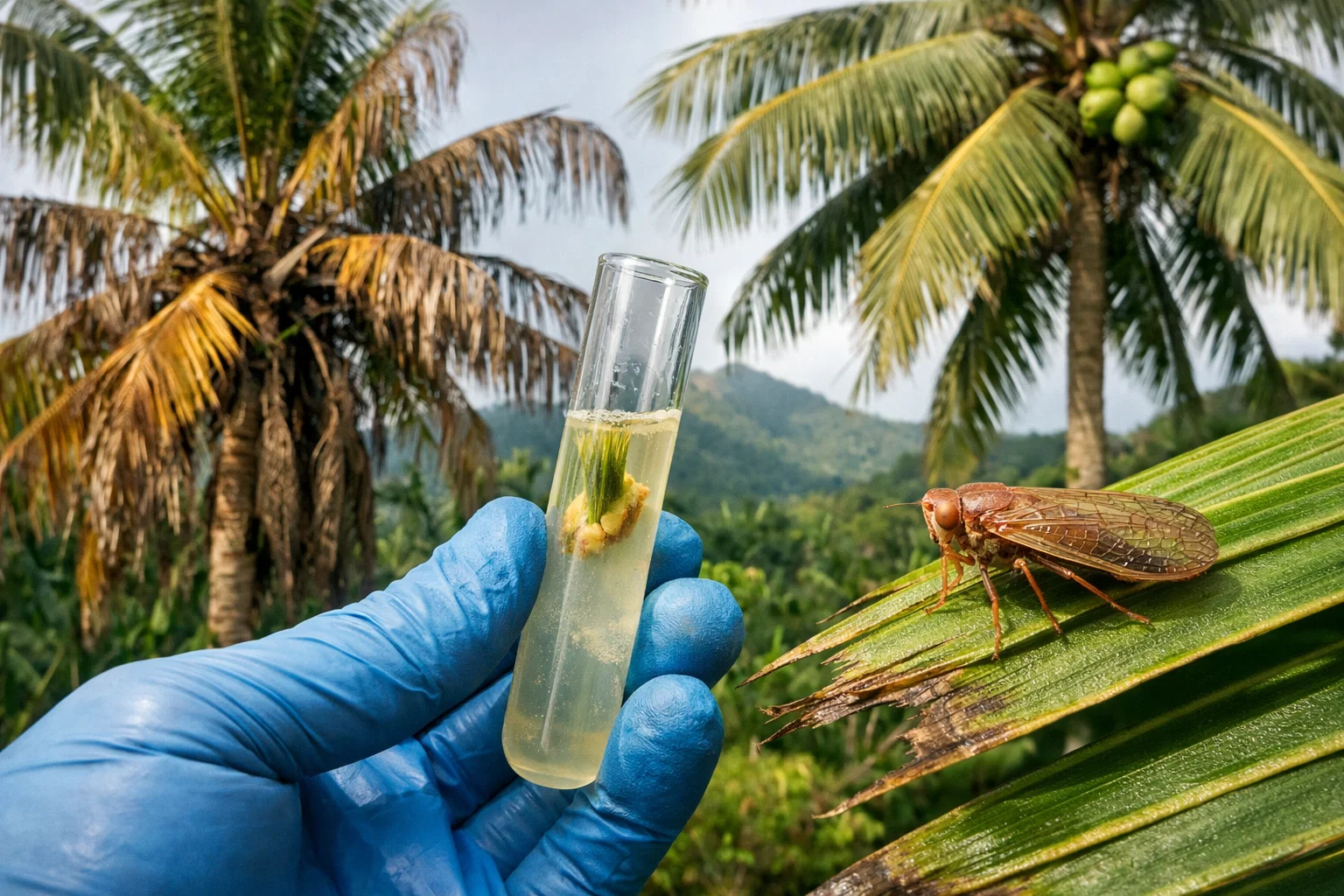

Citrus Greening in Dominica
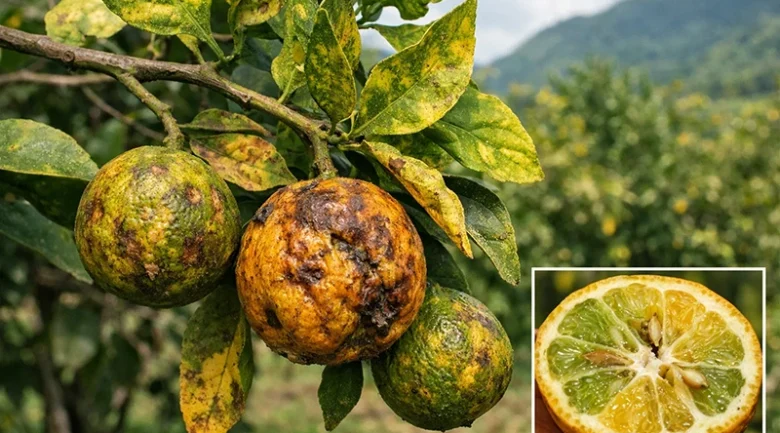
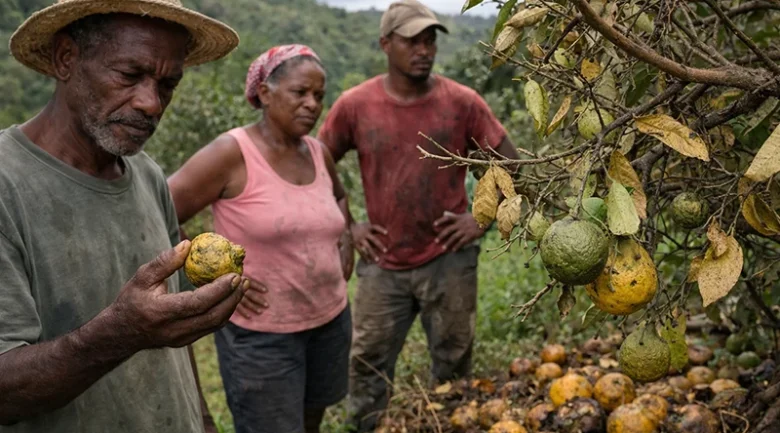
Citrus greening, also known as Huanglongbing (HLB) or “Yellow Dragon Disease,” is a bacterial plant disease affecting citrus crops in Dominica. It represents the single greatest existential threat to the citrus industry. Caused by the phloem-limited bacterium Candidatus Liberibacter asiaticus and disseminated by the Asian Citrus Psyllid (Diaphorina citri), the disease disrupts nutrient flow within the tree, leading to decline, fruit loss, and eventual tree death.
In the Commonwealth of Dominica, an island historically celebrated as a regional hub for citrus production, particularly for its world-renowned limes, the arrival of HLB has forced a total revaluation of agricultural strategy, shifting the national focus from export-led growth to the preservation of germplasm and intensive integrated pest management (IPM).
Historical Narrative and Arrival
For much of the 20th century, Dominica was considered the Citrus Capital of the Eastern Caribbean. The island’s nutrient-rich volcanic soil and high rainfall provided the ideal environment for cultivating West Indian Limes, Valencia Oranges, and Marsh Grapefruit. However, the industry’s vulnerability was exposed in the early 21st century as HLB moved through the Florida citrus belts and across the Caribbean archipelago.
Detection and Timeline
Citrus Greening was officially confirmed in Dominica in early 2012. The detection followed several years of high-alert surveillance by the Ministry of Agriculture. Initial samples were collected from orchards in the Layou Valley (Saint Joseph Parish) and Gommier (Saint George Parish), which served as the epicenters of the island’s commercial citrus production.
The timing of the outbreak was particularly challenging. The Dominican citrus industry was already struggling with the effects of Citrus Tristeza Virus (CTV) and the economic fallout from changing trade preferences in global markets. The introduction of HLB acted as a force multiplier, leading to a rapid decline in tree health across all seven agricultural regions of the island. By 2014, the disease was considered endemic, with nearly all commercial and backyard citrus trees showing some level of infection.
Biology of the Pathogen and the Vector
Understanding the relationship between the bacteria and its insect carrier is central to Dominican management protocols.
The Pathogen: Candidatus Liberibacter asiaticus
The bacteria reside in the phloem (the tissue responsible for transporting sugars from leaves to the rest of the tree). Unlike typical bacteria, Liberibacter cannot be grown in a laboratory culture. It causes the phloem to become blocked or plugged, which effectively starves the roots and the fruit of the energy they need to develop. In Dominica, the Asiatic strain of the bacteria is the most prevalent, known for its high virulence and ability to survive in both cool mountain microclimates and hot coastal zones.
The Vector: Asian Citrus Psyllid (ACP)
The Asian Citrus Psyllid (Diaphorina citri) is a tiny, mottled-brown insect about the size of an aphid. It was detected in Dominica several years prior to the disease itself.
- Feeding Behavior: The psyllid feeds on the young, tender growth (flushes) of citrus trees. It feeds at a characteristic 45-degree angle.
- Transmission: As the insect feeds on an infected tree, it ingests the bacteria. When it moves to a healthy tree, it injects the bacteria into the new host.
- Reproduction: In the humid Dominican climate, psyllid populations can explode during the rainy season when trees are flushing, as the females require new leaf growth to lay their eggs.
Symptomatology and Identification
One of the greatest challenges for Dominican farmers is distinguishing Citrus Greening from common nutrient deficiencies (such as Zinc or Magnesium deficiency) prevalent in acidic volcanic soils.
Foliar Symptoms: Blotchy Mottle
The most definitive symptom of HLB is Blotchy Mottle. This appears as asymmetrical yellowing on the leaf. If a leaf is folded in half along its midrib, the yellow pattern on one side will not match that on the other. In contrast, nutrient deficiencies are almost always symmetrical.
- Vein Corking: In advanced stages, the veins of the leaf may become swollen, yellow, and cork-like in texture.
- Yellow Shoots: Farmers often notice a single branch or shoot that turns bright yellow while the rest of the tree remains green.
Fruit Symptoms
The bacteria cause severe internal damage to the fruit, rendering it unmarketable.
- Color Inversion: Healthy citrus ripens from the base toward the stem. HLB fruit often ripens from the stem downward, a phenomenon known as colour inversion.
- Lopsidedness: The fruit becomes misshapen and lopsided. When cut in half, the central core is often curved or displaced.
- Aborted Seeds: The seeds inside HLB-infected fruit are usually small, shriveled, and blackened.
- Taste Profile: The juice develops a bitter, salty, or metallic aftertaste due to an increase in acidity and a decrease in sugar content.
Whole-Tree Decline
As the infection progresses, the tree experiences heavy leaf drop and branch dieback. Within 3 to 5 years of infection, the tree typically loses its structural integrity and dies, though it may linger as a reservoir for the disease for several more years.
Economic and Social Impact on Dominica
The socio-economic ramifications of Citrus Greening have been profound, affecting rural livelihoods and national food security.
Decline in Production Volumes
Prior to the 2012 outbreak, Dominica exported thousands of tonnes of citrus annually. Following the spread of HLB:
- Export Volumes: Citrus exports to neighboring islands like Antigua, St. Kitts, and the Virgin Islands dropped by an estimated 60-70%.
- The Lime Industry: The iconic Dominican Lime, essential for the local juice and essential oil industry, faced a near-total collapse in commercial acreage.
- Agro-Processing: Local processors who relied on citrus for concentrates and bottled juices were forced to import fruit pulp or diversify into other tropical fruits, such as passionfruit and guava.
Impact on Smallholders
For many small farmers in parishes like Saint David and Saint Patrick, citrus was a pension crop, a low-maintenance tree that provided a steady income. The arrival of HLB turned citrus into a high-maintenance crop, requiring expensive fertilisers, insecticides, and specialised labour that many smallholders could not afford.
National Management and Management Strategies
The Ministry of Agriculture, Fisheries, Blue and Green Economy oversees the national HLB management strategy, which is based on a three-pronged approach supported by regional partners like CARDI and IICA.
Vector Management (Psyllid Control)
Reducing the population of the Asian Citrus Psyllid is the most effective way to slow the spread of the disease.
- Chemical Intervention: The use of systemic insecticides (such as imidacloprid) applied as soil drenches or foliar sprays during critical flushing periods.
- Biological Control: Dominica has successfully introduced and established the parasitic wasp Tamarixia radiata. This wasp lays its eggs on the psyllid nymphs, effectively killing them. This natural enemy approach is vital for Dominica’s goal of maintaining a “Green” agricultural image.
The Clean Seedling Program
To prevent the introduction of the disease into new areas, the Plant Protection and Quarantine Unit manages a strict certification program for nurseries.
- Screenhouses: All new citrus seedlings intended for farmers must be produced in insect-proof screenhouses to ensure they are 100% HLB-free at the time of planting.
- Legal Enforcement: Under the Plant Protection and Quarantine Act, the illegal movement of citrus budwood or uncertified plants is a punishable offense. This is intended to stop the backyard spread of the disease.
Nutritional Therapy
While there is no known cure for HLB, Dominican researchers have found that enhanced nutritional programs can prolong the productive life of infected trees.
- Foliar Feeding: Applying micronutrients (Zinc, Manganese, Iron, and Boron) directly to the leaves bypasses the clogged phloem, allowing the tree to continue producing fruit for several additional years.
- Soil Health: Improving soil pH through the application of lime (calcium carbonate) helps the stressed roots of HLB trees absorb nutrients more efficiently.
Institutional Framework and Policy
The management of Citrus Greening is a coordinated effort involving several key Dominican and regional entities:
| Body | Primary Responsibility |
| Plant Protection Unit | Border surveillance, nursery certification, and HLB diagnostic testing. |
| Division of Agriculture (Extension) | Direct training for farmers on identification and nutritional regimes. |
| Pesticides Control Board | Regulating the insecticides used for vector management to ensure environmental safety. |
| CARDI (Dominica) | Investigating HLB-tolerant rootstocks and conducting field trials on biopesticides. |
| FAO | Providing technical and financial assistance for regional HLB surveillance projects. |
The Path Forward: Resilience and Research
Despite the severity of the crisis, the Dominican citrus sector is moving toward a coexistence model with the disease. Current research is focused on:
- Tolerant Rootstocks: Identifying citrus varieties that can survive and remain productive even after being infected with the Liberibacter bacteria.
- Area-Wide Management: Encouraging farmers in specific valleys to coordinate their spraying and de-leafing schedules to prevent psyllids from simply moving from one orchard to another.
- Diversification: Encouraging farmers to inter-crop citrus with other high-value crops to spread the economic risk.
The survival of the Dominican citrus industry depends on the rigorous application of science-based management and on the farming community’s commitment to following national quarantine protocols. While the Golden Age of low-maintenance citrus may be over, the island remains committed to preserving its citrus heritage through innovation and resilience.


References
-
1.
Citrus Certification Facility to Reestablish Dominica as a Leading Citrus Producer in the Region https://emonewsdm.com/citrus-certification-facility-to-reestablish-dominica-as-a-leading-citrus-producer-in-the-region/
-
2.
griculture Minister Outlines $7.7M Revitalization Investment https://dominicanewsonline.com/news/homepage/homepage-carousel/agriculture-minister-outlines-government-investment-in-revitalizing-citrus-industry/
-
3.
Dominica Steps Up Citrus Certification Efforts https://www.freshplaza.com/north-america/article/9809374/dominica-steps-up-citrus-plant-production-and-certification/
-
4.
Official Brochure: Citrus Greening Disease https://agriculture.gov.dm/news/publications/download/3-brochures/3-citrus-greening-disease
-
5.
Emergency Agricultural Livelihoods Project Update https://www.facebook.com/minofagridom/posts/ministry-of-agriculture-driving-the-revival-of-dominicas-citrus-industry-dominic/1539634464838977/
-
6.
FAO Report: Managing Huanglongbing in the Caribbean https://openknowledge.fao.org/server/api/core/bitstreams/346f422c-6e62-4f6a-99bf-f7922509d908/content