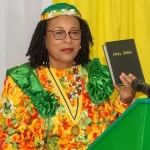
The National Cultural Council of Dominica
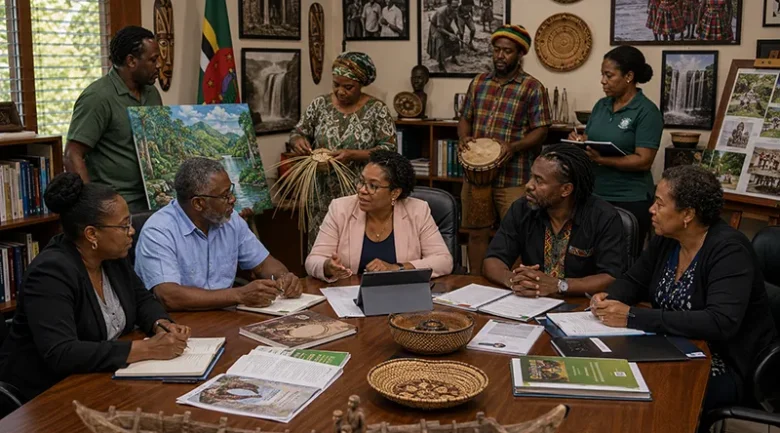
The National Cultural Council (NCC) of Dominica is a semi-autonomous statutory advisory body established by the state to formulate cultural policies, direct national heritage preservation, and guide the strategic growth of Dominica’s creative economy. Formally founded in 1981, shortly after Dominica achieved political independence from Great Britain, the Council was created to decolonize and redefine the island’s national identity.
Operating within the Ministry of Culture, Youth, Sports and Community Development’s current portfolio, the NCC serves as an intellectual and administrative bridge among local artists, indigenous communities, and the state’s formal civil service. By managing structural policies alongside the state-run Division of Culture, the Council ensures that Dominica’s unique syncretic African, Kalinago, and European heritage is safeguarded and commercialised sustainably.
Institutional Mandate and Core Responsibilities
The establishment of the NCC shifted Dominica away from ad hoc, informal cultural preservation toward an institutionalised state framework. The Council meets on a structured monthly baseline to evaluate national arts initiatives, review funding allocation requests, and advise the Cabinet on legislative protections for intellectual property and intangible heritage.
The primary operational responsibilities of the National Cultural Council encompass several core development portfolios:
- Policy Formulation: Crafting long-term national guidelines that govern creative arts education, monument preservation, and the structural development of the country’s multi-million dollar cultural tourism market.
- Institutional Supervision: Coordinating the development strategies and policy directions of Dominica’s principal arts installations, training schools, and historical archives.
- Preservation of Folk Expression: Safeguarding unique Dominican linguistic and performance traditions, specifically the Kwéyòl (Creole) language, traditional dances like the Bélé and Quadrille, and the production of the national wear, the Wob Dwiyet.
- Kalinago Heritage Integration: Partnering with the Kalinago Council to protect the indigenous craftsmanship, oral histories, and socio-economic rights of the resident population within the Kalinago Territory.
The Network of Affiliated Cultural Institutions
The NCC does not execute its mandates in isolation; it functions as the central policymaking node for a network of specialized institutional branches, specialized committees, and infrastructure assets spread across the island.
The Old Mill Cultural Centre (Canefield)
Serving as the physical headquarters for the country’s cultural administration, the Old Mill Cultural Centre in Canefield houses the operational offices of the Division of Culture. Originally a historic sugarcane processing estate, the site has been retrofitted into a multi-purpose creative campus. The facility features a dance studio, an art gallery for visual exhibitions, a sculpture workshop, and the Folk Research Centre, which aggregates historical audio recordings, field interviews, and old photographs documenting rural village customs.
The Arawak House of Culture (Roseau)
Situated on Kennedy Avenue in the capital city of Roseau, the Arawak House of Culture is the premier state-run performing arts theatre in the Windward Islands. Reopened in 1994 following extensive infrastructural remodelling, the auditorium serves as the national stage for theatrical productions, orchestral pan performances, formal state lectures, and multi-disciplinary arts festivals.
Specialized Subsidiary Associations
The NCC provides policy oversight and structural subventions to several domain-specific umbrella groups:
- Kommité pou Etid Kwéyòl (KEK): A specialized linguistic committee dedicated to researching, standardizing, and promoting the use of the Dominican Creole language in contemporary literature and national media.
- The Dominica Pan Association: The governing body overseeing the revitalisation and growth of steel pan orchestras across various urban and rural parishes.
- The Dominica Writers’ Guild: An association supported by the Council to stimulate domestic literary production, publish home-grown anthologies, and host creative writing workshops.
The Festival Economy and Global Engagement
A major operational thrust of the National Cultural Council involves steering the policy surrounding Dominica’s prominent tourism festivals. While the physical marketing and execution of macro-events fall under the Dominica Festivals Committee (DFC) and the Discover Dominica Authority (DDA), the NCC ensures that these highly commercialized events maintain rigorous historical and cultural authenticity.
The Council shapes the cultural input of the island’s core annual celebrations:
- The Traditional Masquerade (Mas Domnik): Restoring historical accuracy to the pre-Lenten Carnival by emphasizing traditional mas characters like the Sensay, Bann Move, and stilt-walkers (Moko Jumbies) alongside modern commercial street jump-ups.
- DOMFESTA (Dominica Festival of Arts): An annual mid-year festival managed directly within the Council’s framework to showcase classical, theatrical, and fine arts creations by local practitioners.
- The Independence Celebrations: Running through October and culminating on National Independence Day on November 3rd, this period sees the NCC coordinating island-wide heritage days, culinary exhibitions emphasizing traditional foods like Callaloo, and the national Konpa and Cadence-lypso competitions.
On the international stage, the NCC serves as Dominica’s technical liaison to global cultural bodies. The Council actively manages projects funded by the UNESCO Intangible Cultural Heritage Fund, facilitating international grant injections, such as recent capacity-building programs concluded in 2025, to train community youth in traditional mask-making, the preservation of oral storytelling, and the climate-resilient management of historical monuments.


