


Wob Dwiyet
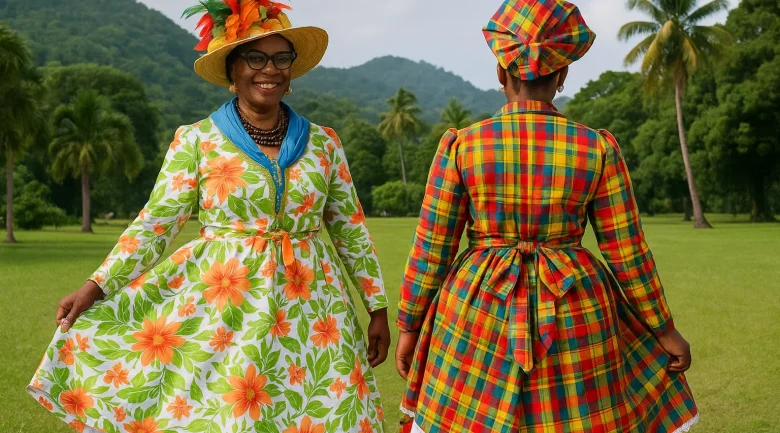
The Wob Dwiyet, sometimes called robe dwiyet or wob douillette, is Dominica’s official national dress and a refined evolution of the earlier Gwan Wob, the everyday Creole garment once worn by women across towns and villages.
Worn mainly during Jounen Kwéyòl, Independence Day and Heritage Day celebrations, as well as formal cultural events, it reflects the artistry, refinement, and pride of Dominican womanhood. Its origins trace back to the 18th and 19th centuries, when Afro-Creole women transformed European colonial fashion into a distinct symbol of self-expression and social dignity.
Origins and evolution of the Wob Dwiyet
The Wob Dwiyet evolved from French colonial dress styles worn by free women of colour across the Antilles. As Dominican society developed, women reinterpreted those designs using locally available fabrics and Caribbean creativity. The word dwiyet derives from the French douillette, meaning “comfortable” or “soft,” though the Dominican version became far more elaborate than its European counterpart.
Initially adopted by women in urban centres such as Roseau and Portsmouth, the Wob Dwiyet was considered formal attire for church, weddings, and receptions. It signified elegance, social standing, and pride in craftsmanship. Seamstresses across the island developed signature touches, lace sleeves, high collars, intricate folds, and embroidery that elevated the garment into a wearable work of art.
Following Dominica’s independence in 1978, it was officially recognised as a national symbol, representing cultural unity and the endurance of Creole heritage. It is prominently displayed in the annual Miss Wob Dwiyet competition, where participants are judged not only on the beauty of the attire but also on their cultural knowledge.
Components and design symbolism
A traditional Wob Dwiyet is a composition of five key pieces, each with meaning and purpose:
- The Dwiyet (dress): A long, flowing gown with a fitted bodice, narrow waist, and flared train. It is often made from silk, satin, or fine cotton and features lace trimming and ruffled sleeves.
- The Foulard: A triangular scarf or shawl worn over the shoulders and pinned with a brooch, signifying modesty and grace.
- The Jupon (petticoat): A stiffened underskirt that gives the Dwiyet its volume and structure.
- The Madras Head Tie (Tête en l’air): Made from the signature plaid madras cloth, this headpiece is folded in distinct ways to indicate a woman’s marital or social status.
- Jewelry: Gold necklaces, earrings, and chains traditionally complete the ensemble, adding refinement and cultural continuity.
The choice of colour, fabric, and accessories reflects individuality and community pride. Every Wob Dwiyet is unique, its cut, drape, and adornments revealing the wearer’s region, occasion, or family tradition.
National and cultural significance
The Wob Dwiyet stands today as a symbol of national identity, blending African resourcefulness, French colonial influence, and Dominican craftsmanship. It embodies the journey of women who, through creativity and resilience, redefined beauty and respectability on their own terms.
During Creole Hat Day, women proudly parade in their Wob Dwiyet through the streets of Roseau and village centres, reviving an era when fashion was storytelling. It is not merely a costume; it is cultural memory made visible, a living link between generations of Dominican women.
In modern times, the Wob Dwiyet continues to inspire contemporary designers who integrate its shapes and fabrics into modern styles, ensuring its relevance while preserving authenticity. It remains a proud statement of identity, elegance, and the Creole spirit that defines the Nature Isle.


