




Public Assistance Programme (PAP) in Dominica
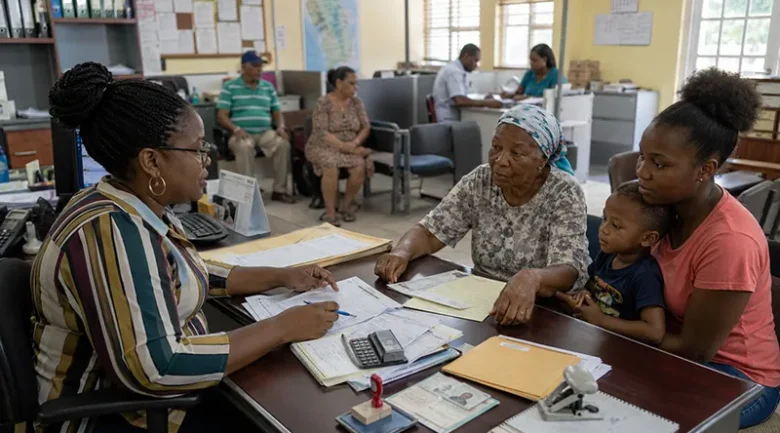
The Public Assistance Programme in Dominica (PAP) is a state-funded social protection mechanism designed to provide direct financial relief and social support to the nation’s most vulnerable, low-income, and marginalized citizens. Formally administered by the Social Welfare Division under the Ministry of Health, Wellness and Social Services, the programme functions as the primary non-contributory safety net in the Commonwealth of Dominica.
Operating under the statutory guidelines of national social welfare policies, the PAP is structured to alleviate extreme poverty, support individuals unable to engage in formal employment, and ensure a minimum standard of living across the island’s ten parishes. Unlike contributory insurance schemes managed by Dominica Social Security, the Public Assistance Programme is funded entirely through budgetary allocations from the central government’s Consolidated Fund, reflecting the state’s institutional framework for social justice and humanitarian relief.
Administrative Framework and Governing Authority
The implementation and regulatory oversight of the Public Assistance Programme are anchored within the public service portfolio of the Ministry of Health, Wellness and Social Services.
The Social Welfare Division
The Social Welfare Division, operating from its headquarters on Great Marlborough Street in Roseau, serves as the technical and executive arm responsible for managing the PAP. Social Welfare Officers and field supervisors execute the programme’s core mandates, which include processing intakes, conducting domestic field assessments, verifying recipient databases, and authorizing monthly cash transfers.
Decentralized District Vetting
To ensure equitable geographic coverage and cross-reference access for rural populations, the division operates a decentralized assessment structure. District Welfare Officers work closely with local government bodies, village councils, and community health centers across the island. This localized framework ensures that social safety resources reach vulnerable pockets outside the immediate Roseau metropolitan area, including remote communities along the windward and leeward coasts, as well as the Kalinago Territory.
Target Demographics and Eligibility Criteria
The Public Assistance Programme enforces rigorous statutory criteria to ensure that finite national welfare resources are directed exclusively to individuals facing severe socio-economic hardships.
An applicant must fall within at least one of the following classified vulnerable categories to qualify for enrollment on the national register:
- The Elderly and Aged Infirm: Senior citizens who have surpassed the standard working age, lack a contributory pension from Dominica Social Security, and have no independent family financial support systems.
- Persons with Permanent Disabilities: Individuals possessing verified physical, sensory, intellectual, or mental impairments that prevent them from participating in the formal labor market.
- Children at Risk and Foster Care Guardians: Families or legally appointed guardians caring for orphaned, abandoned, or vulnerable children where the household income falls below the national poverty line.
- The Chronically Ill: Claimants suffering from debilitating, long-term medical conditions (such as advanced cancer, severe renal failure, or stroke complications) that exhaust their earning capacity and result in catastrophic medical expenses.
Verification Processes and Application Procedures
Securing public assistance requires a standardized legal and administrative validation process designed to prevent duplicate claims and minimize systemic leakage.
The Assessment Phase
Applicants, or individuals acting legally on their behalf, must complete official application forms at their nearest district social welfare office. The lodgment must be supported by foundational civil identity documents, including original birth certificates, valid national voter identification cards, and comprehensive medical certificates signed by a registered medical practitioner if the claim is based on physical disability or illness.
Means Testing and Home Vetting
Following the initial document filing, a Social Welfare Officer conducts an unannounced, mandatory domestic field assessment (means test) at the applicant’s primary place of residence. The officer assesses the household’s actual living conditions, evaluates existing utilities, audits current sources of informal financial support, and interviews neighbours or community leaders to compile a comprehensive socio-economic profile.
The finalized report is then reviewed by an internal ministry panel. If approved, the applicant is entered onto the national register, and recurring monthly allowances are authorized.
Strategic Modernization: The “Cash Plus” Framework
In response to changing economic conditions and climate-driven vulnerabilities, the Government of Dominica has actively shifted the Public Assistance Programme from a model of passive dependency to one of active structural empowerment.
The “Build Back Equal” Collaboration
The Ministry of Health, Wellness and Social Services announced a landmark partnership agreement with UN Women Caribbean to launch the “Cash Plus” Pilot Initiative. Executed under the broader, multi-sectoral Build Back Equal Project, partially funded by Global Affairs Canada, this strategic update targets the systemic barriers that trap low-income welfare recipients in multi-generational poverty.
Transitioning to Sustainable Livelihoods
The Cash Plus framework introduces integrated support mechanisms alongside standard financial aid:
- Technical Skills Training: Providing vocational training and micro-business certification courses to help able-bodied public assistance recipients transition into steady employment.
- Childcare Support Systems: Facilitating access to state-regulated childcare and elderly care services, allowing single mothers and female heads of households to seek full-time employment without compromising family care duties.
- Comprehensive Healthcare Links: Integrating mental, sexual, and reproductive healthcare services into the welfare framework, addressing the holistic social challenges faced by marginalized demographics.
Accountability, Auditing, and System Integrity
To preserve fiscal transparency and align with national anti-fraud standards, the Social Welfare Division enforces periodic accountability mechanisms across the PAP register.
- Mandatory Recertification Cycles: Recipients are subject to bi-annual reviews to verify that their socio-economic status has not changed significantly. Able-bodied individuals who successfully secure employment or whose household income rises above the designated poverty threshold are systematically transitioned off the programme.
- Cross-Agency Data Alignment: The Ministry of Health, Wellness and Social Services conducts digital cross-checks between the PAP database, the Registry’s death records, and Dominica Social Security pension lists to eliminate ghost beneficiaries and prevent the unlawful collection of funds.
- Statutory Criminal Penalties: Under national public service and financial administration frameworks, any person who deliberately misrepresents their financial assets, falsifies medical records, or collects public assistance funds on behalf of a deceased individual commits a summary offense. Offenders face immediate removal from the programme, administrative demands for full financial restitution, and potential prosecution before a Magistrate.


