
Proof of Life in Dominica
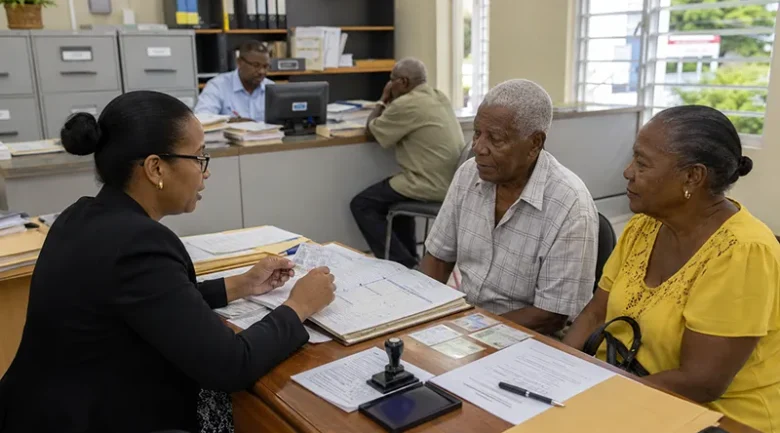
A proof of life in Dominica is a legally regulated administrative process requiring recipients of state-funded pensions and long-term social security benefits to provide official verification that they are alive. Formally known within domestic administrative architecture as a Certificate of Life (C.O.L.), this verification is mandatory to maintain eligibility for ongoing financial disbursements.
The framework is strictly governed by the provisions of the Social Security Act (Chapter 31:01), specifically under Section 22 of the Social Security (Claims and Payments) Regulations. Operated parallel to the Treasury Department’s public pension program, the system serves as a primary state auditing tool. By requiring structured verification intervals, the process prevents identity misrepresentation, deters the unlawful collection of funds on behalf of deceased persons, and preserves the fiscal integrity of the state’s social protection systems.
Statutory Mandates and Administrative Channels
The administration of proof of life protocols operates through two separate state pipelines, depending on whether the recipient draws a statutory public service pension or national social insurance benefits.
The Dominica Social Security System
Under Section 22(1) and (2) of the Social Security (Claims and Payments) Regulations, the Dominica Social Security (DSS) board is legally empowered to require any benefit recipient to furnish documented evidence that they are alive as a condition for continuous entitlement. This mandate primarily applies to long-term benefit beneficiaries receiving:
- Age Pensions: Paid to retired insured workers who have reached the statutory pensionable age of 65.
- Invalidity Pensions: Disbursed to insured persons suffering from permanent physical or mental conditions that prevent employment.
- Disablement Pensions: Provided to individuals who have suffered permanent partial or total loss of faculty due to an employment injury.
- Survivors’ or Death Benefits: Paid to the qualifying widows, widowers, or dependent children of a deceased insured contributor.
The Treasury Department System
For retired public officers, judicial staff, and state pensioners drawing funds directly from the consolidated national budget, the verification process is managed by the Treasury Department under the Ministry of Finance. These individuals must submit distinct public service validation forms directly to the Treasury Building on Hillsborough Street in Roseau.
Mandatory Submission Deadlines and Filing Cycles
The state enforces strict, non-negotiable statutory timelines for the collection of proof of life documentation. Failure to meet these windows results in immediate, automated administrative penalties.
| Administering State Body | Filing Frequency | Fixed Statutory Deadlines | Consequence of Non-Compliance |
| Dominica Social Security (DSS) | Annually | March 31 | Immediate suspension of monthly benefit payments; permanent loss of funds if unclaimed within 6 months. |
| The Treasury Department | Bi-Annually (Twice per year) | June 30 and December 31 | Immediate holding of public treasury checks and withholding of electronic direct deposits. |
The Strict Six-Month Forfeiture Rule
Under Section 19(1) of the Social Security (Claims and Payments) Regulations, the law imposes a strict limitation window on retroactive claims. If an individual fails to provide proof of life and their pension is suspended, the right to receive any accrued monthly sum is permanently lost if the necessary evidence is not furnished within six months of the original date on which the payment was receivable.
Verification and Legal Attestation Standards
A beneficiary cannot self-certify their Certificate of Life; the document must be formally witnessed and stamped by an authorized third-party official. To prevent conflicts of interest, the witness must not be biologically related to the pensioner.
Authorized National Witnesses
Under domestic regulations, only specific professionals holding active credentials within Dominica are legally authorized to sign and stamp the Certificate of Life declaration:
- Justices of the Peace (JPs) or Notaries Public.
- Attorneys-at-law registered with the Eastern Caribbean Supreme Court.
- Police Officers holding the rank of Sergeant or above.
- Ordained Ministers of Religion.
- Registered Medical Doctors or Family Nurse Practitioners.
- Primary or Secondary School Principals.
- Licensed Land Surveyors.
- Authorized executive personnel from recognized Banks or Credit Unions.
- Designated Officers at the central Dominica Social Security headquarters.
Overseas Pensioner Protocols
Dominica maintains a vast diaspora, and many citizens receive their age pensions while residing permanently abroad in the Caribbean, North America, or Europe. To accommodate these individuals, the DSS and Treasury Department permit overseas electronic or postal submissions subject to specific international legal standards:
- Notarization: The Certificate of Life form must be signed in the physical presence of a legally recognised Notary Public, Commissioner of Oaths, or consular official in the country where the pensioner currently resides.
- Apostille/Seal: The document must bear the official seal or stamp of the notary’s office before being transmitted back to the DSS offices via secure email or registered airmail.
Enforcement, Anti-Fraud, and Verification Measures
The strict application of proof of life regulations is critical to preventing systemic leaks within Dominica’s social financial frameworks.
Reporting of Material Changes
In addition to confirming survival, the proof of life document functions as a mandatory disclosure form. Beneficiaries of Survivors’ or Death benefits are legally obligated to report any structural changes in their domestic circumstances that would invalidate their claims. For instance, under the Social Security Act, a widow or widower receiving a Death Benefit must declare if they have remarried or cohabited with another partner, as both actions legally terminate all continuous entitlement to the deceased spouse’s pension.
Field Inspections and Audits
To verify the authenticity of paper submissions, Social Security Inspectors, authorised under Section 12 of the Social Security Act, conduct unannounced field audits and home visits across the island’s ten parishes. These inspectors possess the statutory authority to visit residences, examine identity documents, and confirm the physical well-being of bedridden or incapacitated pensioners who are unable to visit a public office or notary.
Obstructing, misleading, or refusing entry to an authorized Social Security Inspector constitutes a summary offense under the Act. Any individual who knowingly makes a false statement, falsifies a signature, or conceals the death of a pensioner to illegally collect state funds is subject to criminal prosecution for fraud, carrying penalties of substantial statutory fines and terms of imprisonment before a Magistrate.


