




Obeah Act (Chapter 10:38)
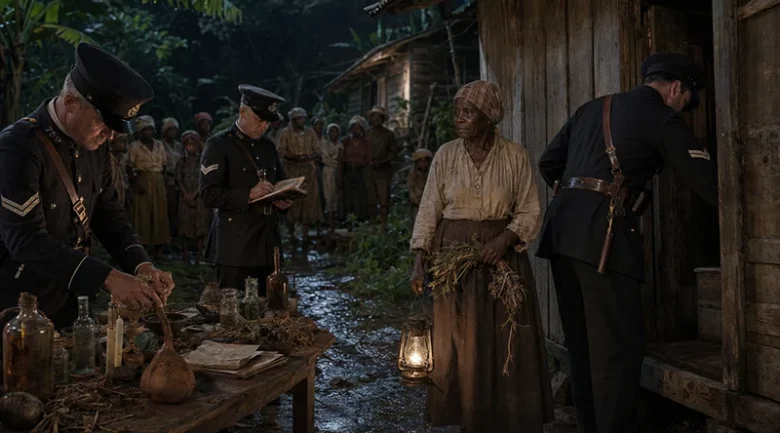
The Obeah Act (Chapter 10:38) is a historical statutory law in Dominica originally enacted during the colonial era (derived from Leeward Islands Act 6 of 1904) to suppress, penalize, and criminalize the practice of obeah, sorcery, witchcraft, and other professed supernatural or occult practices. While modern legal scholars view the Act as a historical tool used by colonial administrators to restrict African-derived spiritual and religious traditions, it technically remains part of the Revised Laws of Dominica. The Act assigns broad powers to the magistracy and law enforcement to arrest individuals and seize property associated with occult rituals.
Legal Definitions
To secure summary convictions without the need to prove financial fraud, the statute relies on wide legal thresholds:
- Obeah: Under the Act, obeah includes witchcraft, working or pretending to work by spells, or utilising any professed occult or supernatural power.
- Instrument of Obeah: Defined as anything ordinarily used, or intended to be used, in the practice of obeah. This encompasses any object used by a person and pretended by that person to hold occult, supernatural, or protective power.
Key Offences and Statutory Penalties
The Act breaks down violations into separate categories targeting practitioners, their clients, and distributors of related literature.
Practising Obeah (Section 5)
Every person found practising, or in any way concerned in the practice of obeah, or using any subtle craft, means, or device by obeah or otherwise, is guilty of an offence.
- Penalty: Liable to imprisonment for twelve months. Under the statute’s historical wording, a convicted male could also be subject to corporal punishment (whipping).
Pretended Supernatural Practices & Fortune Telling (Section 4)
This section captures less intensive occult acts that do not explicitly fall under traditional obeah but involve supernatural assertions. It criminalizes pretending to tell fortunes, palmistry, using incantations or charms to cure injuries/diseases, or using occult practices to intimidate an individual.
- Penalty: Liable to imprisonment for six months.
Consulting an Obeah Practitioner (Section 6)
The law actively criminalizes the consumer side of the practice. Anyone who consults an obeah practitioner for the purpose of bringing about any event or achieving an objective through occult means is guilty of an offence.
- Penalty: A fine of $3,000 or imprisonment for twelve months.
Suppressing Obeah Literature (Section 10)
To prevent the propagation of occult traditions, the Act contains a censorship clause. Anyone who composes, writes, prints, sells, publishes, distributes, or circulates pamphlets or printed material calculated to promote the superstition of obeah commits an offence.
- Penalty: A fine of $3,000 or, in default of payment, imprisonment for six months.
Special Enforcement & Judicial Powers
Because of the nature of summary courts, the Act bypasses standard procedural options found in other criminal frameworks.
Statutory Presumption of Guilt (Section 8)
The Act significantly alters the standard burden of proof regarding the possession of ritual items. If an authorised search is conducted and an instrument of obeah is discovered on the premises, the person in possession or the owner of the premises is automatically deemed to be a person practising obeah, unless or until they can prove the contrary in court.
Forceful Search Warrants (Section 7)
If information is given on oath to a Magistrate or a Justice of the Peace that there is reasonable cause to suspect that someone possesses instruments of obeah, the Magistrate or Justice of the Peace may issue a warrant. This authorises any member of the police service or local constable to enter a location (by force if necessary), day or night, to search for and seize the items to be used as evidence.
- Hindering or molesting an officer executing an obeah search warrant carries a fine of $3,000 or twelve months imprisonment.
Summary Jurisdiction Integrity
Under Section 69 of the Magistrate’s Code of Procedure Act (Chapter 4:20), defendants facing summary charges carrying sentences longer than six months usually have a right to object to a summary trial and demand a trial by jury in the High Court. However, the law explicitly states that this option does not apply to offences under the Obeah Act. The Magistrate retains absolute jurisdiction to try the matter summarily or, at their own discretion under Section 3(2), commit the individual for trial as an indictable offence carrying a harsher penalty of five years imprisonment.


