



Soucuyant (Soukouyant)
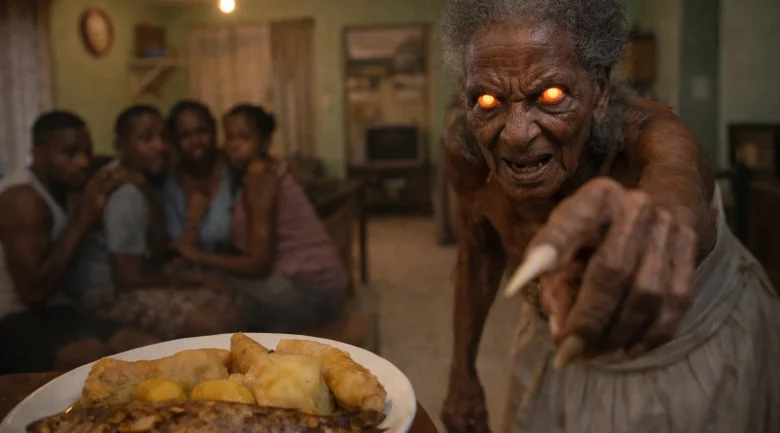
In Dominica’s folklore, the Soucuyant (often spelt Soukouyant or Soukouyan) is a terrifying skin-shifting vampire that has haunted the island’s collective imagination for generations. While many Caribbean islands share similar legends, the Dominican version is deeply tied to the rural village life of the mid-20th century, where tales of these “jumbies” were used to explain mysterious illnesses and enforce community morals.
History and Origins of the Legend
The Soukouyant is a “creolised” figure, representing a fusion of West African beliefs and European vampire myths brought over by the French. Scholars often trace its origins to the Adze, a firefly-like vampire spirit of the Ewe people of Ghana and Togo. In Dominica, the French influence is evident in the alternative name Loogaroo, which is a corruption of the French Loup-garou (werewolf). However, in the local context, it refers to a blood-sucking witch rather than a wolf.
Before the advent of electricity in the 1950s and 60s, these stories were the primary form of entertainment during the dark, silent nights in far-flung villages. They served as cautionary tales, warning children to stay indoors after sunset and advising adults to be wary of reclusive individuals living on the fringes of society.
Characteristics of the Soukouyant
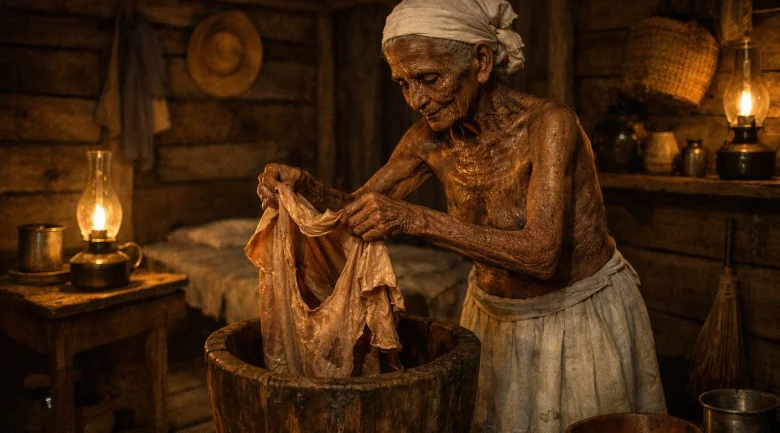
By day, a Soukouyant typically appears as a reclusive, often elderly woman living on the outskirts of the village. According to the lore, she has made a pact with a demon (sometimes referred to as Bazil, who resides in the Silk Cotton tree) in exchange for supernatural powers.
- The Skin-Shedding Ritual: At night, she strips off her wrinkled human skin and carefully deposits it into a wooden mortar (a large bowl used for grinding spices).
- The Fireball: Once skinless, she transforms into a glowing ball of flame or a bright firefly (locally called la belle or la loo) and flies through the night sky.
- The Attack: She can shrink her form to enter homes through keyholes, cracks in the floorboards, or unlatched windows. She does not “bite” like a traditional vampire; instead, she sucks the blood through the skin, leaving behind a telltale blue-black bruise or “soukouyant mark” on the victim’s arms or legs.
Defences and Destruction
Dominican folklore provides precise instructions for exposing and destroying a Soukouyant. Because she is bound by a compulsive need to count, one of the most common defences is to scatter rice or salt around the doorstep. The creature is forced to stop and count every single grain, grain by grain, which usually takes until sunrise, leaving her exposed to the light.
To destroy her permanently, one must find the mortar containing her hidden skin while she is out hunting. By filling the skin with coarse salt and hot pepper, the hunter ensures that when the Soukouyant returns at dawn, the skin will burn and shrink, preventing her from re-entering it. Without her skin, the rising sun will cause her to perish.
Cultural Legacy
While modern technology and education have diminished the literal belief in these creatures, the Soukouyant remains a powerful symbol in Dominican literature and art. She represents the hidden danger within a community and serves as a metaphor for those who drain the life and resources of others. During the Independence season, the figure of the Soukouyant is a popular choice for theatrical performances and storytelling competitions, ensuring that this “fireball in the sky” continues to fly through the island’s cultural memory.


References
-
1.
Carib Folk-Beliefs and Customs from Dominica, B.W.I. (1945) https://tiboko.com/wp-content/uploads/2023/07/Carib-Folk-beliefs-and-Customs-from-Dominica.pdf
-
2.
Of Myths Folklore and Legends – The Story of Lougarous and Soukouyants https://dominicanewsonline.com/news/homepage/columns/ghost-stories/ghost-stories-the-story-of-lougarous-and-soukouyants/
-
3.
The Journal of American Folklore: Vol 32 (1919) http://www.archive.org/stream/journalamerican80socigoog/journalamerican80socigoog_djvu.txt
-
4.
Myths and Beliefs - Dominica's Cultural Heritage https://www.dominicanaonline.org/en/cultura/mitos-creencias/