

Illicit drugs in Dominica
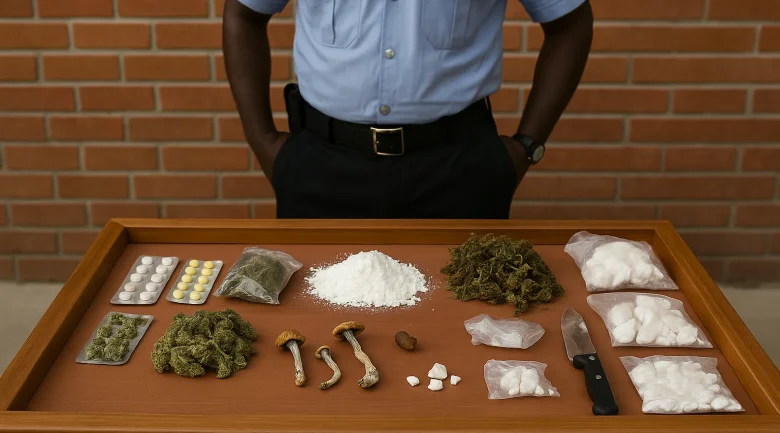
Illicit drugs in Dominica cover a range of substances that are either trafficked through the country or used locally, including cannabis, cocaine, and, to a lesser but growing extent, methamphetamines, crack cocaine, and diverted prescription/over-the-counter pharmaceuticals. The island’s role in regional trafficking flows, combined with its domestic consumption patterns and limited law enforcement resources, means that drug policy must account both for high-volume transit and emerging local-use challenges.
How the Illicit drugs landscape has evolved in Dominica
In the late twentieth century, Dominica, thanks to its geography in the Eastern Caribbean, came to serve as a waypoint for maritime trafficking of cocaine from northern South America toward North American and European markets. Cannabis cultivation and local use were always present but overshadowed in regional attention by the transit flows of cocaine. Over time, as regional trafficking networks diversified, smaller islands including Dominica began seeing indications of other substances, methamphetamines and crack cocaine, though usually in much smaller volumes than the major drugs. Data gathering and institutional capacity were modest in the early years, but by the 2010s, Dominica started establishing more consistent seizure tracking and formal policy frameworks.
Scope of substances: primary and emerging drug types
While cannabis and cocaine remain the most significant in terms of volume and policy attention, other substances are increasingly noted:
Primary substances:
- Cocaine: Dominica is predominantly a transit route, with large shipments intercepted occasionally, such as the 1.73 tonnes seizure in October 2025 worth EC$46.764 million.
- Cannabis: Locally cultivated and consumed; eradication data show that Dominica has reported cannabis plant eradication in past years.
Emerging/albeit smaller-scale substances:
- Methamphetamine: Though comprehensive national statistics for Dominica are scarce, regional reports indicate synthetic stimulants are gaining ground in the Caribbean. There are local references (via social media/newspaper reports) to crystal meth seizures.
- Crack cocaine: The “smokable cocaine” market is mentioned in regional supply reports, and while Dominica’s specific share is small, the possibility of crack cocaine use/trafficking cannot be discounted in the Caribbean corridor.
- Diverted pharmaceuticals and prescription misuse: Anecdotal reporting highlights pill misuse (often imported) though there is not yet comprehensive national data.
- Opioids and synthetic drugs: While Caribbean supply of fentanyl and other synthetic opioids remains much lower than in North America, regional assessments caution smaller island states like Dominica to monitor potential entry.
Consumption and impact on the population
Though usage of methamphetamines, crack, and diverted pharmaceuticals remains very low compared with cannabis and cocaine in Dominica, the presence of these drugs presents future risks:
- Cannabis continues to be locally grown, consumed primarily by youth and rural dwellers; it represents the largest domestic illicit-drug market in terms of frequency of use though lower value per quantity.
- Cocaine is less prevalent as a locally consumed high-purity drug but is implicated in transit flows; occasional users exist, and seizures show the island’s role in the broader market.
- Methamphetamines and crack: Use appears limited but the trend in the region suggests potential growth. Because these are often cheaper, more addictive, and easier to distribute in small units, even small-scale use may produce disproportionate harm.
- Diverted pharmaceuticals: Use of prescription or over-the-counter drugs for recreational effect is less visible but carries significant health risks including overdoses, drug addiction, and shifting demand profiles.
From a public health perspective, Dominica’s treatment and prevention infrastructure is oriented toward cannabis and alcohol but may become under-resourced if synthetic/drug-diversion trends accelerate.
Law-enforcement, legal frameworks and institutional response
Dominica’s regulatory and enforcement architecture addresses both the dominant drugs and the emerging threats:
- The Drugs (Prevention of Misuse) Act, Chapter 40:07 criminalises possession, production, trafficking of illicit drugs. Recent amendments introduced alternative sentencing for some cannabis offences.
- The Proceeds of Crime Act and the Money Laundering Prevention Act enable asset recovery and financial investigation, critical when traffickers deal also in methamphetamine or crack.
- The Customs Act 2010 empowers border control and inspection of imports/exports, which is key given that methamphetamines, diverted pharmaceuticals and crack often travel in smaller shipments or via couriers.
- Institutions: The Commonwealth of Dominica Police Force, Customs and Excise Division, Financial Intelligence Unit (FIU) and the Financial Services Unit (FSU) collaborate domestically and regionally. Mutual assistance and extradition treaties provide cross-border enforcement tools.
Emerging trends, challenges and risk outlook
While cannabis and cocaine remain dominant, several risk factors and strategic priorities stand out:
- Limited quantitative data on methamphetamine, crack, and diversion of pharmaceuticals in Dominica means the country may face a delayed awareness of emerging trends. Regional reports note that Caribbean states often report scarce data for synthetic stimulants.
- Traffickers shifting to smaller-unit synthetic drugs or pill-based markets can exploit resource gaps in small jurisdictions, such as fewer drug-testing labs, constrained forensic capacity, and less-rigorous early-warning systems.
- Public health systems may be less prepared for addiction services and harm-reduction responses oriented toward stimulants and pills rather than traditional cannabis or cocaine models.
- Financial systems in small economies like Dominica are vulnerable to money-laundering pressure, especially if new drug flows build new laundering networks; e.g., diverted pharmaceuticals may link to prescription-drug smuggling and repackaging abroad.
- Maritime and air routes remain the main transit pathways, and as traffickers adapt (smaller consignments, multi-hop routing, courier importation, pill and capsule concealment), Dominica must maintain surveillance and risk-profiling of non-traditional drug flows.
Key takeaways for enforcement and public health policy
Dominica’s illicit drug environment remains dominated by cannabis and cocaine, but the scope of concern is expanding. Methamphetamines, crack, and diverted pharmaceuticals presently account for a small portion of the drug landscape but carry the potential for disproportionate harm if neglected. Policymakers and enforcement agencies in Dominica must therefore continue strengthening surveillance, diversify data collection to include emerging substances, and ensure that treatment/prevention services evolve accordingly. By doing so, the island can both manage current high-volume drug flows and stay ahead of shifting trends that may pose serious societal and public-health challenges.


