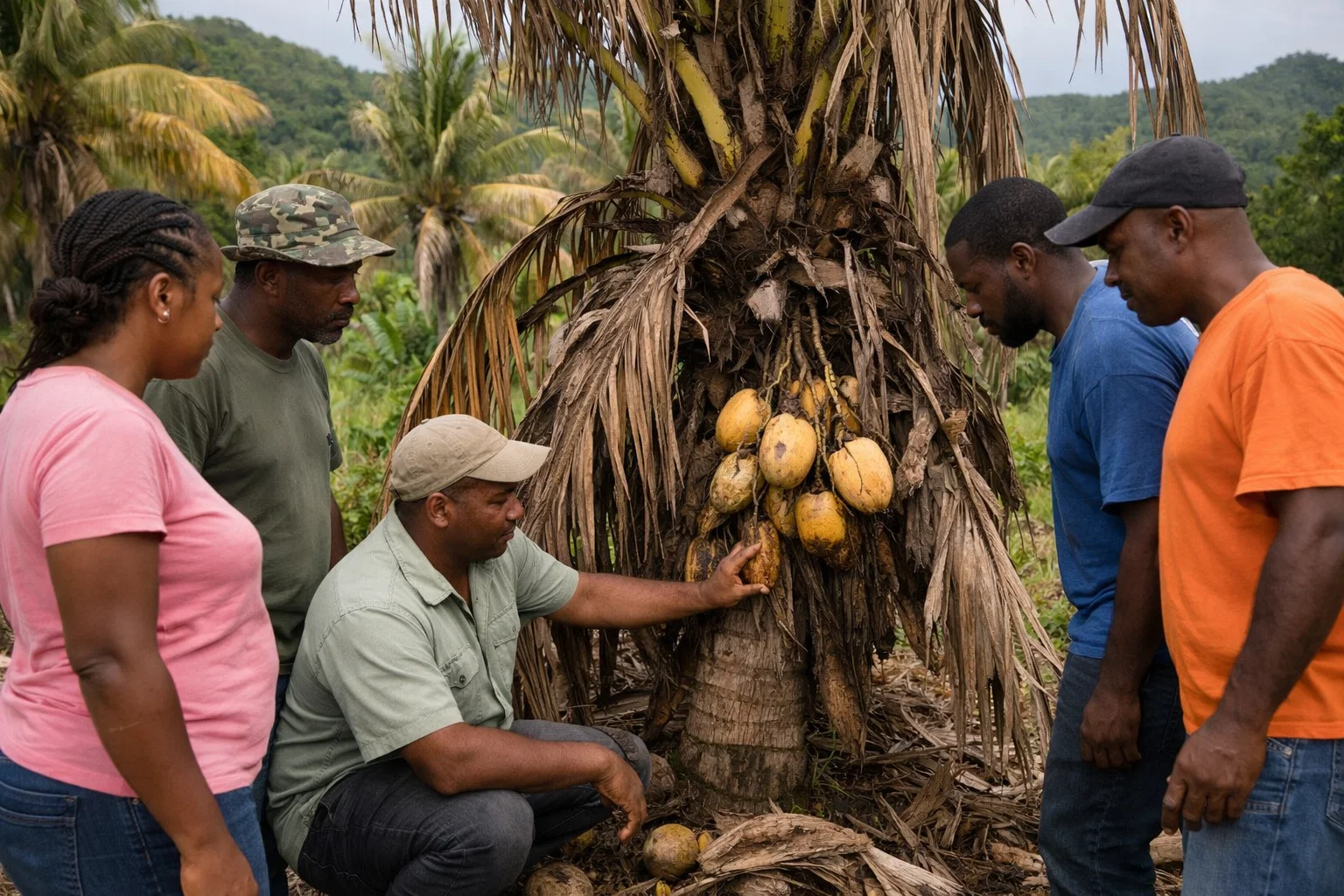

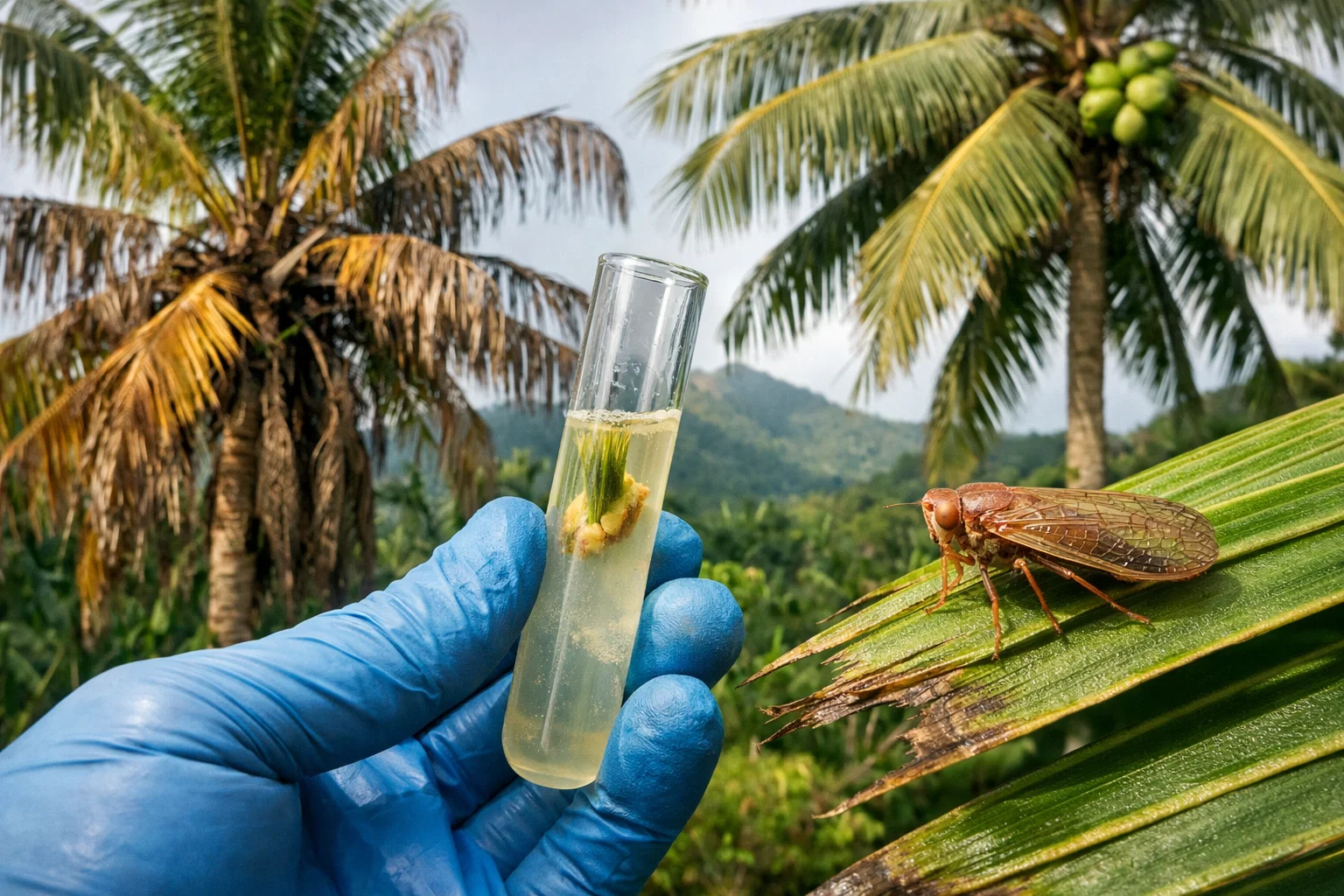


Agricultural officials are warning that lethal yellowing disease remains a significant threat to Dominica’s coconut industry, despite ongoing efforts to contain its spread and protect unaffected areas of the island.
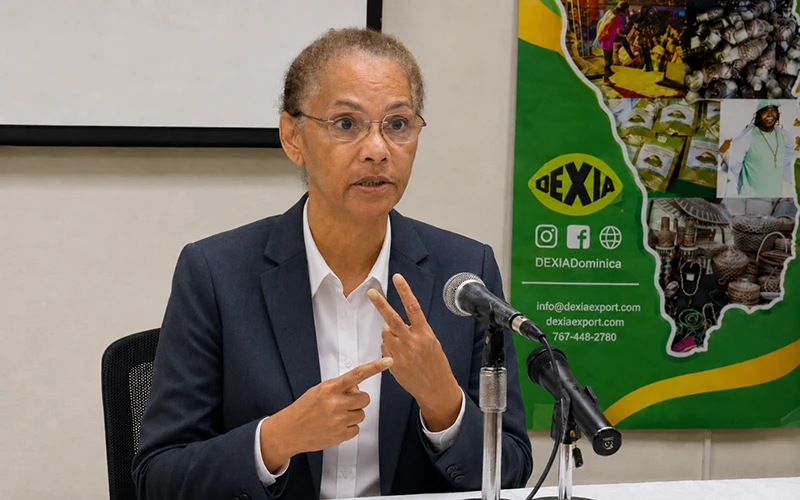
Head of the Plant Protection and Quarantine Unit, Diane Stoute Abraham, said the disease continues to pose serious challenges, particularly in the Woodford Hill area where infections were first detected. Dominica officially confirmed the presence of lethal yellowing disease in February 2026 following laboratory testing conducted by the University of Florida on samples collected from affected coconut palms.
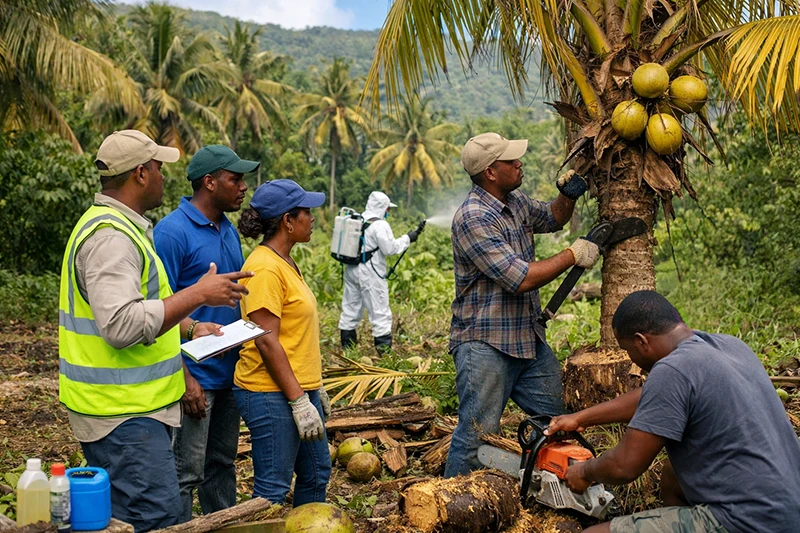
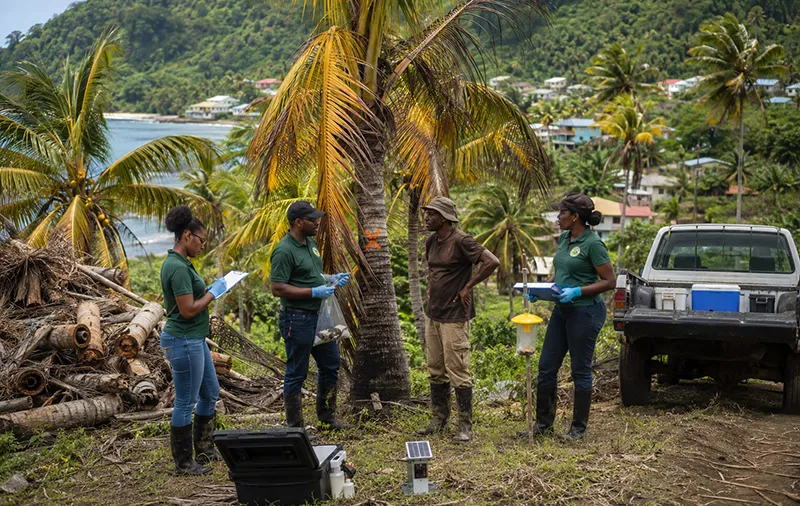
Since the confirmation, the Ministry of Agriculture has implemented an emergency response programme that includes surveillance, diagnostics, vector monitoring, public awareness campaigns, quarantine measures and the removal of infected trees.
According to Stoute Abraham, more than 12,000 infected coconut trees have already been identified, removed and destroyed in an effort to slow the spread of the disease and protect healthy coconut populations elsewhere on the island.
She emphasized that the impact of the disease extends far beyond agriculture alone. Coconut trees contribute to food production, livelihoods, tourism, agro-processing and coastal protection, while also forming a familiar part of Dominica’s natural landscape.
“Coconut palms are deeply connected to the social, economic, cultural and environmental life of Dominica,” Stout Abraham stated while outlining the scale of the challenge facing the sector.
Efforts to combat the disease recently received additional support from the Dominica National Conservation Trust Fund and the Caribbean Biodiversity Fund. More than US$93,000 has been allocated to two biodiversity projects, including a rapid-response initiative implemented by the Ministry of Agriculture to strengthen containment and management efforts for lethal yellowing disease.
Chairman of the Dominica National Conservation Trust Fund, Albert Paul, said the project was selected following consultations with government agencies, technical experts and community stakeholders to identify urgent environmental priorities. The funding will help support continued monitoring, response activities and technical interventions aimed at reducing the long-term impact of the disease.
Agriculture officials say public cooperation remains critical as authorities continue surveillance activities and work to prevent the disease from spreading into additional coconut-growing areas across Dominica.
This article is copyright © 2026 DOM767