


WCK (Windward Caribbean Kulture)
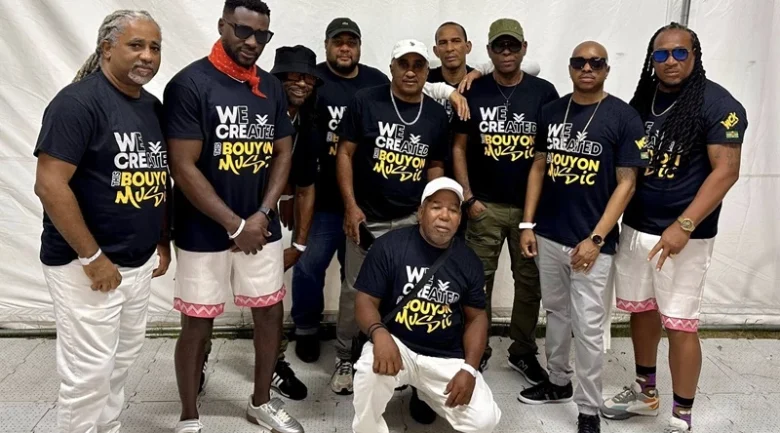
WCK, the acronym for Windward Caribbean Kulture, is not merely a band; it is a seismic cultural movement that permanently altered the DNA of Caribbean music. Formed in 1988, WCK emerged from the lush, volcanic landscape of Dominica at a time when the region’s musical identity was in a state of flux. While the giants of the 1970s cadence-lypso era, such as Exile One and Grammacks, had laid a sophisticated foundation, the youth of the late 80s were hungry for something faster, grittier, and more technologically driven.
WCK provided the answer by inventing Bouyon music. By aggressively fusing the traditional, earth-shaking rhythms of jing ping and lapo kabwit (goat skin drums) with the neon-lit synthesizers and digital drum machines of the era, WCK created a “pot of soup”, the literal meaning of Bouyon, that continues to boil over on international stages in 2026.
The Architects of the Sound: Founding and Philosophy
In the late 1980s, a group of young, visionary musicians in Roseau began experimenting with a fusion that many traditionalists initially viewed with scepticism. They wanted to capture the spirit of the street, the raw energy and translate it into a studio setting.
The founding members, Derick “Rah” Peters, Cornell “Fingaz” Phillip, Keith Goddard, Wayne McLawrence, and Irvine “Smokey” Phillip, approached music with an almost scientific curiosity. Cornell Phillip, often cited as the “General” of the keyboards, began programming digital synths to mimic the staccato, rhythmic patterns of the traditional accordion and bamboo flute. When paired with “Rah” Peters’ heavy, syncopated kick-drum patterns, the “WCK Riddim” was born. This wasn’t just a new song; it was a new language that allowed Dominica to reassert its cultural dominance in the Eastern Caribbean.
The Comprehensive Roster: Past and Present
The “Kulture” in WCK has always been an evolving collective. Over nearly four decades, the band has served as an academy for Dominican excellence, rotating through several generations of musicians who each added a new layer to the Bouyon stew.
The Founding Five (The 1988 Originals)
- Derick “Rah” Peters (Drums / Lead Vocals): The rhythmic heartbeat of the band. Rah’s drumming style, characterised by a driving, four-on-the-floor kick with intricate rim-shot syncopation, defined the genre.
- Cornell “Fingaz” Phillip (Keyboards / Programming): The technical architect. He is widely credited with digitizing the “Nature Island” sound, creating the hypnotic synth loops that are the hallmark of every WCK hit.
- Keith Goddard (Bass Guitar / Vocals): The anchor. Goddard’s basslines provided the melodic “growl” that made WCK’s music travel through the floorboards of every dancehall in the French Antilles.
- Wayne McLawrence (Guitar): Provided the sharp, percussive guitar riffs that bridged the gap between African high-life and Caribbean soca.
- Irvine “Smokey” Phillip (Keyboards / Production): A versatile musician whose studio engineering skills helped polish the raw energy of the band into radio-ready hits.
The “Bouyon-muffin” and Vocal Expansion (1990s–2000s)
- Wayne “Skinny Banton” / “Shadowflow” Robinson (Vocals): Perhaps the most influential addition to the frontline. Shadowflow introduced the “Bouyon-muffin” style, a seamless blend of Jamaican dancehall deejaying (toasting) with Dominican cadence rhythms.
- Kelly Williams (Vocals): Brought a soulful, melodic contrast to the high-tempo tracks, helping the band appeal to the “zouk” markets in Guadeloupe and Martinique.
- Rohan Williams (Vocals): A high-energy performer whose stage presence during the mid-90s helped WCK dominate the regional festival circuit.
- Dennison “Dice” Joseph (Vocals): A nine-time Calypso Monarch of Dominica. Dice joined the group later, bringing a level of lyrical wit and social commentary that elevated Bouyon from simple party music to a narrative of the Dominica economy and social struggle.
- Neijel A. Jno Baptiste (Nayee): (Lead Vocals & Keyboards). A multi-talented force who helped drive the band’s melodies in the 2000s.
The Modern Era and Touring Members
- Pellam Jno Baptiste: (Drums). A powerhouse drummer who maintained the relentless Bouyon pace during the band’s later touring eras.
- Clint “Charm Daddy” Henderson: (Lead Vocals & Keyboards).
- Delton “Delly” Alfred: (Lead Vocals). A dynamic frontman who helped carry the band’s energy into the modern festival circuits.
- Ashton Lugay: (Guitar). A legendary Dominican guitarist who added complex, driving riffs to the band’s live shows.
- Martindale Olive: (Lead Guitar & Lead Vocal).
- Bert Castonguay: (Keyboards & Lead Vocals).
- Kenneth Toussaint: (Lead Guitar).
- Earlson Matthew: (Lead Keyboardist). A modern keyboard maestro who has kept the digital Bouyon sound evolving.
- Edmund “Chum Dada” Telemacque: (Lead Vocals).
- Albert Lockhart: (Current/Later Era Member).
- Marsha Augustine: (Current/Later Era Member). One of the vital female voices that added new harmonic layers to the group.
- Shannon Liverpool: (Current/Later Era Member).
- Nehimiah Darroux: (Current/Later Era Member).
The Discography of a Revolution
To understand WCK is to listen to their evolution from the analogue 80s to the digital 2020s. Their discography isn’t just a list of songs; it’s a timeline of the Nature Island’s modern history.
| Album Title | Year | Significance |
| Culture Shock | 1990 | The blueprint. The track “Culture Shock” officially signaled the death of the old-school slow tempo and the birth of Bouyon. |
| Met Vye | 1992 | Solidified their popularity in the French West Indies. |
| Tou Cho Tou Flam | 1995 | Featured “Balance Batty,” a track so popular it caused literal traffic jams in downtown Roseau and became a staple in the UK and US Caribbean diaspora. |
| Original Hold Dem | 1996 | Blended high-energy soca with the “WCK Riddim.” |
| Pride and Joy | 2000 | A celebration of 12 years of dominance; featured more melodic, cross-over attempts. |
| Focus | 2010 | A “return to roots” album that stripped back the digital layers to focus on raw percussion. |
4. The Global Impact: Beyond the Shores of Dominica
WCK’s success was not confined to the Nature Island. They were the first Dominican band to truly crack the code of the French Antilles (Martinique, Guadeloupe, and French Guiana) on a massive scale. Their music was so pervasive that “Bouyon” became a household name in Paris, fueled by the large Antillean population there.
They served as cultural ambassadors during the implementation of the Revised Treaty of Chaguaramas, using music as a tool for regional integration. When WCK played in Barbados or Trinidad, they weren’t just playing Dominican music; they were demonstrating the power of the Windward Caribbean Kulture. Their influence can be seen in the modern sounds of bands like Triple Kay International and Signal Band, all of whom operate within the house that WCK built.
The Legacy in the Modern Era
Today, WCK remains the gold standard for live performance in the Eastern Caribbean. While there have been legal disputes over the “WCK” name and membership, a common growing pain for legendary institutions, the band’s spirit is currently focused on the “Bouyon Pioneers” movement.
The original members often reunite for major milestones, such as the World Creole Music Festival, reminding both the centenarians and the Gen-Z “Bouyon-heads” that while sounds may change, the Kulture is permanent. WCK didn’t just give Dominica a beat; they gave the island a heartbeat.
“We didn’t set out to create a genre. We set out to create a feeling. We wanted the music to feel like a Saturday night in Grand Fond, raw, hot, and impossible to ignore.” —
Cornell Phillip, 2018 Retrospective.


References
-
1.
WCK: A Dominican Musical Force – Dominica Festivals https://dominicafestivals.com/2022/03/29/wck/
-
2.
Bouyon: A Celebration of Dominican Music Culture https://caribbeanentertainmenthub.com/bouyon-a-celebration-of-dominican-music-culture
-
3.
WCK Pride and Joy – Sensay Dominica https://www.sensay.com/sensaydominica/wckpride.html
-
4.
Bouyon music at the crossroads https://sundominica.com/articles/bouyon-music-at-the-crossroads-3646/