


Grammacks
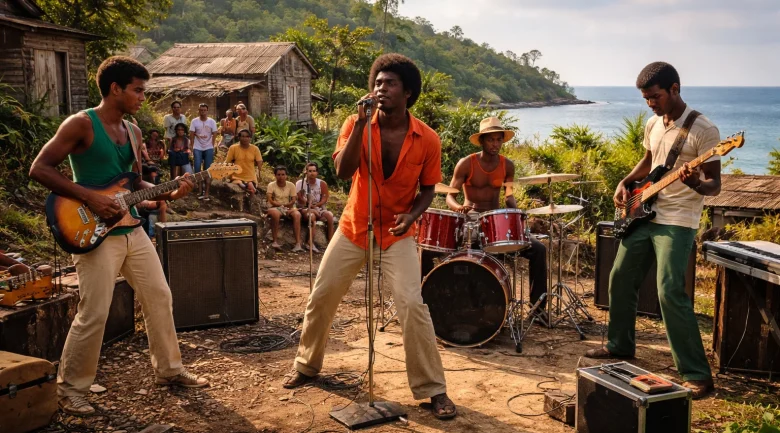
In Caribbean popular music, Grammacks helped define Cadence lypso, serving as a powerful marker of Dominica’s cultural confidence and independent musical voice regionally today. Formed in 1972 in the west coast village of St Joseph, the band’s journey began with a moment of local frustration: a Roseau-based band failed to show up for a village performance, prompting a group of talented youth to vow they would never rely on outside musicians again. This spirit of self-reliance, combined with the academic synergy of members from the Dominica Grammar School and St. Mary’s Academy (hence the name “Gram-Macks”), propelled them from village rehearsals on wooden desks to the world’s most prestigious stages.
The Genesis of a Global Sound
The band’s early lineup was a powerhouse of raw talent, featuring Anthony “Curvin” Serrant (lead guitar), Anthony “Tetam” George (bass), Elon “Bolo” Rodney (drums), and Mc Donald “McKie” Prosper (keyboards). They were later joined by the charismatic Jeff Joseph, whose soulful, gritty vocals and electrifying stage presence would become the group’s hallmark.
Under the influence of the “nationalist ferment” of the 1970s, Grammacks moved away from Anglo-Caribbean calypso and American funk to embrace a fusion that mirrored the island’s unique identity. By merging the driving, synthesized rhythms of Haitian Cadence rampa with the storytelling of Calypso, they, alongside contemporaries Exile One, perfected Cadence-lypso. This genre served as a bridge between the English- and French-speaking Caribbean, sung in English, French, and Antillean Creole.
International Stardom and the Barclay Era
Gramacks achieved milestones that remain unmatched by many contemporary Caribbean acts. They were among the first to integrate newly arrived synthesizers into their horn-heavy arrangements, a technical innovation that caught the attention of Barclay Records in France.
- The Tour de France (1977): The band performed at every stage of the legendary cycling race, introducing the Dominican Sound to millions of Europeans.
- Super Bowl XIII (1979): In a historic display of cultural export, Gramacks performed during the halftime show in Miami, marking a pinnacle of global visibility for Dominica.
- The Olympic Anthem (1980): Their hit song “Cauchemar” was so popular in mainland France that it was selected as the official theme for the French Olympic team during the Moscow games.
Legacy and the “New Generation”
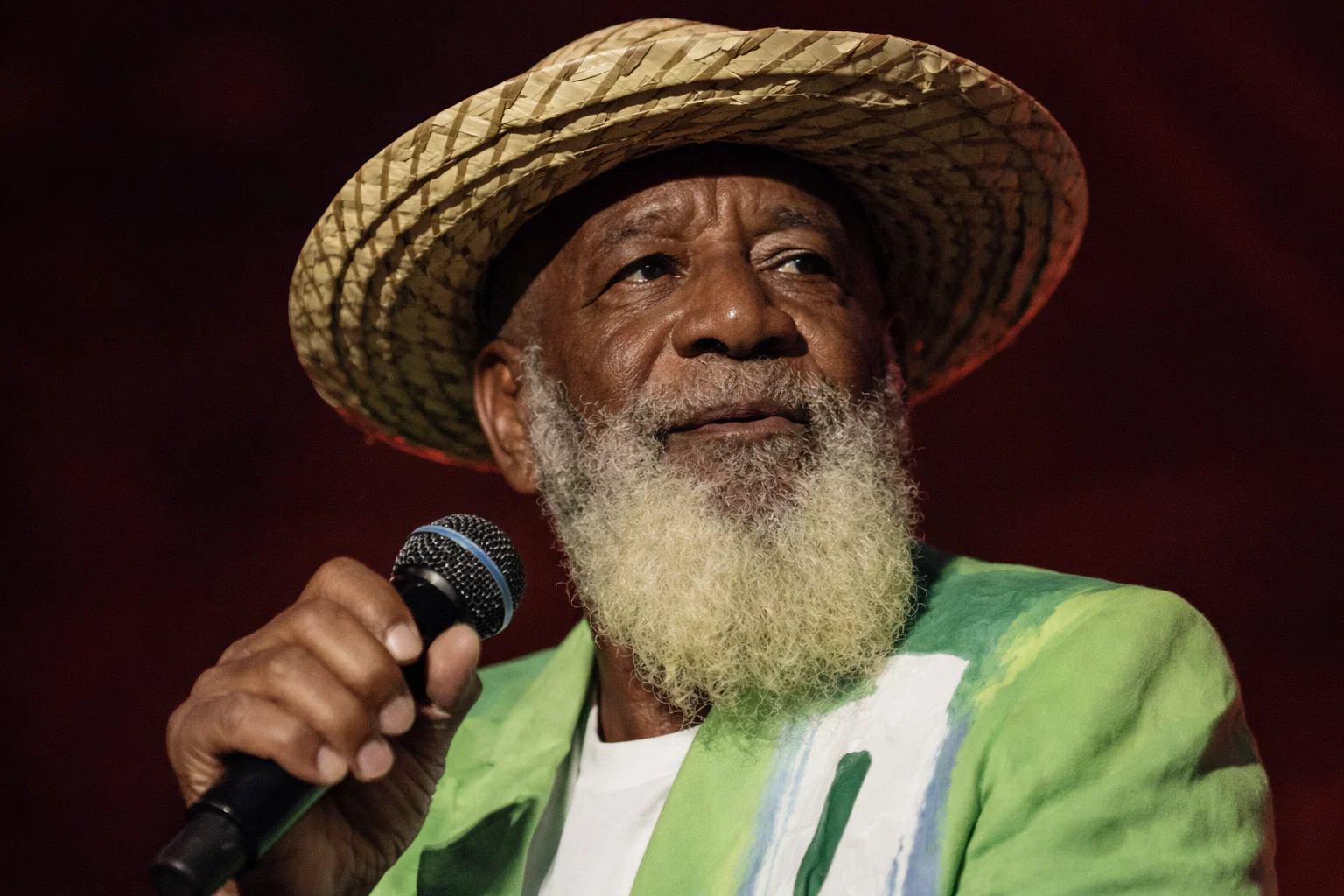
Though the original lineup disbanded in 1985 as Jeff Joseph moved to New York and explored Karibean Rock, the impact of Grammacks never faded. Joseph later formed Gramacks New Generation, headlining the first World Creole Music Festival in 1997. His role as a Goodwill Ambassador and his mentorship of youth in “The Ghetto” in Saint Joseph cemented his status as a national hero.
In 2026, the influence of Grammacks is evident in the technical makeup of Bouyon music and the continued popularity of their classics like “Misik A Nou,” “Soucouyant,” and “Wooy Mi Deba.” They did more than play music; they provided the soundtrack to Dominica’s transition into an independent nation, proving that a small village band could indeed take the world by storm.


References
-
1.
Contemporary Music in Dominica, 1950-2000 https://divisionofculture.gov.dm/performing-and-visual-arts2/music/contemporary-music-in-dominica-1950-2000
-
2.
Les Grammacks: The Band That Took the World by Storm https://www.thedominican.net/2010/03/les-grammacksthe-band-that-took-world.html
-
3.
Jeff Joseph: The Man, The Music, The Legend https://dominicanewsonline.com/news/homepage/news/general/jeff-joseph-the-man-the-music-the-legend/