



Sour Orange (Citrus Aurantium)
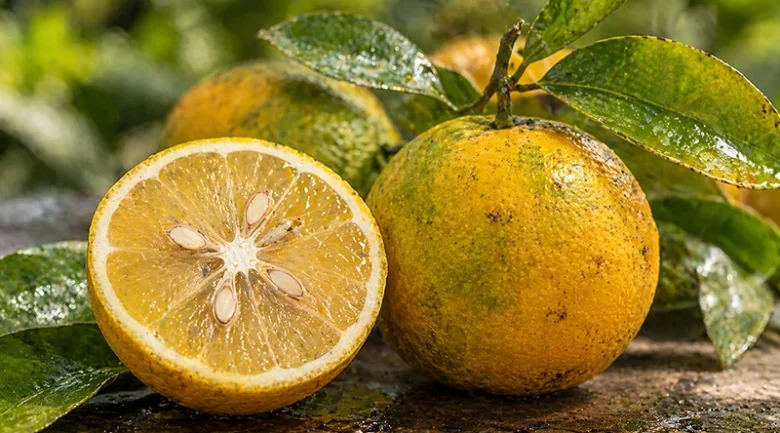
The sour orange, locally known in Kwéyòl (Creole) as lowanj si, is a resilient citrus species of profound importance to the culinary, medicinal, and agricultural fabric of the Commonwealth of Dominica. While too bitter to be consumed as a fresh table fruit, its juice, peel, and leaves are indispensable in Dominican households. It serves as a primary agent for food sanitation, a cornerstone of bush medicine, and a critical component in the national effort to revitalise the citrus industry.
Botanical Profile and Distribution
- Scientific Name: Citrus aurantium
- Common Names: Bitter orange, Seville orange, Bigarade, Lowanj si (Kweyol).
- Physical Characteristics: The tree is medium-sized, typically reaching 3 to 9 metres, with dark green, glossy leaves and distinctively long, winged petioles. The fruit has a thick, rough, dimpled rind that turns deep orange when ripe. The pulp is highly acidic and bitter, containing numerous seeds.
- Distribution in Dominica: Sour orange trees are found across the island, commonly growing in homestead gardens, semi-wild in secondary forests, and integrated into traditional agroforestry systems in regions like Castle Bruce, Belles, and Grand Fond.
Culinary and Cultural Significance
In Dominica, the sour orange is not merely an ingredient but a fundamental kitchen tool. Its use is deeply rooted in the island’s French and African heritage.
The Ritual of Washing Meat
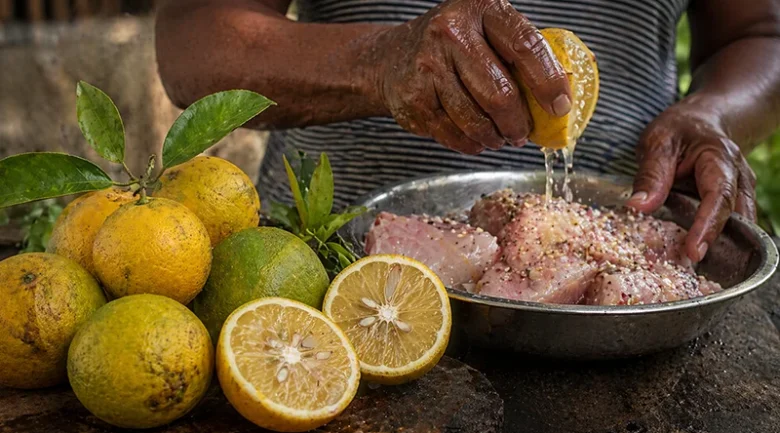
A defining characteristic of Dominican food preparation is the use of sour orange juice to wash or cut the rankness (fraj) of raw meats and seafood.
- Process: Before seasoning, poultry, pork, or fish are rubbed with sliced sour oranges and rinsed in water. Citric acid acts as a natural disinfectant and tenderiser, while removing unwanted odours.
- Culinary Note: In the absence of lime, sour orange is the preferred alternative, valued for the subtle floral aroma its zest leaves behind.
Marinades and Seasoning
The juice of the lowanj si is a key component in the traditional green seasoning used for stews and roasts. It is often combined with garlic, thyme, celery, and pimento peppers to create a potent marinade that penetrates deep into the meat.
Preserves and Drinks
While less common than lime juice, sour orange is used to make a refreshing orange squash or squash-type drink when sweetened with local cane sugar. The high pectin content in the rind also makes it the ideal base for traditional orange marmalades.
Traditional Medicine (Bush Medicine)
Dominican herbalists and “bush doctors” have long utilized Citrus aurantium for various ailments.
- Digestive Aid: A tea brewed from the dried leaves or peel is used to treat indigestion, stomach cramps, and flatulence.
- Diabetes Management: In local folk medicine, sour orange juice or leaf infusions are sometimes consumed to help regulate blood sugar levels.
- Nervous System: The blossoms (often called orange blossoms) are occasionally steeped to create a calming tea for anxiety or insomnia.
Agricultural and Administrative Context
The sour orange plays a pivotal role in Dominica’s agricultural infrastructure, particularly concerning plant health and industry sustainability.
The Londonderry Citrus Certification Facility
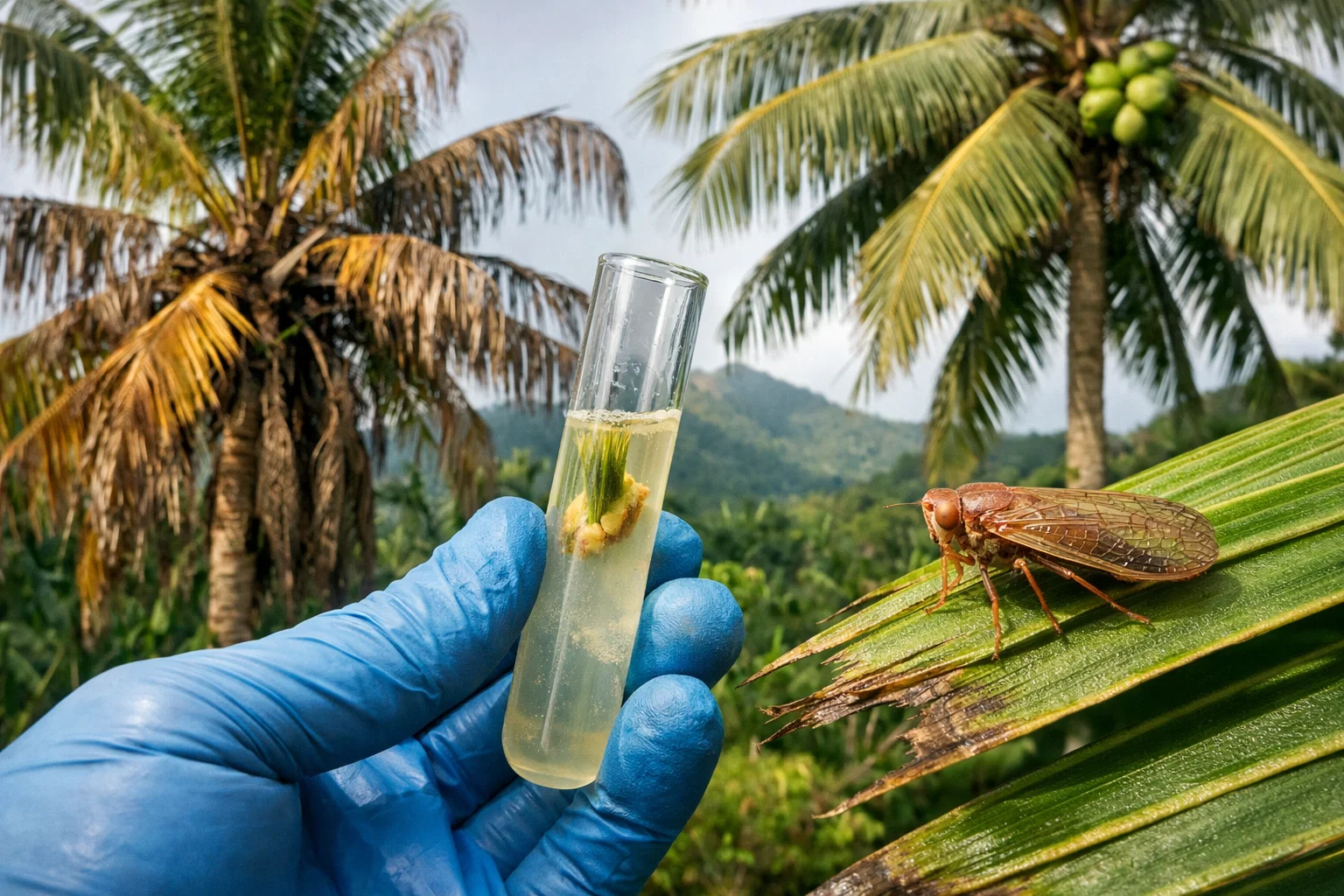
As part of the Ministry of Agriculture‘s “5Cs” program (Cocoa, Coffee, Coconuts, Citrus, and Cannabis), the government commissioned a $7.7 million Citrus Certification Facility at Londonderry. This facility is designed to produce over 50,000 pest- and disease-free seedlings per cycle.
- Significance: Historically, sour orange was the primary rootstock for Dominica’s citrus industry because of its vigour and soil adaptability. However, its susceptibility to the Citrus Tristeza Virus (CTV) led to a decline in production.
- Current Policy: The Londonderry facility focuses on propagating certified, CTV-resistant rootstocks to ensure that new plantations of sweet oranges and grapefruits can survive the viral pressures that previously devastated the sector.
Essential Oils
While not currently a major export, the potential for producing Neroli oil (from blossoms) and Petitgrain oil (from leaves) remains an area of interest for Dominica’s essential oil industry, which historically thrived in the 20th century.


