


National Agricultural Management Information System (NAMIS) in Dominica
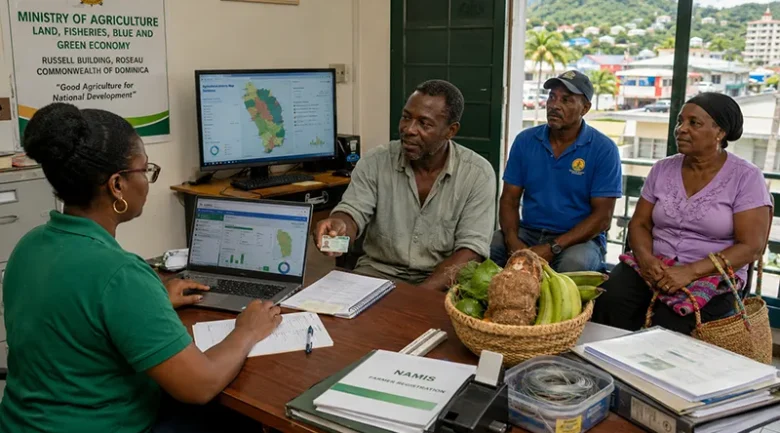
The National Agricultural Management Information System (NAMIS) is a centralised, cloud-based data platform developed by the Government of Dominica to modernise, manage, and monitor the country’s agricultural sector and its fisheries sector. Administered by the Ministry of Agriculture, Fisheries, Blue and Green Economy out of Roseau, NAMIS serves as the primary institutional framework for collecting data on primary food producers, fishers, and local vendors across the island.
The integration of the platform represents a transition from fragmented, paper-based records to a unified registry designed to support evidence-based policy, enhance climate change resilience, and streamline the distribution of state technical support and post-disaster rehabilitation funds.
Statutory Mandate and Operational Objectives
NAMIS functions as a decision-support system to improve food security and optimize supply chain visibility within Dominica’s blue and green economy. The agricultural sector plays a critical role in Dominica’s economy, historically contributing approximately 16% to the gross domestic product (GDP) and employing between 25% and 40% of the island’s workforce.
Core Objectives
The platform is structured to meet several public administration and sector-specific goals:
- Data Consolidation: Eliminating duplication and structural information gaps across various departments, external development partners, and localized agricultural extensions.
- Resource Distribution Integrity: Ensuring that agricultural subsidies, fertilizers, tools, and technical inputs are distributed exclusively to verified, actively producing stakeholders.
- Disaster Risk Management (DRM): Creating a baseline data infrastructure to rapidly assess damage to farms and fisheries following extreme weather events like tropical storms and hurricanes, facilitating swift, transparent financial relief.
Core Functional Modules and Services
The NAMIS architecture is segmented into specialized digital applications tailored to different stakeholders within the domestic food production ecosystem.
Producer Registries
- Farmer Registration Portal: A secure portal where agricultural producers input demographic information, parcel geographic coordinates, land tenure status, major crop types, and livestock data. Successful registration provides farmers with an official Producer ID necessary to access Ministry-backed inputs, extension services, and export programs.
- Fisher Registration Database: A parallel tracking mechanism for small-scale, artisanal, and commercial aquaculture operators. The database captures data regarding boat licensing, engine specifications, safety-at-sea equipment, and dominant fishing grounds.
Regulatory Licensing Applications
The platform digitises structural components of domestic market compliance via its business-facing applications:
- Produce Seller’s License Application: A digital intake portal for market vendors and wholesale aggregators operating within the country.
- License Renewal System: An automated portal designed to handle periodic renewals for pre-existing commercial vendors, reducing administrative overhead at the main ministerial offices in Roseau.
Climate Change and Strategic Integration
A key contemporary focus of the platform is expanding its capacity through targeted international development projects, notably the Enhancing Sustainability and Resilience of the Agriculture Sector in the Commonwealth of Dominica Project.
Supported by a grant of $749,619 USD from the Caribbean Development Bank (CDB), technical expansions in 2026 aim to directly weave Climate Change (CC) adaptation and Disaster Risk Management (DRM) metrics into the system. Working alongside management information system (MIS) specialists, the ministry is upgrading the platform’s database and programming language (both back-end and front-end software) in coordination with the Government’s Information and Communication Technology (ICT) Unit.
These upgrades introduce dashboard and reporting capabilities. This allows for quick analysis, trend tracking, and comparing agricultural indicators against defined baselines. It also transforms the platform into a centralised repository for all climate change and disaster risk reduction initiatives in the agriculture sector, allowing Dominica to better leverage its Global Centre for Agricultural Resilience.


