


Kite Flying
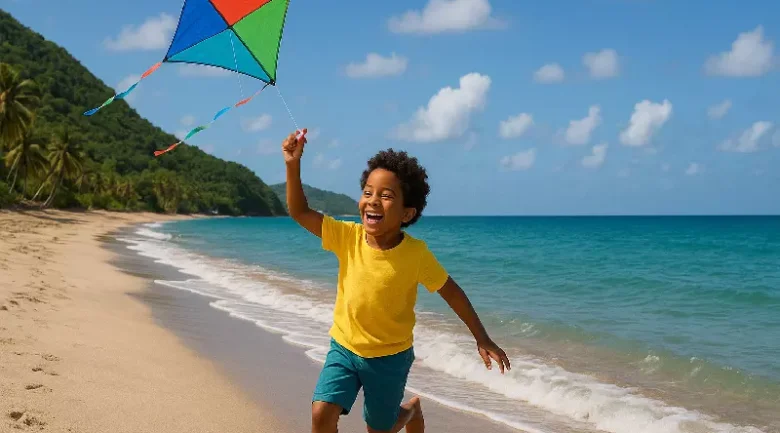
Kite flying in Dominica is a cherished tradition that blends seasonal celebration, rural creativity, and intergenerational bonding. Most popularly practised during the Easter season, it remains one of the island’s most vibrant and visually engaging cultural activities. Although informal in many areas, kite flying holds deep personal and communal meaning for Dominicans, especially children, who eagerly look forward to the annual ritual of crafting and launching their handmade kites into the sky.
Origins and Cultural Relevance
The tradition of kite flying in Dominica has roots in both British colonial influence and West African customs, where kites were flown during religious holidays or to mark special occasions. Over time, Dominicans adopted and localised the practice, particularly aligning it with Easter, a period symbolising renewal and spiritual elevation. In many households, making a kite from scratch is just as meaningful as flying it, with older generations teaching children about the best materials, designs, and wind techniques.
Traditional Kite Crafting in Villages
In rural and urban Dominican communities alike, traditional kites are made using coconut palm ribs or slender wooden sticks for the frame, colored sugar paper or plastic for the sail, and flour bag string for the line. They’re often decorated with tails, frills, and sometimes buzzers, strips of paper or plastic that hum in the wind. This DIY process fosters creativity and strengthens local knowledge sharing, especially in villages like Portsmouth, Castle Bruce, Pointe Michel, and Grand Bay.
Where and When to Fly Kites
While kites can be flown year-round, the peak season is the week leading up to and following Easter Sunday. Families and friends gather on hillsides, playing fields, and open coastal areas to launch their kites into the island’s gusty trade winds. Popular spots include:
- Morne Bruce, overlooking Roseau
- Castle Bruce Playing Field
- Laudat’s breezy ridgelines
- Newtown Savannah
- Benjamin’s Park
The activity typically spans the entire weekend, with Saturday and Easter Monday being favourite days for kite flying.
Cultural Revival and Public Events
In recent years, efforts have been made to revive kite flying through community events and educational programs. The most notable example was the Dominica International Kite Festival in 2019, held in Castle Bruce, which gathered participants from across the island to showcase traditional and contemporary kite designs. While such formal festivals have been sporadic, the cultural interest remains strong, especially among educators and youth development groups.
Symbolism and Lasting Value
For Dominicans, kite flying represents freedom, imagination, and the spirit of togetherness. It offers a joyful, screen-free experience for children and an opportunity for adults to reconnect with childhood memories. Though simple in form, kite flying in Dominica is a meaningful way to honour tradition, celebrate the season, and embrace the island’s natural beauty.
