

Industrial Action in Dominica
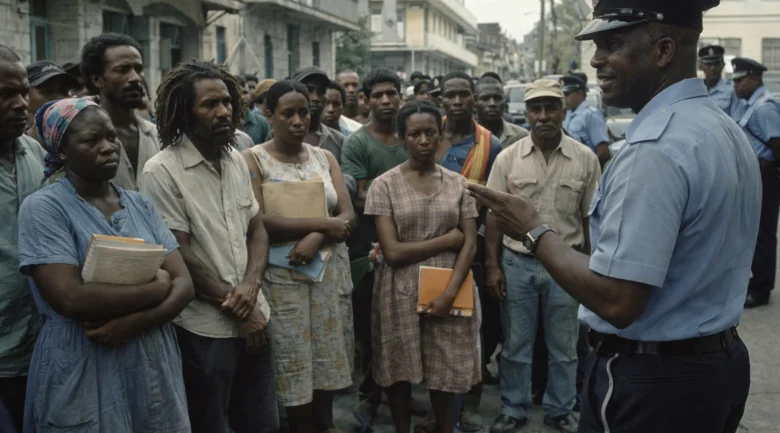
As a vital instrument for workers, Industrial Action remains significant in Dominica, serving as a cornerstone of the nation’s democratic and socio-economic development. Historically, these actions have mirrored the island’s transition from a colonial plantation society to a modern state governed by the rule of law. The state, acting as primary employer, joins powerful trade unions and private-sector federations to define the island’s intricate labor relations landscape. By examining the trajectory of collective bargaining and civil unrest, one understands clearly how Dominica’s workforce has secured protections that are now codified in national legislation.
The Historical Genesis of Labor Advocacy (1919–1945)
The origins of organised labour can be traced back to the period following World War I. In 1919, returning veterans from the British West Indies Regiment brought home exposure to international labour movements and a burgeoning sense of entitlement to improved social conditions. However, the early 20th century was marked by a lack of formal representation for the working class. It was not until the mid-1930s, during a period of widespread labour unrest across the British Caribbean, that the foundations for modern unions were laid.
The seminal moment for the movement arrived in 1945 with the formation of the Dominica Trade Union (DTU). Led by Emmanuel Christopher Loblack, the DTU was the first organization to provide a structured voice for the peasantry and estate workers. Loblack traveled throughout the rural districts, documenting the abysmal conditions of sharecroppers and laborers on the large lime and cocoa estates. The DTU’s advocacy was instrumental in the eventual passing of the Trade Unions and Trade Disputes Ordinance, which provided the first legal protections for workers engaging in collective withdrawal of labor.
The Rise of the Maritime and Waterfront Unions (1950s–1960s)
As the economy shifted toward banana exports in the 1950s, the Green Gold era, the strategic importance of the Roseau Bayfront increased. The workers who loaded and unloaded ships realized that their position was the choke point of the national economy. This led to the rise of the Waterfront and Allied Workers Union (WAWU), which became one of the most militant and successful organizations in the country’s history.
Throughout the 1960s, WAWU utilized go-slow tactics and short-duration strikes to force shipping magnates to improve safety standards and wages. These actions were not merely about financial gain; they were a rejection of the colonial-era relationship between the merchant class and the laborer. By the time the nation moved toward Associated Statehood in 1967, the labor movement had become so influential that it served as a primary recruitment ground for the political leaders who would eventually lead the country to independence.
The 1970s: A Decade of Constitutional and Labor Crisis
The 1970s are recorded as the most volatile period for industrial relations in Dominica. This decade saw a convergence of labor grievances and political dissatisfaction, culminating in events that fundamentally altered the nation’s governance.
- The 1973 Civil Service Strike: This strike remains a definitive study in the power of the professional class. The Civil Service Association (CSA), under the leadership of Charles Savarin, orchestrated a total shutdown of government services that lasted for several weeks. The strike was sparked by a 25% salary demand but evolved into a broader protest against government heavy-handedness.
- Civil service industrial unrest (September 1976): In September 1976, in Roseau, government employees organised labour strikes over wages and terms; this conflict served as a vital practice for future national movements, exhibiting rising opposition to state employment laws.
- 47-day civil service strike (July to October 1977): From July through October 1977, the Civil Service Association led a lengthy islandwide protest, often referred to as a 47-day strike, which compelled talks and demonstrated the strength of organised public defiance.
The Modern Legislative Framework for Industrial Action
In the contemporary era, the rights and responsibilities of both employers and employees are governed by a suite of laws that seek to prevent the chaos of the 1970s while preserving the fundamental right to protest.
- Industrial Relations Act (Chapter 89:01): This is the “Constitution” of labour relations. It outlines the process for registering unions, certifying a union as a bargaining agent for a specific workforce, and the mandatory conciliation process that must occur before a strike can be legally declared.
- Disputes in Essential Services: This Provision under the Industrial Relations Act, restricts the right to strike for workers in critical sectors such as water, electricity, health, and fire services, requiring disputes to be referred to mandatory arbitration.
- Labour Standards Act (Chapter 89:05): Establishes the baseline for all employment in the country. It covers minimum wages, maximum hours of work, overtime compensation, and mandatory vacation leave. Most disputes today arise from an employer’s failure to adhere to these statutory minimums.
- Protection of Employment Act: This legislation is critical during periods of industrial unrest as it protects workers from being summarily dismissed for participating in lawful industrial action. It also governs redundancy and severance pay procedures.
- Occupational Health and Safety (OHS) Act: A more recent addition to the legal landscape, this focuses on the physical environment of the workplace and provides workers the right to refuse work they believe is imminently dangerous to their health or life.
Notable Examples of Industrial Action in the Last 25 Years
The profile of labour disputes in the 21st century has shifted from general strikes to sector-specific actions focused on reclassification, arrears, and working conditions. The following are documented examples of the last two and a half decades:
- The 2021 Nurses’ Protest: In a significant demonstration of collective will, nurses across the island staged “sick-out” actions to highlight exhaustion and inadequate financial recognition amid a global health crisis. This led to accelerated negotiations for a new nursing reclassification and a hazard allowance.
- Dominica State College (DSC) Faculty Actions (2018–2023): Over the past several years, the faculty and staff of the national college have repeatedly withdrawn their labour to protest delays in the payment of social security contributions and to demand repairs to a campus damaged by natural disasters.
- The Teachers’ Association “Work-to-Rule” (2002): The Dominica Association of Teachers (DAT) utilised this tactic to demand the full implementation of a salary review. By strictly adhering to the letter of their contracts and refusing “extra-curricular” duties, they demonstrated the immense unpaid labour that sustains the education system.
- Port Authority Tensions (2014): Workers at the Woodbridge Bay Port, represented by WAWU, engaged in a series of short-term stoppages in response to the introduction of new shift systems, which they argued would reduce take-home pay without a corresponding reduction in hours.
- Public Service Union “Lunch Hour” Protests (2008): To avoid the legal ramifications of a full strike, the Dominica Public Service Union (DPSU) held a series of large-scale lunch-hour protests in Roseau to pressure the government to settle outstanding salary increases for the 2006–2009 triennium.
- National Security Guard Strikes (2019): Private-sector security guards engaged in a strike against several prominent firms to protest the lack of equipment and the failure of employers to pay the newly adjusted minimum wage.
- Agricultural Worker Walkouts (2005): During a period of agricultural restructuring, workers on various estates in the eastern parishes walked off the job to protest the lack of clarity regarding severance payments as estates were being subdivided.
Primary Drivers of Labor Stability Today
Currently, the goal of both the state and the labour movement is to achieve Industrial Peace through Social Dialogue. This modern approach is characterised by several stabilising factors that have reduced the frequency of disruptive strikes.
- The Tripartite Model: This involves a consultative committee where representatives from the Government, the Employers’ Federation, and the Unions meet regularly to discuss national economic policy before it becomes law. This proactive communication reduces the surprise factor that often leads to industrial action.
- The Role of the Industrial Relations Tribunal: As a specialised quasi-judicial body, the Tribunal allows for the resolution of disputes without the need for expensive and lengthy High Court litigation. Its decisions on unfair dismissal and union recognition are legally binding, providing a clear path for justice.
- Inflation-Adjusted Collective Agreements: Modern unions now negotiate multi-year wage increases designed to protect workers’ purchasing power against global inflation, reducing the need for emergency salary protests.
- The “Bridge Pension” Mechanism: By addressing the concerns of non-established workers who previously lacked retirement security, the state has removed a significant source of historical resentment within the public service.
- Digitalization and Retraining Clauses: As the workplace evolves, current bargaining agreements increasingly focus on just transition clauses, ensuring that workers are retrained rather than replaced when new technologies are introduced.
- Standardized Grievance Procedures: Most modern workplaces now have a clearly defined stepped grievance process (Supervisor > Manager > Union Rep > Ministry of Labour), which ensures that small issues are resolved before they escalate into national disputes.
The Future of Collective Bargaining
As the economy continues to diversify into tourism, geothermal energy, and digital services, the labour movement is adapting its strategies. The recent formation of the National Trade Union Congress (DTUC) signals a move toward a super-union model, in which the combined strength of all organisations is used to influence national legislation. This evolution ensures that while the methods of Industrial Action may change, shifting from the picket line to the boardroom, the fundamental mission remains the protection of the worker’s dignity and economic security.


References
-
1.
The Constitution of the Commonwealth (1978) – Constitute Project https://www.constituteproject.org/constitution/Dominica_2014
-
2.
Dominica Is Racked by Political Upheaval and Depression https://www.nytimes.com/1979/08/12/archives/dominica-is-racked-by-political-upheaval-and-depression-limes-and.html
-
3.
Decent Work Country Programme: Dominica – ILO Policy Papers https://www.ilo.org/media/58121/download
-
4.
Labour Relations (Notice in Essential Services) Rules http://www.commonlii.org/bm/legis/consol_reg/lriesr1975505.pdf