


Hide & Seek
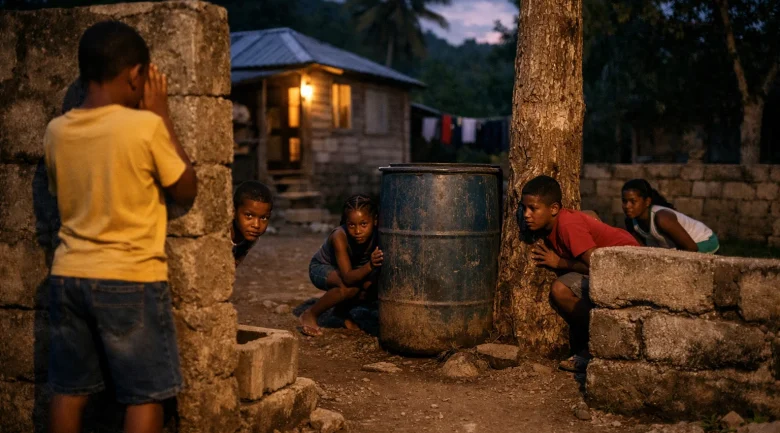
What appears to be a simple children’s game, Hide and Seek in Dominica, is in fact a deeply rooted cultural tradition, known in Kwéyòl as “Kach-ka-Jou” or simply “Kach,” and influenced by the French-derived term “Cacher” in everyday use.
Historically, the game has been played in the varied terrain of the island, from the dense backyard gardens (the “bush”) to the sprawling community yards of villages like La Plaine and Grand Bay. In these rural settings, the game often incorporates the natural environment, utilising trees, banana groves, and stone walls as strategic hiding spots.
Traditional Variations and Gameplay
While the basic premise of one person seeking and others hiding remains, the Dominican version often includes unique regional elements:
- Home Base (The “Blocko” or Base): Players usually designate a specific tree or post as the “base.” The seeker counts at this base, and the hiders’ goal is not just to stay hidden but to outrun the seeker back to the base.
- The “Tag” Shout: In some communities, when a seeker spots someone, they must race back to the base and shout a specific phrase (similar to “One, two, three for [Name]”) to officially “catch” them.
- “Man in the Bush”: A variation that blends hide-and-seek with guessing. One player may hide an object (often a seed or a Jumbie Bead), and others must find it, or players hide in the high grass and foliage, making it a test of stealth in the tropical terrain.
- Night Play: On moonlit nights, “Kach-ka-Jou” was a staple evening activity for village children. This version, played in the dark, added a layer of suspense and required players to be intimately familiar with the layout of their surroundings.
Cultural Significance
Traditional games like Hide-and-Seek serve as a bridge between generations. In Dominica, these games are frequently highlighted during the Traditional Games and Toys Festival, organised by the Division of Culture. This festival encourages the use of natural materials for play, such as whistles made from coconut leaflets (souflèt) or dolls from banana inflorescences (pòpòt fig), reminding the youth of the resourcefulness inherent in Dominican childhood.


