


Cowboys and Indians
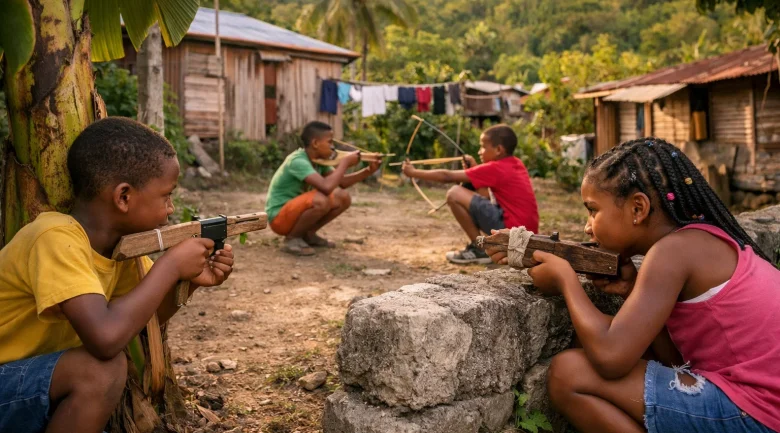
Cowboys and Indians emerged in Dominica as a popular high-energy role-play game, commonly played in village streets and backyard “bushes” throughout the mid-to-late twentieth century. Shaped by Western cinema culture through Carib Cinema and Harlem cinema, it tested stealth, marksmanship and creative improvisation.
While the game is less common today due to the shift toward digital entertainment, it remains a significant part of the collective memory of Dominica’s pre-technology generation.
The Dynamics of Play
The game functioned as a large-scale version of Tag combined with Hide and Seek. Children would divide into two rival factions, often utilising the rugged terrain of the village or neighbourhood, including ravine edges, banana groves, and stone walls, as tactical vantage points.
- The Pursuit: The Cowboys typically hunted the Indians, who were known for their superior camouflage and ability to move silently through the dense tropical vegetation.
- The Capture: A player was considered caught or dead if they were tagged or shot with a toy projectile. This often led to elaborate, dramatic death scenes, a hallmark of the game’s cinematic influence.
- Territory: Large villages like Marigot or Castle Bruce provided expansive theatres of war where a single game could span several hours and multiple acres.
Handmade Weaponry and Resourcefulness
The hallmark of Cowboys and Indians in Dominica was the craftsmanship of the toys. Because commercial plastic toys were rare and expensive, children relied on the island’s botanical resources:
- The “Pop-Gun”: Made from a hollowed-out branch of the Bamboo or the Elderberry tree. A wooden plunger was used to force a small, hard fruit (often a green berry or a wad of wet paper) out of the tube with a loud pop.
- Bows and Arrows: Indians typically used the flexible mid-rib of a coconut leaflet or branches from the Guava tree for bows. Arrows were fashioned from sharpened reeds or the dried stems of the Wild Cane.
- Wooden Six-Shooters: Cowboys would carve pistols out of soft wood or even use a V-shaped branch that resembled a holster-ready gun.
- The Slingshot (Catapult): Known locally as a Cattapool, these were made from a forked branch and sturdy rubber strips (often salvaged from old bicycle inner tubes), used to fire small seeds or pebbles.
Cultural Reflection
The game’s popularity reflected Dominica’s exposure to American pop culture through the “Matinee” tradition. However, the Dominican version was uniquely adapted. The “Indians” were often portrayed not just as antagonists but as skilled “bushmen,” a role that resonated with the island’s own history of Maroon resistance and the presence of the Kalinago people.


