




Commonwealth of Dominica Citizenship (Change of Name) Regulations 2022
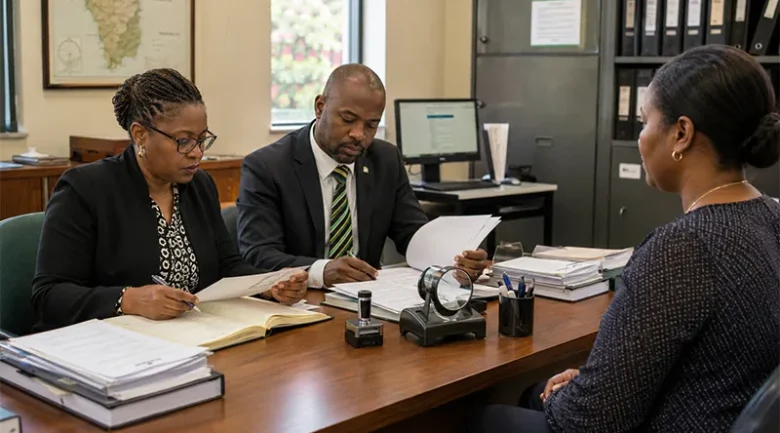
The Commonwealth of Dominica Citizenship (Change of Name) Regulations 2022 are statutory rules enacted to govern, restrict, and systematically audit the legal process of altering personal identity data for naturalized citizens within the Commonwealth of Dominica. Formally gazetted on August 18, 2022, as Statutory Rules and Orders (S.R.O.) No. 24 of 2022, these regulations were made by the Minister responsible for citizenship under the executive authority granted by Section 20 of the Commonwealth of Dominica Citizenship Act (Chapter 1:10).
The primary purpose of the legislation is to curb identity laundering, protect the geopolitical integrity of Dominica’s passport, and address international security concerns raised by global oversight bodies. By shifting name changes away from unrestricted common-law deed polls and placing them under strict judicial oversight, the regulations establish definitive residency and timelines that naturalised individuals must satisfy before any modification to their legal name can be registered.
Regulatory Architecture and Oversight
The implementation of S.R.O. 24 of 2022 centralises all name alteration processes within the High Court of Justice. Under the statutory framework, the Registrar of the High Court serves as the chief regulatory authority responsible for receiving, vetting, gazetting, registering, or rejecting Change of Name requests.
The regulations apply primarily to individuals who have obtained their Dominican nationality via naturalization, specifically impacting economic citizens who acquired passports through the Citizenship by Investment (CBI) program. Under this framework, the standard common-law freedom to assume a new name at will is entirely suspended for naturalised citizens, replaced by a formal judicial administrative procedure.
Strict Statutory Thresholds for Applicants
To prevent individuals from changing their names immediately after acquiring a new passport, the 2022 Regulations introduced strict temporal and physical residency barriers. The Registrar is legally mandated to refuse the registration of any name change if the applicant fails to meet these multi-tiered thresholds:
- The Five-Year Holding Clause: An applicant who obtained citizenship by naturalization must hold that status for a minimum continuous period of five years before becoming eligible to submit an application for a name change.
- The Two-Year Physical Residency Mandate: The applicant must provide definitive, documented proof of having maintained physical residence within the island of Dominica for a minimum aggregate period of two years.
- Frequency Limitation: To prevent continuous identity cycling, the Registrar will refuse any application if less than two years have elapsed since a previously registered certificate of change of name for that same individual.
Application Requirements and Procedural Protocols
Every name change application must follow a highly structured statutory procedure, navigating multiple stages of background verification and public disclosure.
Submission and Supporting Evidence
The applicant must submit a formal petition using the prescribed form set out in Schedule 1 of the regulations directly to the High Court Registry. The submission must include:
- A detailed affidavit affirming the applicant’s true identity, current lawful name, and proposed name.
- The original Certificate of Naturalization and current Dominican passport.
- Clear declarations regarding the applicant’s civil status (single, married, widowed, or divorced).
- The names and proposed names of any close family members or dependents whose legal identities will be structurally altered as a direct result of the primary applicant’s name change.
Spousal Notification and Consent
Section 7 of the regulations details explicit protections for marital contracts. A married applicant is legally required to produce a valid marriage certificate and provide verifiable evidence (such as a registered mail receipt or courier delivery confirmation) proving that formal notice of the intended name change was served to their spouse’s last known address. Furthermore, the applicant must file written spousal consent, or provide the Registrar with valid legal justification explaining why such consent should be judicially dispensed with.
Public Notice and Gazetting Mandate
To maintain public transparency and allow creditors or law enforcement to intervene, Section 3(3) requires the Registrar to cause the application to be published in the Official Gazette and in at least two commercial newspapers of national circulation. This public notice must be circulated for at least one full month before the Registrar can legally finalize or register the change.
Grounds for Mandatory Rejection
The regulations provide the Registrar of the High Court with absolute discretionary power to deny any application that threatens public safety or international law. Registration must be refused if:
- The proposed name is deemed confusing, offensive, or explicitly formulated to mislead or defraud the general public.
- The applicant is currently under active law enforcement investigation or facing open criminal proceedings before any court of competent jurisdiction.
- The naturalized citizen has held their Dominican nationality for less than five years or cannot substantiate their two-year domestic residency footprint.
Legal Effects, Document Amendment, and Revocation
Upon successful satisfaction of all statutory checks, public notice timelines, and the payment of a $500 USD processing fee, the Registrar records the modification in the official registry and issues a duplicate Certificate of Change of Name.
Amendment of Public Records
The issuance of this certificate acts as irrefutable legal proof of the name change. Under Section 11, any individual who has successfully registered a new name may request the person in charge of maintaining any public or official document (such as the Passport Office, Social Security Board, or Inland Revenue Division) to substitute their former name. The state officer executing the change must physically certify directly on the document that the substitution was performed pursuant to the 2022 Regulations.
Revocation and Criminal Penalties
The Registrar retains the perpetual right to revoke a name change if subsequent investigations reveal that the certificate was obtained through fraud, duress, or systemic misrepresentation. A formal revocation order cancels the certificate retroactively, and a public notice of the revocation must be published immediately in the Official Gazette.
Furthermore, Section 13(2) classifies the fraudulent acquisition of a name change under these regulations as a summary offence. Individuals convicted of this infraction face a statutory fine of $1,500, an uncommutable prison sentence of 6 months, or both punishments simultaneously.


