




Central Livestock Farm (CLF) in Dominica
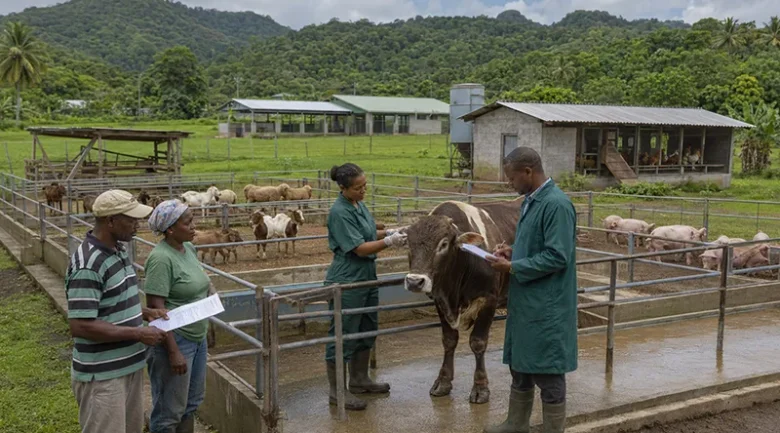
The Central Livestock Farm (CLF) in Dominica serves as the primary national hub for animal husbandry, genetic improvement, and agricultural technology transfer on the island. Managed under the Livestock Development and Veterinary Unit of the Division of Agriculture, the facility is designed to support domestic food security, reduce dependence on expensive livestock imports, and supply local farmers with high-quality, genetically superior breeding stock.
The farm operates as a model agricultural research and multiplication facility. It plays an indispensable role in safeguarding Dominica’s agricultural resilience, particularly as the country faces climate-related vulnerabilities in the Caribbean region.
History and Relocation
Initially established in the community of Stock Farm (near the capital city of Roseau), the facility’s footprint was eventually constrained by urban growth and the need for more expansive pasturelands.
In 2005, the Government of the Commonwealth of Dominica relocated the Central Livestock Farm to Londonderry on the northeastern coast, situated just north of the Douglas-Charles Airport (formerly Melville Hall Airport).
This 95-acre site offered the scale required for a modern agricultural research center. Between 2005 and 2009, substantial public investments were funneled into the Londonderry site to construct dedicated livestock barns, staff quarters, and feed-storage infrastructure, transitioning the farm into a fully realized national breeding center.
Facility Structure and Breeding Units
The Central Livestock Farm in Dominica is divided into specialized multiplication and research units:
| Breeding & Multiplication Unit | Primary Animal Breeds & Focus | Purpose & Outputs |
| Goat Multiplication Unit | Creole, Anglo-Nubian, and Nigerian Dwarf dairy breeds. | Upgrading the local genetic pool for meat and milk production; providing hardy hybrids to farmers. |
| Sheep Multiplication Unit | Barbados Blackbelly and tropical hair sheep. | High-quality mutton breeding stock; distribution of animals built for tropical climates. |
| Dairy & Cattle Unit | Holstein, Jersey, and Bos indicus crossbreds. | Milking operations, pedigree recording, and breeding bulls resistant to tropical parasites. |
| Pig Breeding Unit | Large White, Landrace, and Duroc. | Supply of healthy, fast-growing weaners to commercial pork producers across Dominica. |
| Rabbit Breeding Unit | New Zealand White and Californian. | Revitalizing meat rabbit production following historic facility disease outbreaks. |
Climate Resilience and Post-Maria Rehabilitation
In September 2017, Hurricane Maria caused catastrophic damage across Dominica, decimating the country’s agricultural sector and leaving the structures at the Londonderry CLF severely compromised.
To rebuild the livestock sub-sector, the government leveraged the Emergency Agricultural Livelihoods and Climate Resilience Project (EALCRP), a major national recovery initiative funded by the World Bank Group.
Under Phase 1 of this project, a rehabilitation contract valued at over EC$613,000 was signed in December 2020. The works focused on restoring four key structures:
- The Goat Unit
- The Sheep Unit
- The Bull Unit
- The Dairy Facility
Rehabilitation plans prioritized climate-resilient engineering, including reinforced roofing systems, structural timber framing, specialized rainwater harvesting setups, and integrated solar energy options to ensure the farm remains self-sustaining during natural disasters.
Key Functions and Services
The CLF is not merely a holding facility; it is a vital training and resource center for the island’s farming network. Its core operations include:
- Genetic Distribution: Livestock farmers can purchase certified, genetically superior animals to improve their own herds’ yields and health.
- The “Cut and Carry” System Promotion: To mitigate parasite infections and maximize the island’s limited flat grazing land, CLF technicians train farmers in the “cut and carry” feeding method. Under this system, high-nutrient grasses are cultivated, harvested, and brought directly to penned animals, effectively doubling stocking capacity.
- Veterinary & Diagnostic Support: The farm works in tandem with the Molecular Diagnostic Laboratory in Roseau to monitor animal health, manage tick-elimination programs, and run disease prevention protocols (such as screen testing for Leptospirosis and Varroa mites in bees).
- Input Provision: The farm maintains a revolving fund that supplies essential infrastructure inputs, such as barbed wire, sheep fencing, and rabbit cage wire, directly to farmers.
