




By-Elections in Dominica
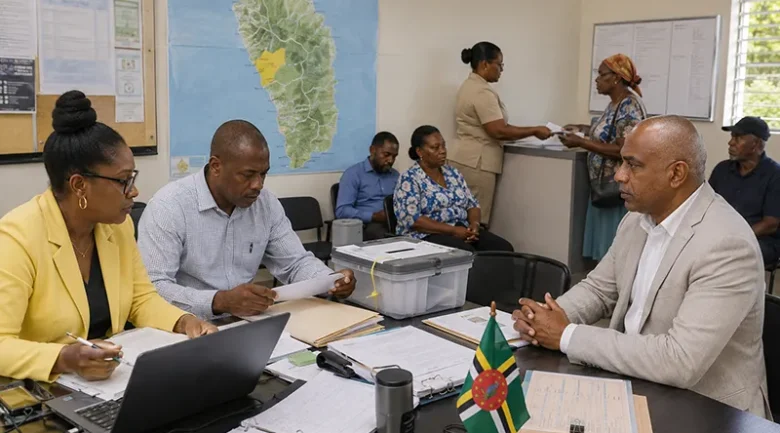
A by-election in Dominica is the official statutory process used to fill a sudden vacancy within the House of Assembly between regular general elections. Governed by the strict legal provisions of the Constitution of Dominica and the House of Assembly (Elections) Act, a by-election ensures that residents of a specific constituency maintain continuous political representation when an elected Member of Parliament (MP) resigns, dies in office, or is legally disqualified.
Unlike a general election, which dissolves the entire Parliament to seek a national mandate, a by-election is micro-targeted, occurring only within the boundaries of the affected constituency. The administration, monitoring, and verification of the process are handled by the Electoral Commission and the Electoral Office, ensuring that strict deadlines for issuing writs, nominating candidates, and conducting the poll are executed in full alignment with national law.
Constitutional and Legal Triggers
A localized parliamentary vacancy cannot remain unfilled indefinitely. The legal framework of Dominica mandates a clear timeline to restore localized representation.
Statutory Triggers of a Vacancy
Under Section 35 of the Constitution of Dominica, an elected seat in the House of Assembly becomes vacant under several specific conditions:
- The death of the sitting Member of Parliament.
- The formal submission of a written resignation to the Speaker of the House.
- Continuous absence from sittings of the House for a period prescribed by parliamentary standing orders without explicit leave from the Speaker.
- The emergence of a legal disqualification, such as being declared bankrupt, being certified mentally insane, or executing an allegiance to a foreign power.
Mandatory Constitutional Timelines
Pursuant to Section 55 of the Constitution, once a vacancy is formalized, a by-election must be held within ninety days of the seat becoming vacant. This strict constitutional timeline prevents the executive branch from leaving a constituency unrepresented for an extended period, protecting the democratic rights of the local electorate.
Administrative and Operational Procedures
The operational execution of a by-election follows a precise, sequential timeline managed by the Chief Elections Officer under the House of Assembly (Elections) Act.
The Writ of Election
The formal legislative mechanism that starts a by-election is the Writ of Election. Issued by the President of Dominica and directed to the designated Returning Officer of the affected constituency, the writ legally sets the dates for:
- Nomination Day: The official day candidates must formally submit their credentials.
- Polling Day: The day the electorate casts their ballots, which must occur if more than one candidate is successfully nominated.
Nomination Day Rules
On the designated Nomination Day, the Returning Officer sets up an official station within the constituency between 9:00 AM and 4:00 PM to receive prospective candidates. To secure a valid nomination, a candidate must fulfill several strict legal requirements:
- Be proposed and seconded by two registered voters of that specific constituency.
- Obtain the written consent of six other registered voters from the same district.
- Submit a formal Statutory Declaration verifying their legal eligibility to serve in Parliament.
- Deposit the mandatory statutory sum of one hundred dollars ($100 XCD).
If only one candidate is successfully nominated by the close of the session, the Returning Officer immediately declares that candidate duly elected to the House of Assembly, eliminating the need for a public poll. If two or more candidates are nominated, a contested election is declared, and Polling Day is scheduled.
Polling and Counting Processes
A contested by-election poll takes place between 14 and 21 days after Nomination Day. Voting procedures mirror those of a national general election:
- Ballot stations across the constituency open strictly from 7:00 AM to 5:00 PM.
- Votes are cast via secret ballot and tallied at individual polling stations immediately after the close of the poll.
- The Returning Officer conducts the final centralized count, officially certifies the results, and returns the endorsed Writ of Election to the Chief Elections Officer for publication in the Official Gazette.
Notable Historical By-Elections
By-elections have played a significant role in Dominica’s political history, occasionally marking pivotal transitions for both government and opposition factions.
The 2004 Grand Bay By-Election
Following the sudden death of Prime Minister Pierre Charles, who served as the parliamentary representative for the Grand Bay constituency, a highly watched by-election was triggered in early 2004. The Dominica Labour Party (DLP) selected John Fabien, who successfully won the poll, ensuring the governing party retained its legislative seat and maintained its parliamentary majority during a sensitive period of political leadership transition.
The 2021 Grand Bay By-Election
In September 2021, a vacancy occurred in the Grand Bay constituency following the death of sitting MP Edward Registe. The President issued the formal Writ of Election, setting the poll for November 29, 2021. Dr. Vince Henderson was selected to contest the seat for the Dominica Labour Party. Following a coordinated local campaign, Dr. Henderson secured an overwhelming majority of 1,229 votes against independent candidate Julius Gabriel, who received 159 votes, allowing Dr. Henderson to be formally sworn into the House of Assembly.
Modern Reforms and Electorate Monitoring
The operational management of by-elections operates alongside ongoing efforts by the Electoral Commission to update Dominica’s broad registration frameworks.
Centralized Voter Confirmation
Under modern legislative updates, including the Registration of Electors Act, the Electoral Office continuously verifies the Register of Electors across all 21 constituencies. This framework introduces specific monitoring adjustments that affect how by-election lists are generated:
- The Confirmation Register: The Electoral Office conducts systematic voter confirmation exercises to update national records, removing deceased individuals or those who no longer meet statutory residency requirements.
- Constituency-Specific Supplementary Lists: When a by-election writ is issued, the Electoral Office generates a clean, localized supplementary list from the master database. This ensures that only residents currently registered within that specific geographic boundary can participate in the localized poll.


References
- 1.