

Bredin-Archbold-Smithsonian Biological Survey of Dominica
The Bredin-Archbold-Smithsonian Biological Survey of Dominica, conducted primarily between 1964 and 1966, represents one of the most ambitious and comprehensive scientific endeavours in the history of Caribbean biology. In an era when many islands in the Lesser Antilles were undergoing rapid agricultural intensification, deforestation, and urban development, philanthropists J. Bruce Bredin and John D. Archbold recognised that the Commonwealth of Dominica remained a biological time capsule. By partnering with the Smithsonian Institution, they launched a multi-year, multi-disciplinary mission to catalogue every living thing on the Nature Isle, from the microscopic insects in its 365 rivers to the towering Gommier trees of its primary rainforests.
This survey was not merely a collection of specimens; it was a foundational act of scientific sovereignty that defined the island’s biological identity for the next century. The sheer volume of data produced, documented in over 100 specialised papers, transformed Dominica from a poorly understood colonial outpost into a global reference point for tropical ecology and island biogeography.
The Genesis and Structural Scope of the Survey
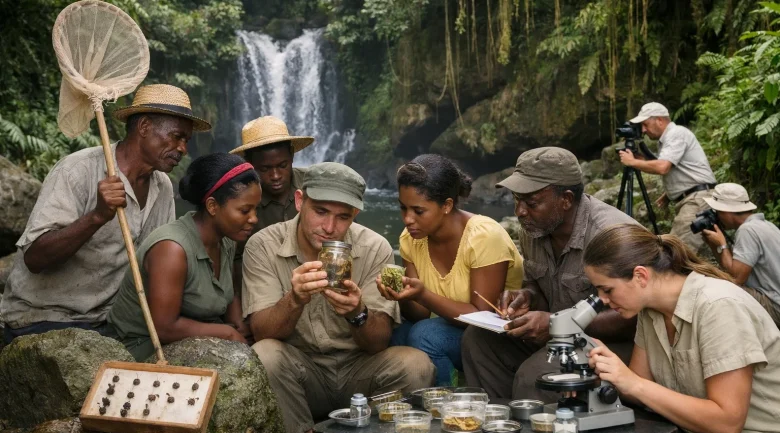
The survey was a massive logistical undertaking involving over 50 scientists from various branches of the Smithsonian and several major universities. The primary objective was to create a total biological inventory, a baseline that would allow future generations of scientists to measure environmental change, evolutionary shifts, and the impacts of human activity within an isolated tropical ecosystem.
Dominica was selected specifically because of its extreme and varied topography. The island’s vertical rise from sea level to over 4,700 feet within a few horizontal miles creates a compressed range of life zones, known as microclimates. To capture this diversity, scientists established base camps in environments as radically different as possible. The most famous of these was the Springfield Estate, which John D. Archbold later donated to serve as a permanent research station, a legacy that continues currently through the Archbold Tropical Research Center.
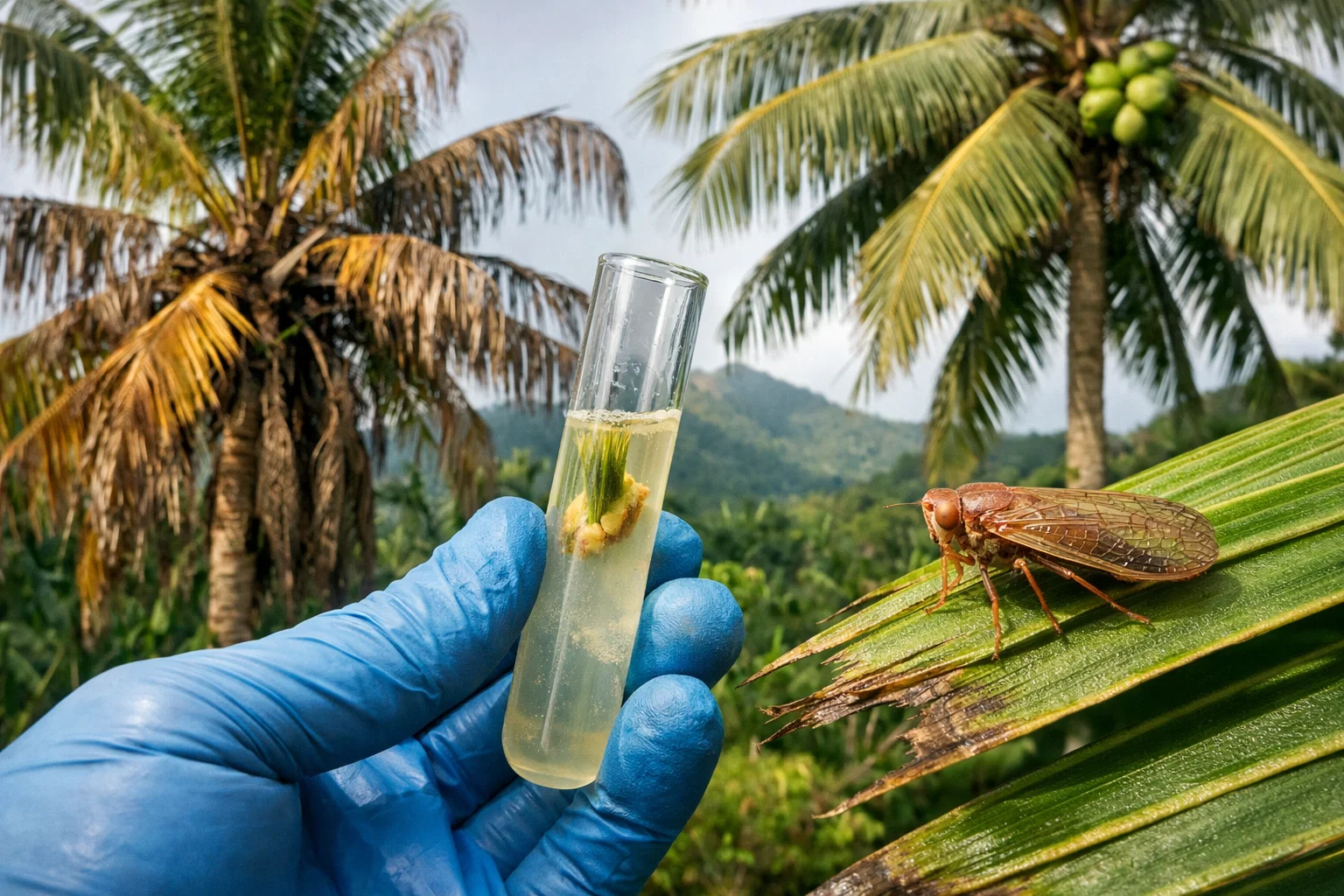
The methodology utilised by the teams was rigorous and cutting-edge for the 1960s. Botanists spent months in the rain-soaked interior, often sleeping in remote mountain camps to reach the untouched cloud forests. Entomologists used specialised light traps, malaise traps, and Berlese funnels to capture nocturnal insects and soil-dwelling organisms. Ornithologists and mammalogists used mist nets to study the island’s bird and bat populations, ensuring that no niche of the ecosystem, from the canopy to the forest floor, was left unexamined. This systematic approach resulted in the collection of hundreds of thousands of specimens, many of which remain in the permanent collections of the National Museum of Natural History in Washington, D.C., where they are currently used for DNA sequencing and climate change modelling.
Major Findings and Taxonomic Breakthroughs
The data generated by the survey was so vast that its publication spanned decades, appearing in a dedicated series of papers titled The Bredin-Archbold-Smithsonian Biological Survey of Dominica. These findings fundamentally rewrote the textbooks on Lesser Antillean biogeography.
| Taxonomic Group | Significant Contributions and Discoveries |
| Entomology | This was perhaps the most prolific arm of the survey. Scientists discovered hundreds of new species. Studies on the Trichoptera (caddis flies) and Diptera (flies) revealed an incredible diversity of aquatic insects, proving that the island’s freshwater systems were among the cleanest and most biodiverse in the Western Hemisphere. |
| Crustaceology | The work of Fenner A. Chace and Horton H. Hobbs Jr. on decapod crustaceans (shrimp and crabs) remains the definitive text on Caribbean freshwater biology. They documented species that spend their entire lives in high-altitude mountain streams, providing insights into how marine organisms adapted to freshwater over millions of years. |
| Botany | The survey provided the first modern, comprehensive descriptions of the island’s rare Cloud Forests and Elfin Woodlands. It documented orchids and ferns that exist only in the saturated, high-altitude mists of Morne Diablotins and Morne Trois Pitons. |
| Chiropterology | Detailed surveys of the island’s bat populations provided a natural history of species like the Antillean fruit-eating bat and identified specific endemic subspecies found only on the island, highlighting the island’s role as a biological island within the Caribbean chain. |
| Herpetology | Scientists conducted deep dives into the life cycles of the unique Mountain Chicken frog (Leptodactylus fallax), which at the time was a thriving staple of the ecosystem before being decimated by the chytrid fungus in more recent decades. |
One of the most significant takeaways from these findings was the high degree of endemism. The survey proved that because of Dominica’s rugged interior, many species had evolved in total isolation from the rest of the world. This made the island a vital laboratory for studying the principles of island biogeography, rivalling the Galapagos in its scientific importance.
The Enduring Legacy: From Science to National Sovereignty
The impact of the Bredin-Archbold-Smithsonian Survey extends far beyond the walls of museums. It provided the intellectual and scientific teeth needed to advocate for the protection of the island’s interior. In the early 1970s, as the government moved toward independence, the data from the survey was used to demonstrate that Dominica possessed a globally significant concentration of biodiversity.
This scientific evidence was the primary catalyst for the establishment of the Morne Trois Pitons National Park in 1975. The survey showed that the park’s boundaries encompassed a unique watershed that was vital not only for the island’s water security but also for the survival of species found nowhere else on Earth. In 1997, this area was designated a UNESCO World Heritage site, a status that stems from the meticulous field notes and specimen jars of the Smithsonian team.
Furthermore, the survey established a tradition of environmental stewardship. The Springfield Station for Environmental Studies served as a bridge between international researchers and local students for decades, fostering a culture of conservation that currently defines the Dominican national identity. Currently, as Dominica strives to become the world’s first climate-resilient nation, the 1964–1966 data serves as the “Year Zero” for climate scientists. By comparing current species distributions with the Smithsonian’s records, researchers can track exactly how a warming climate is pushing species higher up the mountains or altering the chemistry of the island’s 365 rivers.
The survey also had a profound impact on the island’s branding. The term Nature Island is rooted in the biological richness confirmed by these scientists. The survey gave the people of Dominica a scientific vocabulary with which to describe their home, turning a bushy interior into a primary rainforest of international significance.
The Nature Isle: A Living Laboratory
The legacy of the Smithsonian scientists lives on every time a traveler explores the Waitukubuli National Trail. The pristine forests you see today, the giant tree ferns that carpet the forest floor and the rare parrots that call from the canopy, were first systematically understood through the lens of this survey. It is a testament to the foresight of its founders that Dominica remains one of the few places in the world where a modern visitor can experience the exact same biological wonder described in the scientific journals of the 1960s.
Walking through the heights of the Freshwater Lake or the Boeri Lake area, one is surrounded by the descendants of the very plants and animals that J. Bruce Bredin and John D. Archbold sought to protect. For the modern eco-tourist, Dominica is not just a vacation destination; it is a living, breathing museum of the Caribbean’s primordial past, a paradise that was meticulously documented and, as a result, saved for the future.


References
-
1.
Smithsonian Institution Archives: Bredin-Archbold-Smithsonian Survey Records https://siarchives.si.edu/collections/auth_exp_fbr_eace0073
-
2.
Bredin-Archbold-Smithsonian Biological Survey of Dominica https://repository.si.edu/items/b274d0e8-ba2d-40da-b75c-52065b7b1185/full
-
3.
Morne Trois Pitons National Park https://whc.unesco.org/en/list/814/
-
4.
Wirth, W. W. (1968): The Brachycera of Dominica https://scholarsarchive.byu.edu/gbn/vol28/iss4/1
-
5.
View of the Springfield Estate, St. Paul Parish, Dominica. https://www.researchgate.net/figure/ew-of-the-Springfield-Estate-St-Paul-Parish-Dominica_fig4_29444933