




Automated System for Customs Data (ASYCUDA)
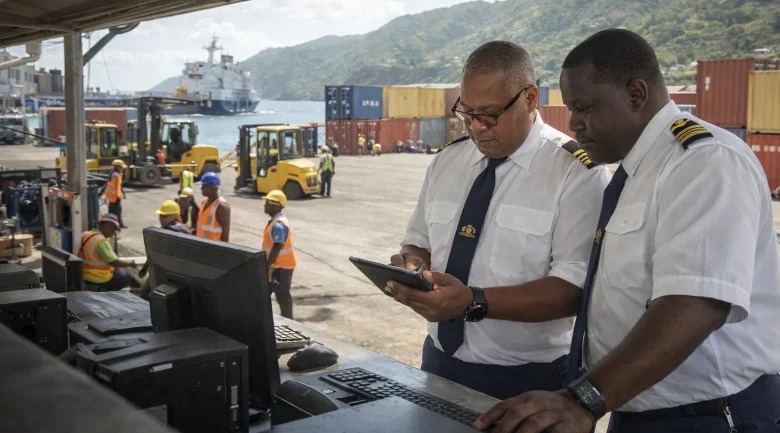
The Automated System for Customs Data (ASYCUDA) is the primary system for international trade in the Commonwealth of Dominica. Developed by the United Nations Conference on Trade and Development (UNCTAD), this system has evolved from a simple data-entry tool into a comprehensive, web-based customs management platform that dictates how goods enter and leave the island. In a nation where maritime and air trade are the lifeblood of the economy, the transition to ASYCUDA World has been nothing short of a digital revolution, replacing antiquated, paper-based workflows with a streamlined, transparent, and highly efficient electronic environment.
The Historical Shift: From Paper Trails to Digital Streams
To understand the impact of ASYCUDA on Dominica today, one must look back at the administrative landscape of the late 20th century. Before the introduction of automated systems, the Customs and Excise Division in Fond Cole operated on a foundation of physical ledgers and hand-written manifests. Importers and brokers were required to manually fill out stacks of forms, often spending days shuttling between the port, the Treasury Department, and various government ministries to obtain the necessary stamps and signatures. This manual era was characterised by delays, high operational costs, and an inherent susceptibility to human error in calculating customs duties and taxes.
The first significant step toward modernisation came with the implementation of earlier versions of the software, such as ASYCUDA. While this provided a computerised framework, it was often limited by local area network constraints and required physical presence at specific terminals. The true paradigm shift occurred with the national rollout of ASYCUDA World. This version moved the entire customs operation to a centralised, web-based system, enabling stakeholders to access it from anywhere in the world. This transition wasn’t just about software; it was a fundamental shift in border philosophy, moving from a gatekeeping model to a trade facilitation model.
The Technical Architecture of ASYCUDA World
ASYCUDA World is built on a robust, Java-based platform that utilises a centralised database. This architecture is particularly well-suited for the Commonwealth of Dominica’s geographical and economic scale. Whether a shipment arrives at the Deep Water Harbour in Fond Cole, the Portsmouth Port, or Douglas-Charles Airport, the data is synchronised in real time. This ensures that the Customs and Excise Division has a single version of the truth regarding every ounce of cargo entering the country.
One of the most transformative technical aspects of the system is Direct Trader Input (DTI). Under this protocol, licensed customs brokers and authorised economic operators can lodge their declarations electronically. The system performs automatic validation checks against pre-defined business rules. If a broker attempts to use an invalid tariff code or fails to attach a mandatory document, the system flags the error instantly. This prevents the submission of dirty data, significantly reducing the time officers spend on administrative corrections and allowing them to focus on high-level enforcement and revenue protection.
Mastering the Manifest: Pre-Arrival Processing
The efficiency of the Dominican port system currently relies heavily on the ASYCUDA World Manifest Module. Modern trade facilitation dictates that authorities should know what is on a ship or plane well before it arrives at the dock or runway. Shipping lines and airlines are now required to submit their cargo manifests electronically via the system as soon as the vessel departs its previous port of call.
This pre-arrival data allows customs officers to perform anticipatory risk management. By reviewing the manifest in advance, they can identify high-risk consignments, verify the consistency of the cargo descriptions, and prepare for the physical handling of sensitive goods. This proactive approach has significantly reduced “port dwell time”, the duration a container sits idle at the terminal, which, in turn, lowers storage costs for businesses and ensures that perishable items reach market shelves while still fresh.
The Single Administrative Document (SAD)
At the heart of every transaction in the system is the Single Administrative Document (SAD). This electronic form replaced dozens of disparate papers with a unified digital record. The SAD module automates the complex calculations of duties, taxes, and fees based on the CARICOM Common External Tariff (CET). It also accounts for local taxes such as the Value Added Tax (VAT), Environmental Surcharges, and Excise Duties.
By automating these calculations, the system ensures a high degree of fiscal accuracy. It eliminates the discretionary gaps that existed in manual systems, where different officers might interpret a tariff code differently. Today, the system applies the law uniformly, ensuring the government receives its fair share of revenue while protecting importers from arbitrary charges. The SAD also serves as a vital data source for national statistics, allowing the Ministry of Finance to track trade volumes and economic trends with precision.
The Selectivity Engine: Intelligent Risk Management
The most sophisticated component of ASYCUDA World is undoubtedly the Selectivity Module. In a high-volume trade environment, it is physically and economically impossible for customs officers to inspect every single package. The Selectivity Engine uses a complex algorithm based on risk parameters to determine which shipments require intervention. These parameters include the type of goods, the importer’s reputation, the country of origin, and the broker’s history.
When a declaration is submitted, the system automatically assigns it to one of four color-coded channels:
- The Green Channel: This signifies immediate release. Goods are cleared without physical inspection or a detailed document check. This “fast track” is reserved for low-risk, compliant importers, allowing them to move their goods almost instantly.
- The Blue Channel: Goods are released immediately, but the documentation is flagged for a “post-clearance audit.” This means customs officials may visit the business’s premises at a later date to verify records, allowing trade to flow while maintaining accountability.
- The Yellow Channel: This triggers a documentary check. An officer must verify that the invoices, permits, and certificates match the electronic declaration before the goods are released.
- The Red Channel: The highest level of scrutiny. It requires both a detailed documentary review and a physical inspection of the cargo. This channel is activated when the system detects a potential risk of smuggling, undervaluation, or the presence of prohibited items.
By utilising this risk-based approach, the Customs and Excise Division can optimise its manpower, focusing its investigative energy on the Red Channel while facilitating the rapid movement of legitimate trade through the Green Channel.
Revenue Mobilization and Economic Impact
The implementation of ASYCUDA has had a profound impact on the national treasury. In small island developing states, customs duties often account for a significant share of total tax revenue. Currently, the system provides an unbreakable audit trail for every cent collected. Because all payments are logged digitally and reconciled with the Treasury, the potential for revenue leakage through off-the-books transactions has been virtually eliminated.
Furthermore, the system’s ability to generate real-time reports has empowered policymakers. The Ministry of Finance can now monitor the economy’s health daily, tracking which commodities are being imported and how consumption patterns are shifting. This data is crucial for formulating annual budgets and responding to economic shocks. For example, if there is a sudden drop in raw material imports for the manufacturing sector, the government can identify the trend early and intervene with appropriate fiscal measures.
The National Single Window and Inter-Agency Integration
Today, Dominica is moving toward a National Single Window environment, with ASYCUDA World serving as the central hub. In international trade, the Customs Division is just one of many agencies involved. Importers often need permits from the Ministry of Agriculture for food items, the Ministry of Health for pharmaceuticals, or the Bureau of Standards for technical equipment.
Under the Single Window initiative, these Other Government Agencies (OGAs) are being integrated into the ASYCUDA platform. This means that a permit issued by the Ministry of Agriculture is transmitted electronically to the Customs system. The customs officer can see the approval on their screen, eliminating the need for the importer to carry physical papers from one office to another. This joined-up government approach has significantly improved the island’s ranking in global ease-of-doing-business indices, making the nation more attractive to foreign direct investment.
Resilience and Disaster Recovery
For a country that frequently faces extreme weather threats, the resilience of its digital infrastructure is a matter of national security. The shift to ASYCUDA World has made the trade system significantly more resilient than it was in the manual era. In the event of a natural disaster, paper records are easily destroyed or lost. However, the centralised, backed-up nature of the ASYCUDA database ensures that trade records are preserved.
Following past major climate events, the ability to quickly restore the customs system was a priority. With a digital infrastructure accessible via mobile networks or satellite links, authorities can resume clearing emergency relief supplies and essential goods within hours of a disaster. This digital redundancy is a key pillar of the nation’s broader goal to become the world’s first climate-resilient nation.
Challenges and the Human Element
Despite its successes, ASYCUDA implementation is not without challenges. The system requires ongoing technical maintenance and a reliable power and internet infrastructure. There is also the human challenge of digital literacy. To address this, the Customs and Excise Division regularly conducts training workshops for both its staff and private sector brokers. Currently, there is a push to ensure that every stakeholder in the supply chain, from the small-scale huckster to the large-scale industrialist, is proficient in using the system’s electronic features.
The transition also requires a shift in mindset. Some stakeholders were initially resistant to the increased transparency and the unforgiving nature of a computerised system that does not allow for manual overrides. However, as the benefits of faster clearance and lower costs became evident, the system has gained widespread acceptance across the business community.
Future Horizons: Paperless and Mobile Customs
The future of ASYCUDA in the island is clearly heading toward a 100% paperless environment. The next phase of development involves the total adoption of electronic signatures and the integration of mobile applications. Imagine a scenario where a small business owner can track their shipment’s clearance and pay duties via a smartphone app while standing at the port. This level of Customs-in-your-pocket is the ultimate goal of the current modernization strategy.
Additionally, as regional integration within the OECS and CARICOM deepens, there is a move toward “harmonised” data exchange. This would allow the Customs Division in Dominica to share data with its counterparts in neighbouring islands, further securing the regional supply chain and making trade between Caribbean nations as seamless as domestic trade.
A Foundation for Modern Governance
ASYCUDA World is a foundational element of modern governance in Dominica. It has brought a level of professionalism, speed, and integrity to the border that was previously unimaginable. By leveraging this technology, the nation has not only protected its revenue and secured its borders but has also created a welcoming environment for the trade that drives its development. As the system continues to evolve, it will remain at the heart of the island’s journey toward a more prosperous, digital, and resilient future.


References
-
1.
ASYCUDA World Overview - Dominica Customs and Excise Division https://www.customs.gov.dm/asycuda-world
-
2.
ASYCUDA Country Profile: Commonwealth of Dominica https://asycuda.org/en/usercountries-dominica/
-
3.
ASYCUDA Annual Report 2025 - UN Trade and Development https://unctad.org/publication/asycuda-report-2025
-
4.
Caribbean Digital Transformation Project (CARDTP) - Project Portal https://cardtp.gov.dm/about-the-project
-
5.
Dominica Trade Statistics and Tariff Schedule - WITS https://wits.worldbank.org/CountryProfile/en/DMA
-
6.
WTO Trade Facilitation Agreement Database - Dominica Member Profile https://tfadatabase.org/en/members/dominica
-
7.
Aid-for-Trade Case Story: ASYCUDA World Implementation https://history-commons.net/artifacts/3884580/aid-for-trade-case-story-commonwealth-of-dominica-asycuda-world-implementation-success-story/4690904/